Littleton Fowler. The name appeared on my research radar while looking for the origins of my ancestor Henry Ellis Fowler.
It did not take long to realize that Littleton Fowler was a well documented descendant of John Fowler who immigrated from England into Virginia in the 1600s.
Research indicated that my branch of the Henry Ellis Fowler family also descended from the same John Fowler. But there was a problem: the line of ascent from Henry Ellis Fowler to John Fowler was not as well documented. There was a gap in the paper trail that left some doubt in my mind.
The only way to know if Littleton Fowler and Henry Ellis Fowler descended from a common male ancestor – John Fowler of England – would be extensive yDNA testing of male descendants of both men.
THE GENETIC PROOF OF ANCIENT CONNECTIONS
The Fowler Surname Project for whom I research has been supportive in this effort. The researchers have worked tirelessly in pursuit of this important research goal. It has taken years to find documented men who descend from Littleton Fowler and Henry Ellis Fowler willing to test.
The last, most important leg of this “race” was recently completed and we finally have –in hand — the DNA results that prove what we have suspected for years.
Modern yDNA testing has proven that Rev. Littleton Fowler of Texas and Henry Ellis Fowler of Union County, South Carolina, both descended from the same English patriarch, John Fowler (d. 1683), who immigrated to Virginia in the mid to late 1600s.
The Reverend Littleton Fowler and Henry Ellis Fowler were second cousins, once removed.
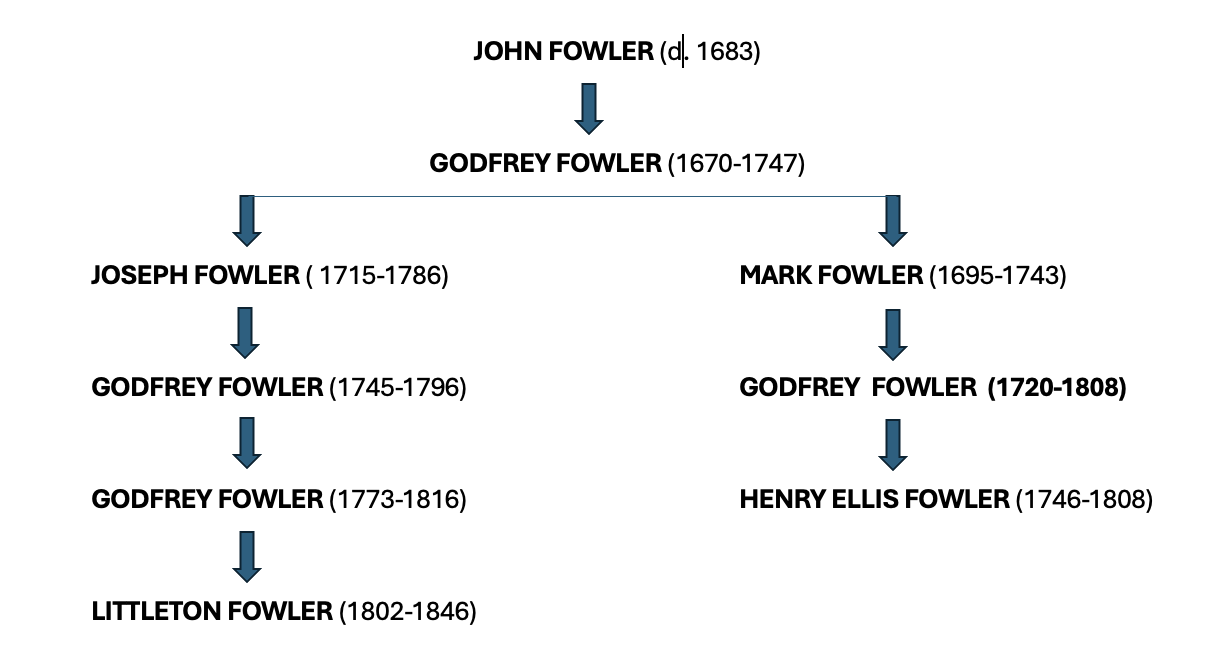
This genetic evidence bridges the centuries and validates the careful work of family historians who preserved these connections through oral tradition and written records. It demonstrates how families maintained their connections across vast distances and multiple generations, even when separated by hundreds of miles and decades of time.
FROM ENGLAND TO THE NEW WORLD
The Fowler family’s journey from England to Virginia, then to Tennessee, Kentucky, Georgia, the Carolinas, and Texas represents the broader story of American westward expansion and the persistence of family identity across time and space.
John, Mark, Godfrey, Joseph, Thomas, William, James, Ellis, …… and Littleton. These are the names of the sons and grandsons — the generations of Fowler men — who followed in the footsteps of their ancestor, John Fowler of England.
There is one man who exemplifies the bravery and honor and, indeed, the very heart and soul of this Fowler family. He lived a life of righteousness and integrity. He was a devoted servant of God and a missionary of great religious importance:
Reverend Littleton Fowler

Littleton Fowler was born September 12, 1802 in Smith County, Tennessee, the son of Godfrey Fowler (1773–1816) and Clara Wright (1773–1829). He was the first known in the family to carry the Littleton name, but he would not be the last. The name was one of honor; the man, of major importance in the Fowler family.
ENGLISH ROOTS AND AMERICAN BEGINNING
The story of Rev. Littleton Fowler begins not in the Tennessee wilderness where he was born, but in the rolling countryside of England, where his ancestor John Fowler was born.
John Fowler’s journey from England to the Virginia Colony represented one of countless individual decisions that collectively shaped the character of early America. His immigration was part of the great wave of English settlement that transformed the Chesapeake Bay region from a wilderness outpost into a thriving colonial society.
The Virginia Colony of the mid-to-late 1600s was a land of both opportunity and peril. English settlers like John Fowler faced the constant challenges of establishing sustainable communities in an environment vastly different from their homeland.
Archaeological evidence from 17th-century Virginia settlements reveals the harsh
realities faced by immigrants like John Fowler. Mortality rates were high, with many colonists dying within their first few years in America. Those who survived, found opportunities for land ownership and economic advancement that would have been impossible in England’s rigid class system.
John Fowler’s successful establishment of his family in Virginia demonstrated the resilience and adaptability that would characterize the Fowler lineage for generations to come. His decision to remain in Virginia rather than return to England reflected the growing sense of American identity that was emerging among first-generation colonists.
GENERATIONAL MIGRATION AND THE FOWLER FAMILY
Once established in the Virginia Colony, John Fowler of England remained there until his death circa 1683. Legal documents confirm that he was the father of at least three sons — Mark, John, and Godfrey.
The land that John Fowler had acquired since his arrival in America was to have been evenly divided among his three sons. But Mark and John died without issue, and when the dust settled, the youngest son, Godfrey (b. 1670), was the only one left standing.
GODFREY FOWLER, SON OF THE IMMIGRANT
It was Godfrey who would become the next custodian of his father’s lands, and it is Godfrey from whom we descend.
Godfrey Fowler grew up in colonial Virginia during a period of rapid expansion and increasing prosperity. The colony was transitioning from a struggling outpost to a major economic force in the British Empire, and the Fowler family participated in this transformation.
Naming patterns play a big part in my research, and Godfrey Fowler did not disappoint. He named his sons John, Mark, and Godfrey. Two more sons were named Thomas and Joseph, and two daughters, Anne and Martha. Thus began the foundation lines of our Fowler family.
Although my ancestor Henry Ellis Fowler descends from son Mark, it is son Joseph Fowler (b. 1715) with whom I will discuss.
JOSEPH FOWLER: VIRGINIA TO NORTH CAROLINA
Joseph Fowler (1715-1786) lived through the most transformative period in American history, witnessing the transformation of British colonies into an independent nation. His lifespan encompassed the French and Indian War, the growing tensions with Britain, the Revolutionary War, and the early years of the new republic.
Joseph Fowler left the Virginia Colony and was in Wake County, North Carolina before 1772, or even years earlier. He fathered twelve children with wife Nancy before his 1786 death. His will was contested by two of his sons in 1791, and finally recorded in 1793 in Wake County.
GODFREY FOWLER, SON OF JOSEPH
Godfrey Fowler was born in 1745 –one of the twelve children of Joseph Fowler. He was a member of the Revolutionary generation, coming of age during the conflicts that would define American independence. He lived through the birth of the nation and the establishment of the political and social institutions that would govern his descendants.
Godfrey Fowler married Rehab Cooper; they had six sons and two daughters. He died in Wake County, NC, and his land was divided in December 1796 among his sons.
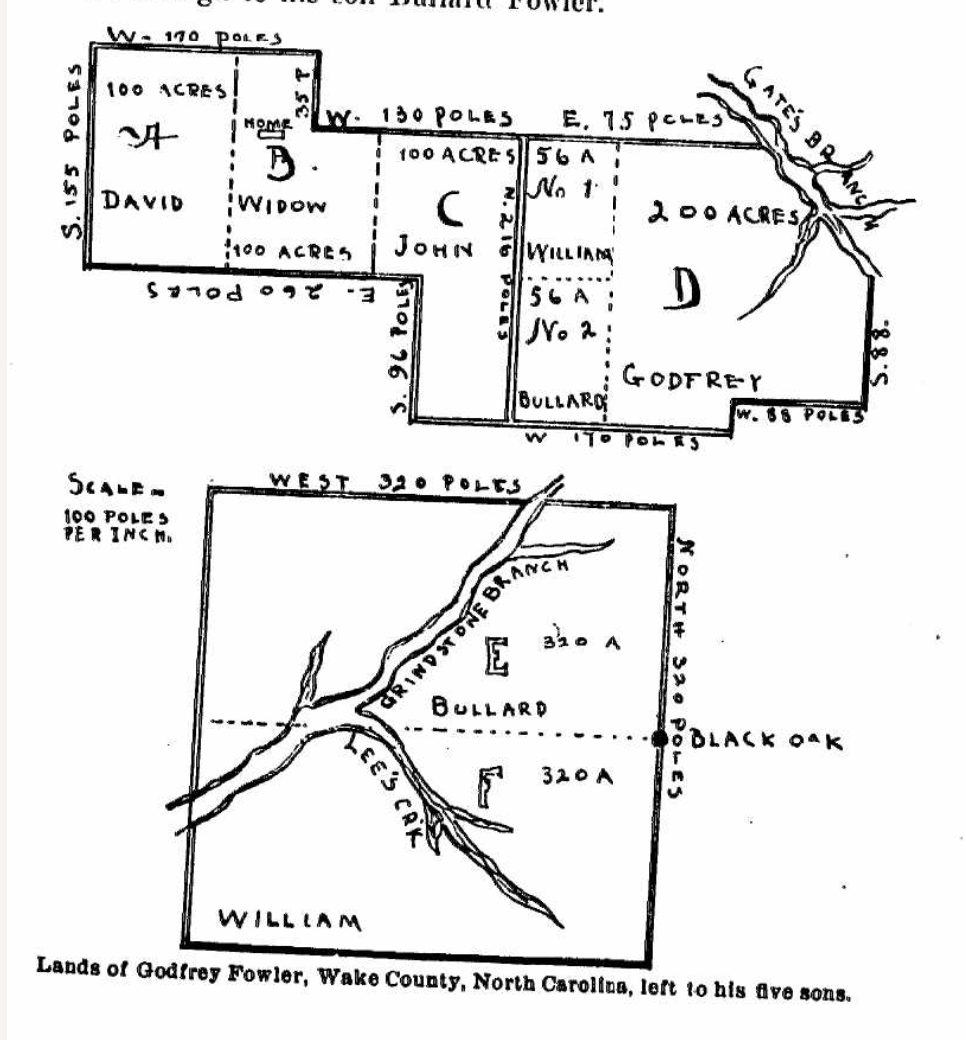
GODFREY, FATHER OF THE REV. LITTLETON FOWLER
Godfrey Fowler — born in 1773 — was a son of the elder Godfrey Fowler and Rehab Cooper. The younger Godfrey was in the first generation of Fowlers to grow up as Americans rather than British subjects. His life coincided with the Louisiana Purchase, the Lewis and Clark Expedition, and the War of 1812, events that expanded American territory.
Godfrey Fowler married Clara Wright on the third of May in the year 1792. Born in North Carolina in 1773, Clara embodied the strength and resilience that frontier women needed to survive and thrive in challenging circumstances.
THE YEARS IN TENNESSEE AND KENTUCKY
Godfrey Fowler and Clara made the five-hundred mile journey from Wake County, North Carolina to Smith County, Tennessee before the 1796 birth of twins Joseph Wright Fowler and John Hopkins Fowler. Some of Clara’s male Wright cousins joined them.
The Godfrey Fowler family remained in Smith County long enough for the births of sons Wiley Paul Fowler in 1799, and Littleton Fowler in 1802.
Tennessee, where the mountains gave way to fertile valleys perfect for farming and raising families, was only a temporary home for the Godfrey Fowler family.
Son Jerry Fowler was born after 1803 and before 1809. The location and date of his birth are not documented.
In 1806, Godfrey Fowler and wife Clara relocated their family one last time, near Princeton, Kentucky. The rest of their children would be born in the blue-grass state: Bradford C. Fowler in 1810, daughter Polly Ann Fowler in 1814, and Andrew Jackson Fowler in 1815.
THE GODFREY FOWLER HOME IN KENTUCKY
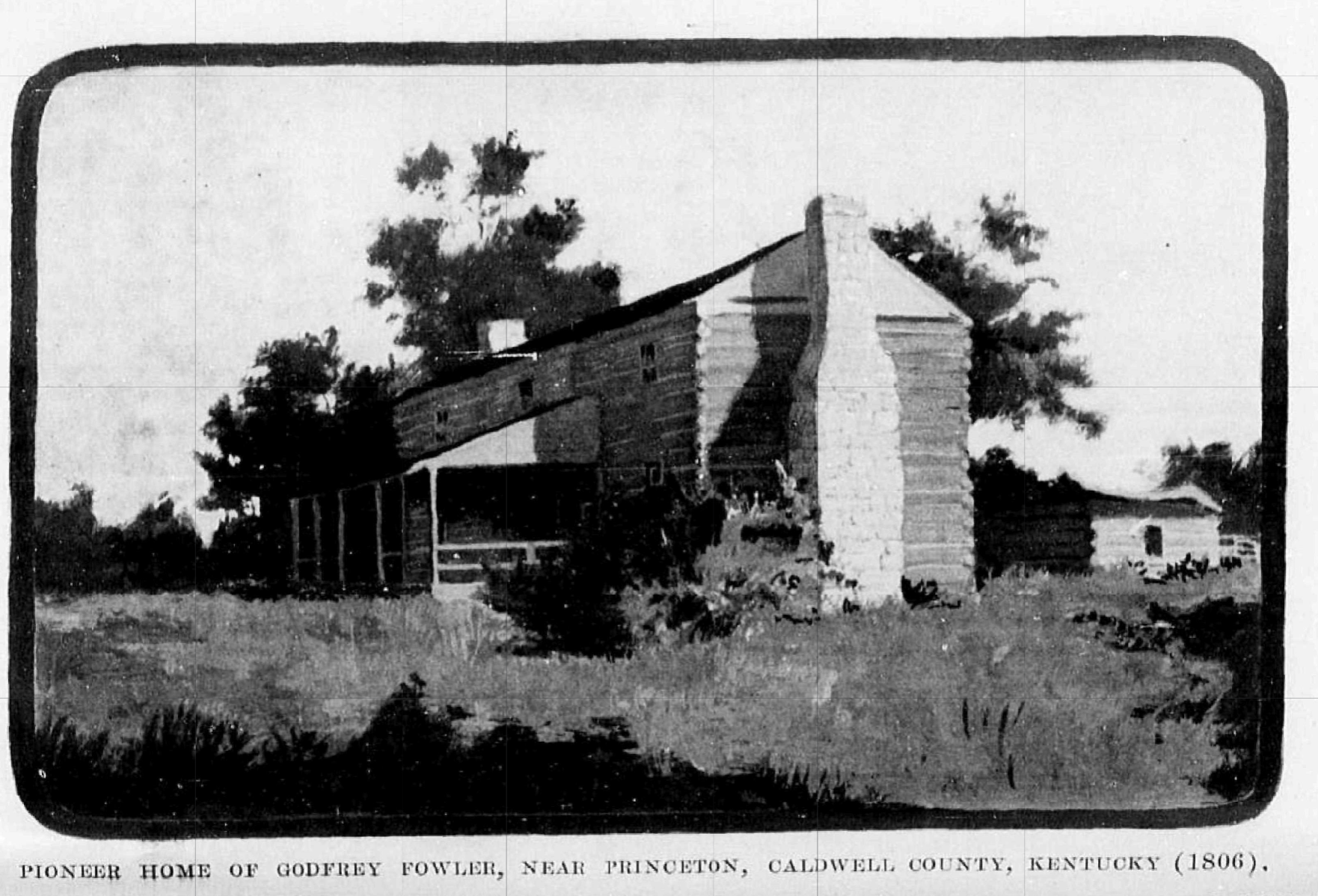
The final move of this family to Princeton would firmly establish Godfrey as the Founder of the Fowler family in Kentucky.
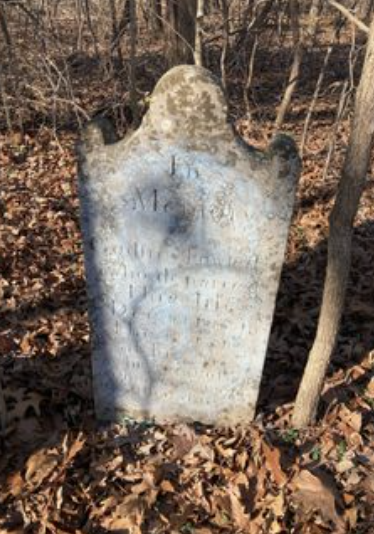
Godfrey Fowler died on December 23, 1816. He was buried in the family graveyard near Princeton.


A BRIEF LOOK AT THE SIBLINGS OF LITTLETON FOWLER
- Joseph Wright Fowler (1796-1844)
- John Hopkins Fowler (1796-1873)
- Wiley Paul Fowler (1799-1881)
- Littleton Fowler (1802-1846)
- Jerry Fowler (d. bef. 1837)
- Bradford C. Fowler (1810–aft 1850)
- Polly Ann Fowler (1814–1854)
- Andrew Jackson Fowler (1815–1885)
Littleton Fowler’s brothers inherited the adventurous spirit that had driven their ancestors from England to America. Years before Littleton would make his own journey westward, his brothers had already ventured into the territories beyond Kentucky, seeking their fortunes in the vast expanse of the American West.
These men faced challenges that would test the limits of human endurance and determination, and their experiences would have influenced Littleton’s own understanding of the frontier’s opportunities and dangers.
JOSEPH WRIGHT FOWLER (1796–1844) – Twins Joseph Wright Fowler and his brother John Hopkins Fowler were born on December 23, 1796. Joseph married Ginsey Gray in 1825, and a large family of seven daughters and two sons followed. Census records confirm that Joseph lived most, if not all, of his 48 years in Caldwell County, Kentucky. His family became scattered and lost touch with each other over the years. Some of the daughters moved to California with their families while other siblings remained in Kentucky. Joseph and his bride Ginsey died in 1844, leaving behind many descendants to follow in their footsteps.
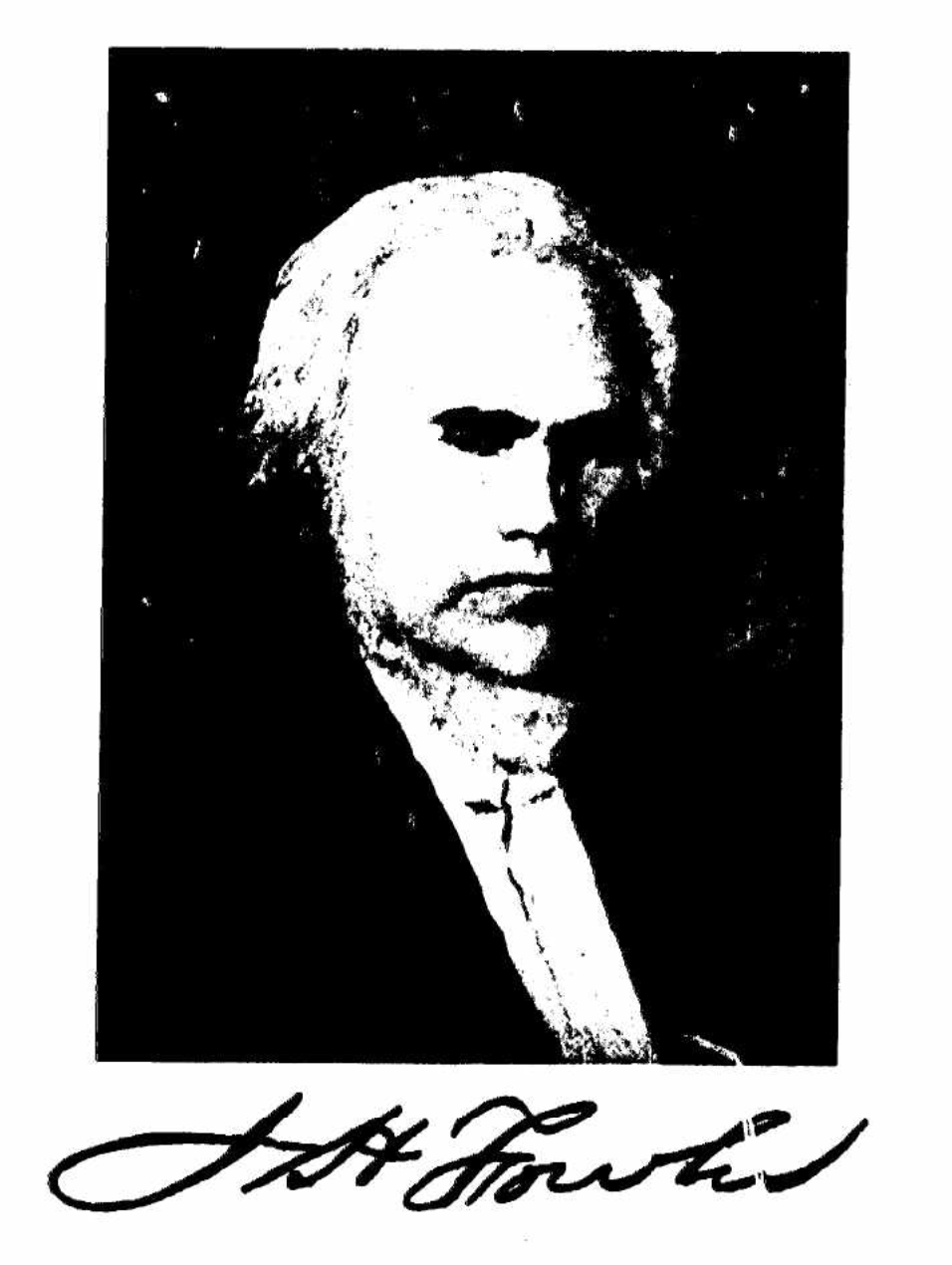
JOHN HOPKINS FOWLER (1796–1873) – Born in 1796, John Hopkins Fowler chose a different way of life than his twin brother. He went to the Red River in the Spanish province of Texas with his brother Wiley P. Fowler and two of his Wright cousins. He was a successful business man, served in both the Texas Senate and Congress, and had huge land holdings. He married twice, once before 1833, and again in 1837. He was the father of a son born in 1840, John Littleton Fowler, and a daughter, Susan Clara Fowler, with whom he lived until his death in 1878.

WILEY PAUL FOWLER (1799–1881) – Born on September 2, 1799 in Tennessee, Wiley Paul Fowler spent most of his youth in Kentucky. He went to Red River Texas with his brother John in 1817. After two years, he returned to Kentucky to study law. He became a leading attorney and judge. He married twice: Ester Given in 1827, and a year after her 1847 death, he married Sarah Barnett. His sons became successful owners and captains of steamboats. He was a Union patriot, a Mason, and a Methodist. After his 1881 death, it was said “When John Fowler died, one of God’s noblemen crossed over the river.”
BRADFORD C. FOWLER (1810 – after 1850) – According to Glenndora Fowler Arthur, son Bradford C. Fowler married twice, went to California during the gold rush 1849-1850, and died there.
Bradford C. Fowler is found in the 1850 Lamar County, Texas Census:
- Bradford C. Fowler (40) Lawyer, born in Kentucky
- Mary Fowler (25)
- John Fowler (53) Farmer, born in Tennessee
- Susan Clara Fowler (12)
- John Littleton Fowler (10)

Do I know for sure that this Bradford C. Fowler was the son of Godfrey and Clara Fowler? I do not. But it is a perfect fit. Older brother John Hopkins Fowler (born in Tennessee in 1796 would have been 53 (or 54 ) in 1850. Bradford C. Fowler was born after the Godfrey Fowler family’s move in 1806 to Kentucky. (This census record suggests a birth in 1810) And, the profession of “lawyer” was fitting for a family of judges, lawyers, doctors, and preachers.
Gold Rush Fever must have sent Bradford C. Fowler to California after the 1850 census. I find no records of him after this. Glenndora Fowler Arthur’s word is Gospel to me.
POLLY ANN FOWLER (1814–1854) – The only daughter in a family of sons, Polly Ann Fowler was born April 23, 1814. She married Thomas Bradford Wilson on December 3, 1830. Born in South Caroline, Thomas Wilson came from a wealthy family. Like her mother, Polly Ann had seven sons and one daughter. Her last child, James Henry Wilson, was born June 15, 1854. Polly Ann died three months later from typhoid fever.

Polly Ann’s son Wiley Cyrus Wilson (1849-1899) was the father of Cyrus Cline Wilson (b. 1878). Cline Wilson left Kentucky to study art in New York City, and credit must be given to him for the drawings of the Fowler and Wilson homes as they appeared in 1898. He drew these images for his cousin Glenndora Fowler Arthur to be included in her Annals of the Fowler Family volume.
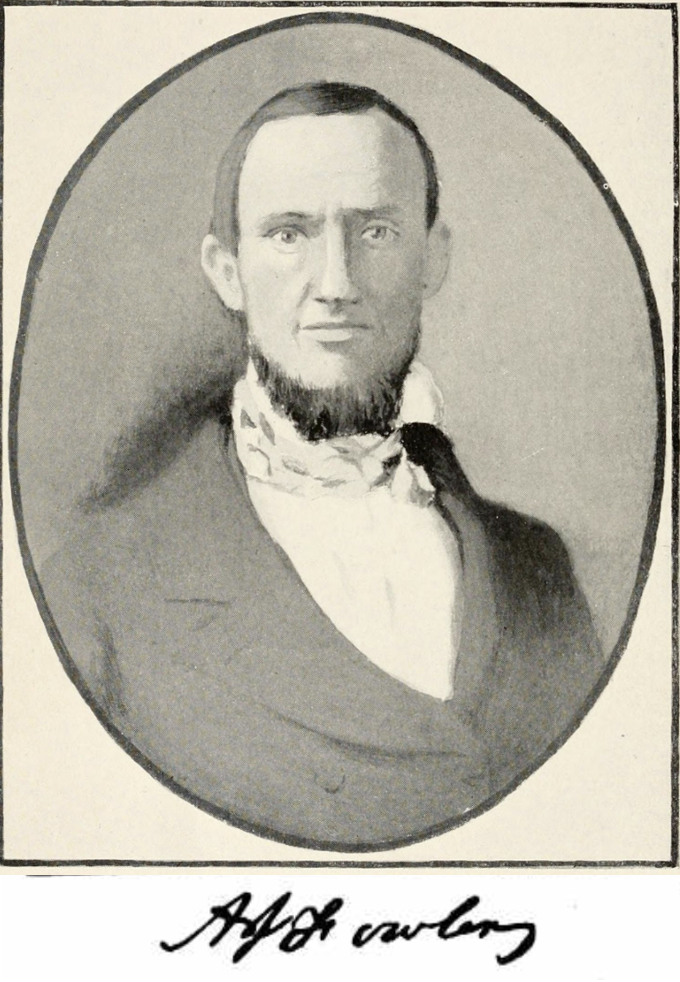
ANDREW JACKSON FOWLER (1815–1885) – Named after the future president, who was said to be a friend of Godfrey Fowler, the last child born on November 11, 1815 to Godfrey and Clara was known to his family as Jack. As his brothers did before him, Jack studied law and, in 1837, moved to Clarksville, Red River County Texas. He married Martha Susan Glenn in 1841, the same year he served in the Texas Congress. He and his wife had nine children, one of them being family historian Glendora Fowler. Jack Fowler died in 1885 in Texas.
BIRTH OF A FUTURE MINISTER
On one of the last days of summer, September 12 in the year 1802, in the rugged landscape of Smith County, Tennessee, Clara Wright Fowler gave birth to a son. She and her husband Godfrey would name him Littleton.
Smith County, Tennessee, in 1802, was a land of stark contrasts and endless possibilities. The county had been established only a few years earlier, and many of its residents were first-generation settlers –not unlike the Godfrey Fowler family — who had moved west from the Carolinas and Virginia.
Into this environment, Littleton Fowler was born, destined to become one of the most significant religious figures in the early history of Texas.
When he was still a young boy, the Godfrey Fowler family packed their belongings and moved to Kentucky, joining the stream of families seeking better opportunities in what was then considered the western frontier.
This early experience of migration and adaptation would serve Littleton well in his later ministry, as he would spend much of his adult life traveling between communities and adapting to new environments.
THE CALL TO MINISTRY
While his brothers battled the physical challenges of the frontier, Littleton found himself called to a different kind of service. He was only sixteen when he joined the Methodist Episcopal Church.
In 1826, Littleton Fowler studied the ministry and was admitted to the Kentucky Conference in 1826, He became a deacon and elder in the church over the next few years.
Although Littleton had established himself as a Methodist minister by the 1830s, his greatest calling lay ahead in the Republic of Texas in what had previously been Mexican territory.
THE MINISTRY YEARS
Littleton Fowler was one of three missionaries commissioned by the Methodist Episcopal Church to the Republic of Texas in 1837. His decision to bring his ministry to Texas would earn him a place in history as one of the founding fathers of Methodism in Texas.
The newly-arrived-to Texas preacher wasted no time in his mission of establishing churches of the Episcopalian Methodist faith in the Texas territory. He became a circuit rider minister and traveled countless miles on horseback. He often slept under the stars in his journey to reach isolated families who had been months or even years without organized religious services.
The physical demands of circuit riding were enormous, requiring ministers to be skilled horsemen, capable of navigating difficult terrain, and able to endure harsh weather conditions.
The psychological challenges were equally significant, as ministers had to maintain their spiritual focus and emotional stability despite the loneliness and hardships of constant travel.
His Christian faith was genuine and deep, providing the foundation for a life dedicated to service and ministry. The sincerity of his religious convictions was demonstrated through his willingness to sacrifice personal comfort and security to serve isolated frontier communities.
A SPIRITUAL CONTRADICTION IN THE ANTEBELLUM AGE
Rev. Littleton Fowler embodied the complexities and contradictions of his era, representing both the highest ideals of Christian ministry and the moral blind spots that characterized antebellum America.
His Christian faith was genuine and deep, providing the foundation for a life dedicated to service and ministry. Those who knew him recognized his stellar qualities and ethical views. His reputation for integrity and compassion made him a trusted figure in the communities he served.
Like many religious leaders of the antebellum period, Rev. Littleton Fowler held views that modern Christians find deeply troubling. Despite his intelligence and commitment to Christian principles, he believed that the Bible condoned slavery, a position that reflected the social and economic realities of his time and place.
Rev. Littleton Fowler’s position on slavery was typical of many white Southern ministers of his era, who faced enormous social and economic pressures to support the institution that underpinned their society’s economic structure. His acceptance of slavery reflected not only personal conviction but also the practical realities of ministering to communities whose economic survival seemed to depend on the institution.
LOVE AND FAMILY IN THE LONE STAR REPUBLIC
Missouri M. Lockwood (1807–1891) was born in Louisiana. She married Dr. J. J. Porter in 1825, and the couple moved to Nacogdoches, Texas, where Dr. Porter died in 1836.
The courtship between a circuit-riding minister and a frontier widow would have been conducted under unique circumstances, with Littleton’s ministerial duties requiring frequent travel and Missouri’s responsibilities as a widowed mother to a young son demanding her constant attention.
Reverend Littleton Fowler and Missouri Lockwood Porter married in 1838. She recognized in her new husband a man whose calling complemented her own deep faith.
The marriage of Littleton Fowler and Missouri represented not just a union of two hearts, but a partnership in religious service to the growing Texas communities that desperately needed spiritual leadership.
A SON AND A DAUGHTER
The couple was blessed with two children who would carry forward the Fowler name and legacy. Their daughter Mary Pitt and son Littleton Morris represented the continuation of a family line that stretched back to John Fowler in 17th-century England, each generation building upon the foundation laid by their predecessors.
The raising of children in frontier Texas required particular attention to education and moral development, as traditional institutions were often absent or inadequate. As a minister’s family, the Fowlers would have been expected to model Christian values and provide leadership in community development. The children’s education would have included not only basic literacy and numeracy but also religious instruction and the practical skills needed for frontier life.
Mary Pitt Fowler was born on September 2, 1839 in San Augustine Texas. The charming, educated beauty married Professor Gilbert M. L. Smith in 1858. They raised their four daughters and five sons in Nacogdoches County Texas. They remained there until their deaths, Gilbert Smith in 1884 and his wife, Mary Pitt Fowler Smith, on October 17, 1892.
Littleton Morris Fowler was born in San Augustine County on October 15, 1844. Like his sister, he was well educated by his parents. He entered the Methodist McKenzie College in 1857 and stayed there until summer of 1860. He enlisted in the 14th Texas Cavalry in the fall of 1862 and managed to stay alive through the thirteen battles in which he fought.
Littleton Morris Fowler married Augusta Isabella Lynch on 1865. The family lived in Isabella’s home state of Alabama, and their four eldest children were born there. The Littleton Morris Fowler family went back home to Sabine County Texas in 1872 and moved into the former home of his father, the Rev. Littleton Fowler. Four more children were born in Texas.
Littleton Morris Fowler eventually decided to follow in his father’s footsteps, and began preaching in 1876. Isabella died in 1870, and two years later, he married Regina Walker. They had a son and a daughter. Littleton died in Rusk County Texas on January 20, 1817, and lies in the Old Henderson City Cemetery.

I have not yet counted the number of times that the name Littleton was given to the descendants of the Reverend Littleton Fowler. Scores of little Fowler boys throughout many generations were no doubt honored with the name of their noble and righteous ancestor.

THE FINAL YEARS AND LASTING LEGACY
Reverend Littleton Fowler continued his religious work, establishing churches across Texas and ministering to everyone who was lucky enough to cross paths with this man of God.
His last sermon was preached in the small town of Douglass in Nacogdoches County. He has become ill early in January 1846, but he gave a mighty powerful sermon to all in attendance that day. And then he went home.
Littleton Fowler knew he was dying when he entrusted the care of his soon-to-be widow and their two children to another Methodist minister, Rev. John C. Woolam. It was perhaps spiritually ordained that the Missouri and Rev. Woolam would marry in 1849.
He was surrounded by many loved ones as he lay in his bed preparing for his final journey. He awoke once from his sleep and said, “Oh, what a glorious sight. I have seen the angelic hosts, the happy faces of just men made perfect. Fairwell, vain world, I’m going home; My Savior smiles, and bids me come.”
And later, “Ah, well, my sight grows dim. Earth recedes. Heaven is approaching. Glory to God in the highest.”
As he grew closer to leaving this world and entering the next, his wife leaned over him, and he asked who she was.
She answered him, “Your unhappy wife.”
“Ah,” he whispered his last words, ” I thought it was an angel“.
The holy man of God closed his eyes and slowly slipped away.
Rev. Littleton Fowler’s earthly ministry had come to an end. He had lived only 44 years, but in that relatively short time, he had established a legacy that would endure for generations.
His death was mourned throughout East Texas, where the churches he had founded continued to serve their communities under the leadership of ministers he had trained and inspired.
The network of Methodist churches he had established provided a foundation for continued religious growth in the region, and his influence could be traced through the ministers who followed in his footsteps. The congregations he had nurtured continued to grow and flourish, spreading his influence far beyond what he could have imagined during his lifetime.
In a fitting tribute to his life’s work, Littleton Fowler was buried beneath the church he had founded, the McMahan Chapel in Sabine County. His final resting place is a permanent reminder of his dedication to bringing the Gospel to the Texas frontier.

The Inscription:
Rev. Littleton Fowler
Presiding Elder of the Methodist Episcopal Church
Son of Godfrey & Clara Fowler
Born 1803
Died January 29 1846
His native land, Kentucky, his adopted, Texas, his final home, Heaven
HISTORICAL DOCUMENTATION AND SCHOLARLY RECOGNITION
Much has been written about the Rev. Littleton Fowler. In my research of the preacher, I have been overwhelmed by the sheer number of words put down on paper. I feel that I could study him — and no one else — for the next ten years and still there would be more to learn.

I have so much respect for the work of a woman, historian, author, an intellectual. Without the research of Glendora Fowler Arthur, there would be many gaps in our knowledge of Littleton Fowler, his ancestors, his countless relatives, and the names of his descendants.
Glendora Fowler was the daughter of Andrew Jackson Fowler; thus, the niece of Littleton Fowler. Born July 1, 1859 in Palestine, Texas, she was alive during the lifetimes of many of the people she wrote about.
She married James Joyce Arthur (1855-1929) in 1879. The couple had no children. Thankfully, Glendora had a keen interest in her family history, and even more to be thankful for — she shared her knowledge with the world.
It is her work that I go to first when researching my Fowler family. Her words are research gospel to me; my eyes slowly taking in each word, my mind absorbing every name, date, and story about my people.
Glendora Fowler Arthur died September 15, 1936 in Kingsville Texas. She lies next to her husband who preceded her to the grave by seven years.
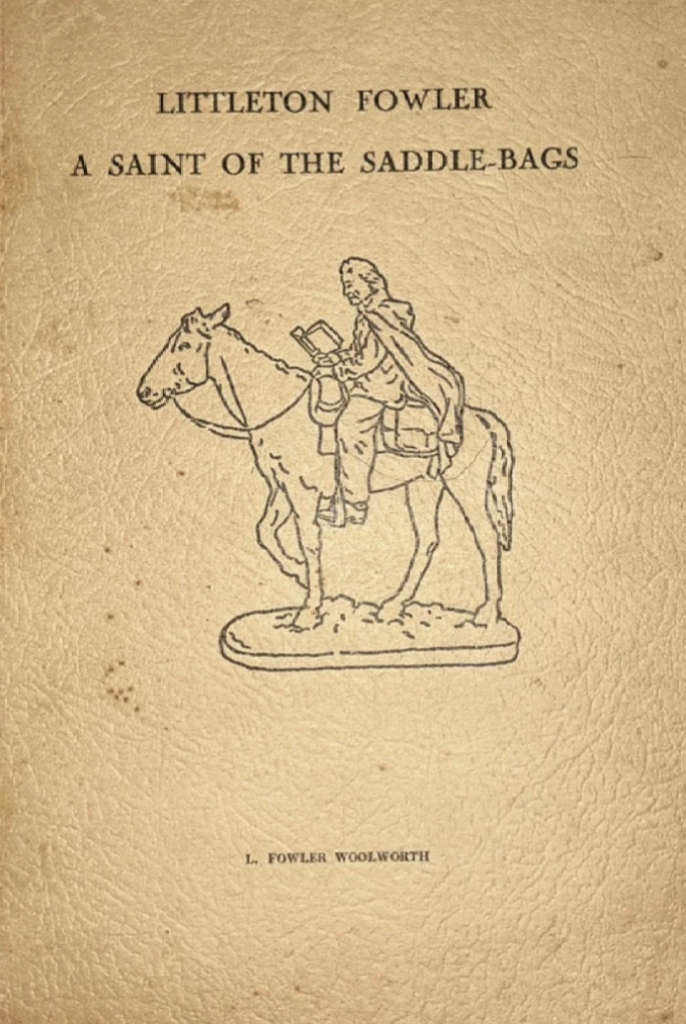
A must read for anyone researching the Rev. Littleton Fowler is the 1936 small but mighty volume written by his granddaughter Laura Fowler Woolworth.: “Littleton Fowler A Saint Of The Saddle Bags”
The pamphlet was sold for fifty-five cents, and fifty cents went to the fund to rebuild McMahan’s Chapel, the final resting place of the preacher. It contains information of the preacher’s life that I have seen nowhere else.
My sources:
- Dora Fowler Arthur, “Jottings from the Old Journal of Littleton Fowler”
- Dora Fowler Arthur, “Annals Of The Fowler Family“
- Quarterly of the Texas State Historical Association 2 (July 1898).
- Dora Fowler Arthur, “The Reverend Littleton Fowler: Missionary to the Republic of Texas“
- Texas Methodist Historical Quarterly 1 (October 1909).
- Littleton Fowler Papers, Bridwell Library, Perkins School of Theology
- Southern Methodist University. Walter N. Vernon et al., The Methodist Excitement in Texas (Dallas: Texas United Methodist Historical Society, 1984).
- Laura Fowler Woolworth, comp., Littleton Fowler (Shreveport, Louisiana, 1936).
- Grover Parsons Fowler “House of Fowler“
- Fowler Family Papers; SMU website https://www.smu.edu › libraries › digital collections
CONCLUSION: A COMPLEX LEGACY
The story of Rev. Littleton Fowler is ultimately the story of America itself—a nation built by imperfect people who nevertheless possessed the courage to venture into unknown territories in search of something better for themselves and their descendants. His life exemplifies both the highest ideals of American religious life and the moral contradictions that characterized his era.
The enduring significance of Rev. Littleton Fowler’s life lies not in any claim to moral perfection, but in his representation of the human struggle to create meaning, community, and purpose in challenging circumstances.
The Fowler family’s journey from England to America and across the American frontier represents millions of similar stories that collectively created the American nation. Each family’s experience was unique, yet all shared the common elements of courage, determination, and hope that characterized the American experience.
In the end, Reverend Littleton Fowler’s legacy reminds us that history is made by real people facing real challenges, people who possessed both remarkable strengths and significant limitations. His story continues to inspire and challenge us as we work to understand our past and create a better future for generations to come.
- John Fowler of England d. 1683
- Godfrey Fowler (1670–1747) m. Susannah Archer (1674–1747)
- Joseph Fowler (1715-1786) m. Nancy Ann Tucker (1715–1786)
- Godfrey Fowler (1745-1796) m. Rehab Cooper 1748–1825
- Godfrey Fowler 1773–1816 m. Clara Wright (1773–1829)
- Littleton Fowler (1802-1846) m. Missouri Lockwood (1807–1891)
- Littleton Morris Fowler 1841–1917 m. Augusta Isbel Lynch 1845–1879
- Littleton Augustus Fowler 1869–1916 m. Clota Moughton 1878–1955
- Clota Isabelle Fowler 1899–1901
- Florine Fowler 1902–1975 m. Horace Greeley Lilley 1898–1959
- Ada Louise Fowler 1906–1988
- Littleton Augustus Fowler 1869–1916 m. Clota Moughton 1878–1955
- Littleton Morris Fowler 1841–1917 m. Augusta Isbel Lynch 1845–1879
- Mary Fowler (1839–1892) m. Gilbert Motier Lafayette Smith 1835–1889
- Charles Sidney Smith 1857–1858
- Woolam Ira M. Smith 1859–1937
- Mary Ellen Smith 1860–1939
- Willie Smith 1861–
- Littleton Fowler Smith 1863–1940
- Emmett W Smith 1866–1949
- Ellis Smith 1868–1939
- Charity Emoline Smith 1869–1938
- Clarence Thomas Smith 1871–1887
- Clara Belle Smith 1874–1949
- Florence “Flossie” Smith 1878–1958
- Littleton Fowler (1802-1846) m. Missouri Lockwood (1807–1891)
- Godfrey Fowler 1773–1816 m. Clara Wright (1773–1829)
- Godfrey Fowler (1745-1796) m. Rehab Cooper 1748–1825
- Joseph Fowler (1715-1786) m. Nancy Ann Tucker (1715–1786)
- Godfrey Fowler (1670–1747) m. Susannah Archer (1674–1747)
 THE FOWLER FAMILIES OF UNION COUNTY, SC