Claude Fowler was my grandfather’s brother. He was the second son of seventeen children born to Thomas Gillman Fowler (1858-1944) and Lura Mabry Littlejohn (1862-1957).

He was also a railroad fireman. It was hard work, shoveling coal from the tender to the firebox to fuel the engine of a steam locomotive. It was dirty work, hot work, dealing with coal and fire, but it was important work. It was the fireman’s job to keep the train running.
There were other duties too. The water level in the boiler had to be monitored. The fireman worked closely with the engineer to ensure smooth engine operation.
Sixteen-year-old Claude Fowler was in the household of his parents in 1900. My great grandparents, Gillman and Lula Fowler lived just above Jonesville, on land that Lula had bought from her father, William Thomas Littlejohn in the late nineteenth century.
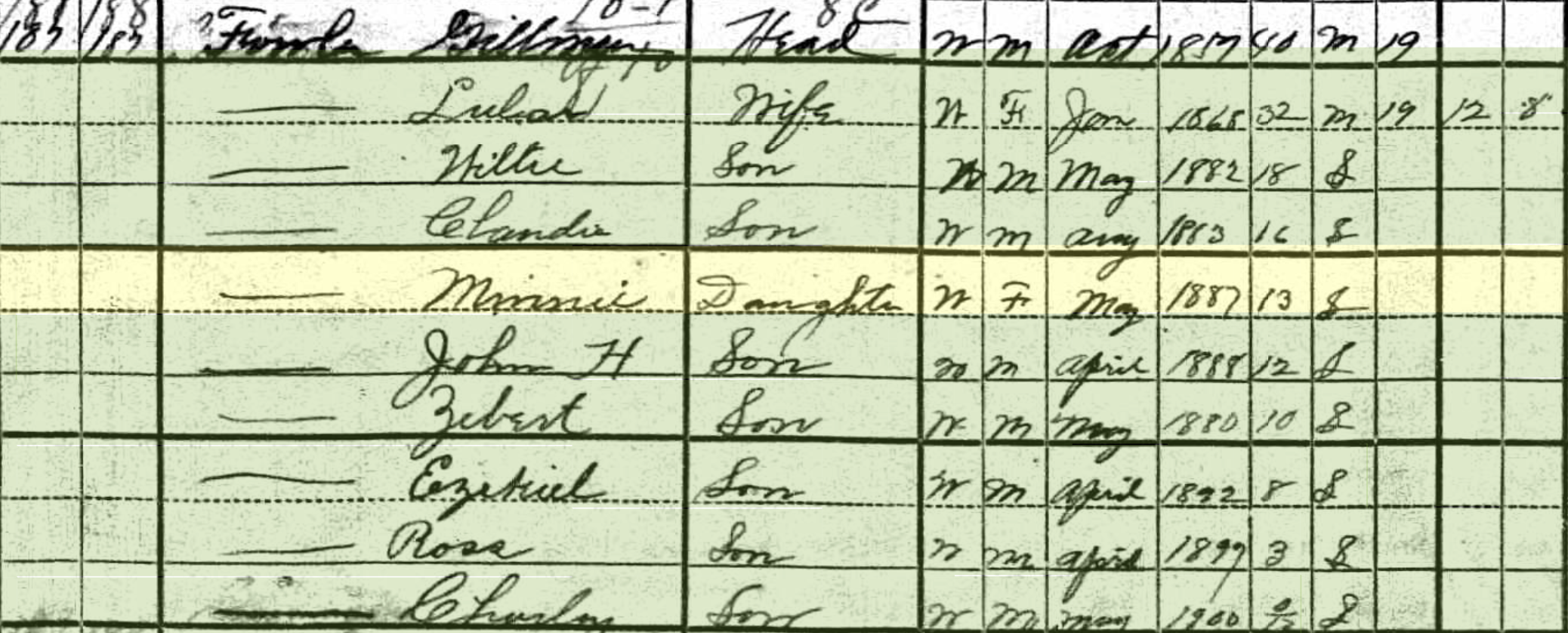
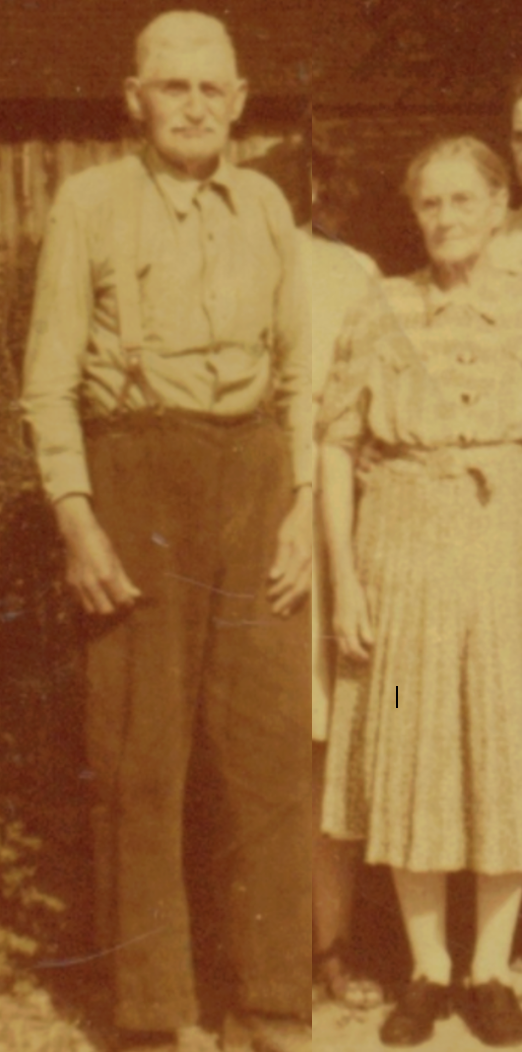
I do not have a photo of Claude Fowler. I do have one of his father Thomas Gillman Fowler, and his mother Lura.
An entry from U.S., City Directories, Columbia, South Carolina, City Directory, 1909, (page 86) had Claude Fowler at 1320 Pickens Street in Columbia. He had begun his short career as a fireman working for Southern Railway, a company founded in 1894 by J.P. Morgan’s reorganization of several failed railway systems.

The September 29, 1909 issue of The Spartanburg Weekly Herald Journal made mention that Claude Fowler had moved to Lockhart from Columbia to take a position with the railroad there.
Did he move to be closer to family and friends, or did he move for a better job? Whatever the reason, the decision would change the course of his life.

There were twenty people who lived in the 1910 household of Benjamin H. Howe in the Pinckney township. He and his family numbered ten. The household included one female servant, and nine male boarders, and except for two, all of whom were in their twenties.
Of the nine boarders, three worked for the railroad: William Sills, engineer; Charlie Watson, flagman; and Claude Fowler, fireman.

THE FIGHT
Claude Fowler and Curtis Ammons were known to be friends. Ammons worked at the mill in Lockhart, and although I cannot find him in the 1910 census, the two men probably lived close to each other.
It was said that the two friends had spent the previous night together, and had visited some young ladies the day of the fight. What had happened between them that would lead to the death of Claude Fowler?
I do not know exactly where in Lockhart the fight took place. It happened outside around 6 pm — after darkness fell — on Sunday, the eighteenth of December, a month that was unusually cold in 1910.
It was reported in the local news that the fight began over one dollar. It may seem an insignificant amount today, but in 1910, a dollar could buy far more goods: 14 loaves of bread or 14 gallons of gas. The value of $1 in 1910 would be equivalent to roughly $34.10 today.
Still, one dollar –or one hundred, or one thousand — was not worth a man losing his life.
My father, who was not born until 1938, and whose own father was only thirteen years old in 1910, told me that the fight was over a woman. I heard this story from another member of my family, making it even more believable.
One dollar, or one woman. It does not matter all these years later; it only matters that the fight began. It was said by witnesses in court that Claude Fowler struck Curtis Ammons three times.
THE MURDER
Curtis Ammons retreated as he fought off the blows of Claude Fowler. He was backed up against a nearby building, low to the ground while Fowler stood over him. Ammons pulled the trigger on his pistol three times.
The first bullet went into the ground. The second one hit Fowler in his side. The third one entered his chest.
Claude Fowler was shot through the heart.
The wounded man — my grandfather’s brother — staggered a few steps, and fell down dead, onto his face.
“Curtis, you have killed him.“
“I don’t give a damn. If I’ve got to go to hell, let me go.”
THE ESCAPE
Curtis Ammons did not go to hell. Instead, he hired a horse and buggy and fled the scene. He crossed the Broad River and went into Chester County. It was thought that he was headed to Yorkville.
It was later determined that his initial destination was the small town of Sharon where he was hoping to catch a train going east. Instead of facing the consequences of his actions, he fled like a coward. He sought only to escape arrest and prosecution for his crime of murder.
THE CAPTURE
Arriving too late in Sharon to take a train, Curtis Ammons went to a boarding house in town and bedded down for the night. The local authorities had been notified of the homicide and discovered his presence at the boarding house. They found him there, and took him to Yorkville to be charged.
Saying very little of the murder he had just committed, he did admit that Claude Fowler had been following him and beating him with brass knuckles.
“I decided to try to do him one, and I reckon I done it.“
THE TRIAL
The trial was held two months later, on February 9, 1911. There was testimony that both men were of good character. There was also testimony that both men had been drinking, Fowler more drunk than Ammons. A great deal of blame for the murder was laid upon their consumption of alcohol.
Brass knuckles were found under the body of Claude Fowler. There was much debate during the trial whether the weapon was actually worn by Claude Fowler as he struck Curtis Ammons. It was suggested they were placed near the body of Claude Fowler after the attack so Ammons could claim self-defense at trial.
The jury was out all night. Eleven jurors voted to acquit, one voted to convict. After at least two ballots, Judge Wilson ordered a mistrial the next day, February 10th. The Sessions Court was dismissed “sine die”; in other words, indefinitely.
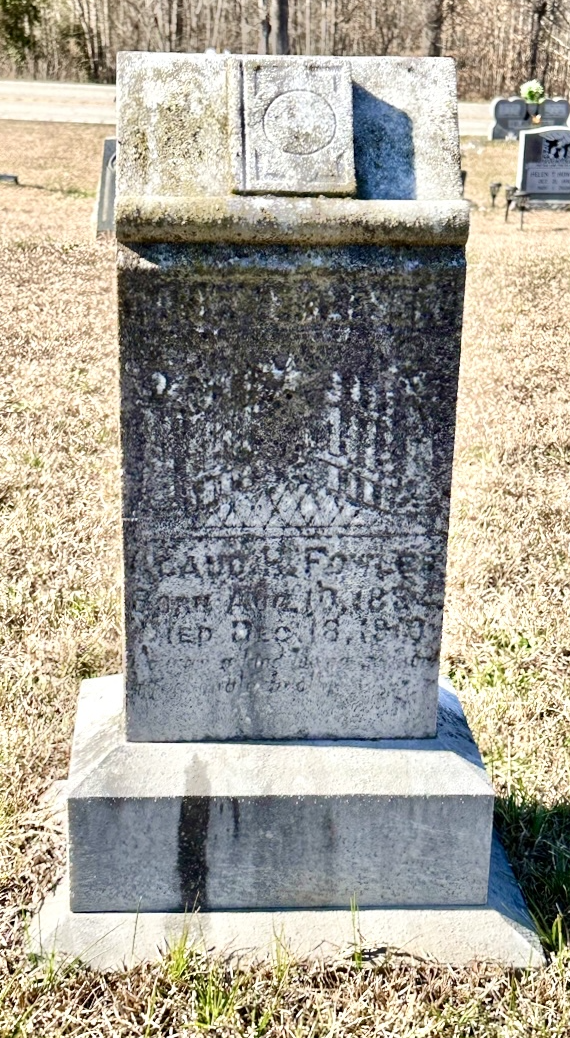
It was over. Curtis Ammons would walk away a free man while Claude Fowler would forever lie under a mound of red clay dirt in the graveyard at Gilead.
WHO WAS JEFFERSON CURTIS AMMONS?
Jefferson Curtis Ammons was born September 4, 1886 in Madison County, North Carolina. He was the son of W. E. Ammons and Sarah White.
Mae Gallman (1888-1985) was the daughter of Daniel George Gallman and Mary Cudd.
In 1910, the Gallman family lived in the same Pinckney township as Claude Fowler. Was Mae Gallman one of the young ladies Claude and Curtis visited the day of the murder?
Curtis Ammons married Mae Gallman. Their first child, a daughter, was born June 17, 1912.
The couple had three daughters and one son. Their son, James Curtis Ammons, (b. 1917) married Marjorie Fowler (1922-2004), daughter of Albert Fowler (1890-1955) and Delphia Fowler (1897-1987).
Albert Fowler and Delphia Fowler were first cousins, and descendants of Henry Ellis Fowler (1746-1808) through his son Godfrey Fowler (1773-1850).
Jefferson Curtis Ammons died July 9, 1955: forty-four years, six months, and twenty-nine days after he ended the life of Claude Fowler.
INJUSTICE FOR MURDER
In my research, I have seen many instances when white men were either not convicted or served very little time for the murder of other white men.
In the early 1900s, there was a strong cultural emphasis on personal honor in the South. Certain killings — those resulting from perceived insults or disputes — were often seen as justifiable.
Juries composed entirely of local white men often declined to find a fellow white man guilty of murder if a defendant could convince them the killing was justified. Self-defense and defending one’s property or honor were reasons the jury was highly likely to acquit.
Like today, justice then was not always fair. The guilty sometimes walked away as free men, while innocent men were convicted and spent decades in prison, or even worse, were executed for crimes they did not commit.
A LIFE CUT SHORT
I never got the chance to ask my grandfather how he felt when his older brother Claude was killed. My great grandparents, Gil and Lura Fowler, surely felt pride of their son and his career as a fireman turn to grief when his life ended.
I can almost hear her cries of heartbreak when Grandma Lura was told her son had been murdered. I can almost see her fall to her knees, legs too weak to hold up a body that became limp from anguish. Sorrow must have washed over Grandpa Gil at the sad news that his son was no more.
Curtis Ammons, in a moment of uncontrolled rage, had ended the life of Claude Fowler.
 THE FOWLER FAMILIES OF UNION COUNTY, SC