March 8, 1862. George Gresham of Wilkes County, Georgia put pen to paper and signed his name to his Last Will and Testament. Four days later, he enlisted in the Confederate Georgia Infantry. Eight months later, he was dead.
Who was this southern man, turned soldier from the south, buried far from home and hearth?
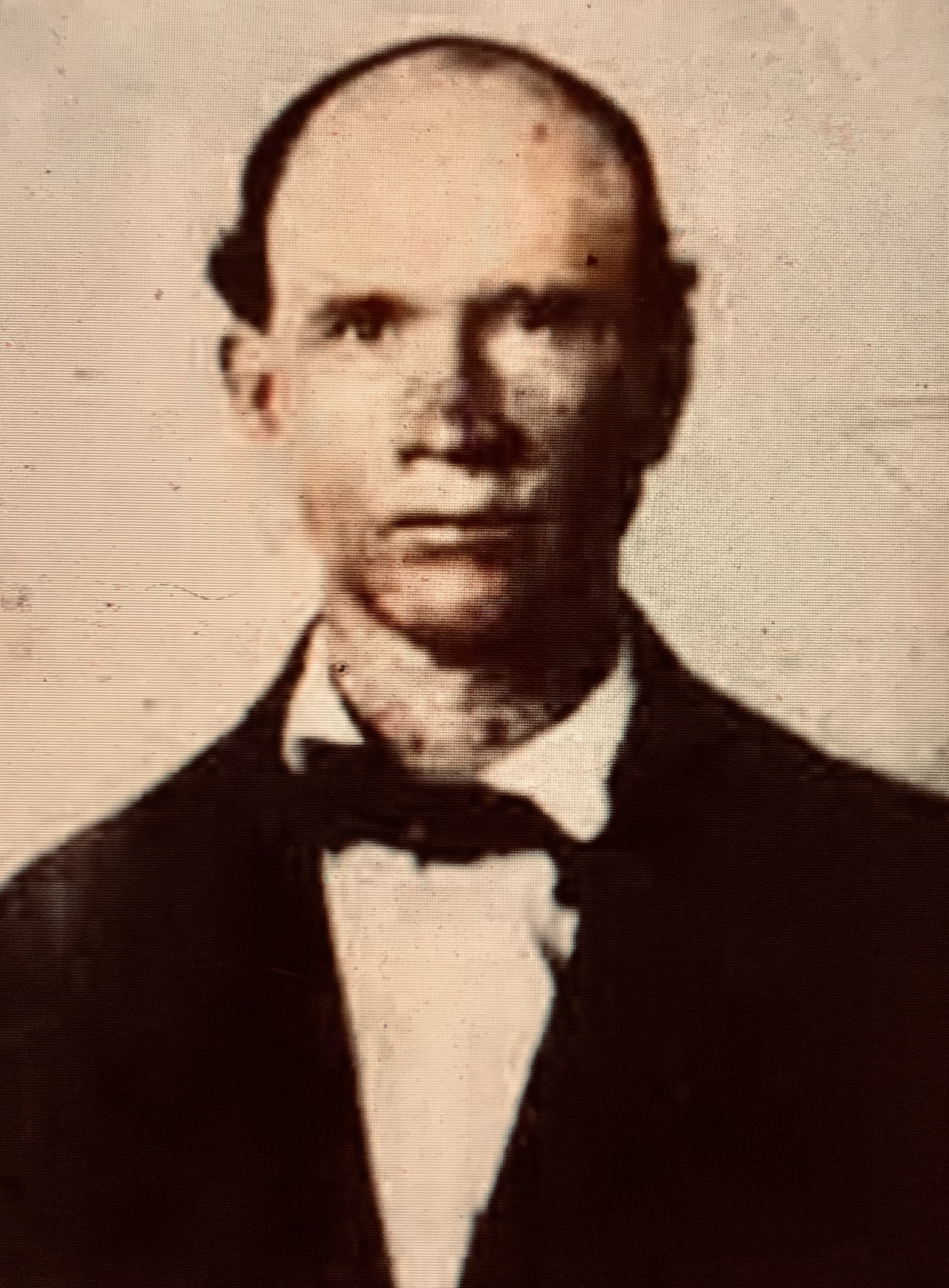
Born in 1818 in Georgia, son of Kauffman Watts Gresham and Temperence Ivey, husband of Nancy Sanders Quinn, father of six sons bookended by two daughters:
- Lucy Ann Gresham (1847–1907)
- Edward Euselius Gresham (1849–1929)
- Benjamin Watson Gresham (1851–1940)
- Rufus Quinn Gresham (1855–1942)
- George A. Gresham (1857–1910)
- John Kauffman Gresham (1858–1907)
- William West Gresham (1860–1941)
- Ada Temperence Gresham (1861–1862)
It is fortunate for all researchers of George Gresham that there is an abundance of military records to peruse. It is perhaps unfortunate that the documents — concise and straight-forward at the beginning — evolve into speculation and hearsay; thus, the fate of Private Gresham is hinted at but not entirely clear.
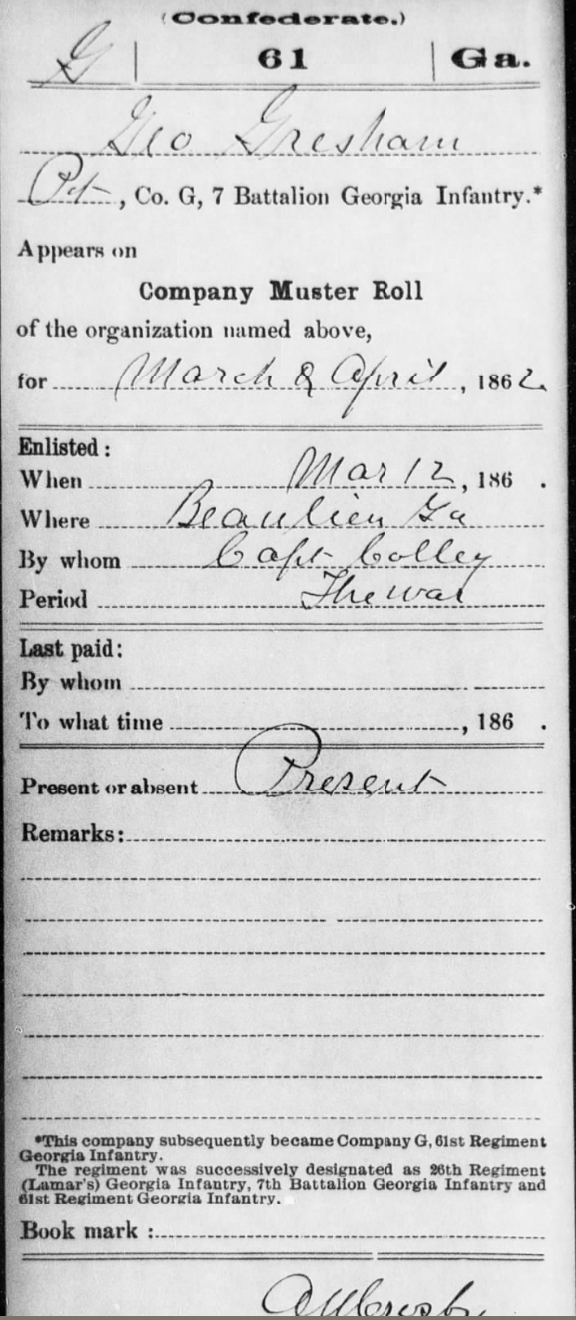
George Gresham traveled to Beaulieu, Georgia and enlisted under Captain Colley in the 61st Regiment Georgia Infantry Company G on March 12, 1862.
Dating back to a land grant of 1737, the Beaulieu Plantation was located on the Vernon River 12 miles south of Savannah. John Schiley and his family, owners of the home and its lands since 1854, were forced to leave and turn over the property to the Confederate government when the Civil War began.
The Beaulieu Plantation became the Beaulieu Battery under the command of Robert E. Lee, and it was here where George Gresham entered into military service in 1862.
The documents below attest to the enlistment date of Private George Grisham, the location and officer of enlistment, the Regiment and Company. The period of enlistment — “the war” — was both an ambiguous and ambitious commitment.
The Company Muster Rolls below confirm that Private Gresham was “present” from March 12 until October 31, 1862.


George Gresham’s health declined over the next months. He was reported to be “absent, sick” for the Nov/Dec 1862, Jan/Feb 1863, and Mar/Apr 1863 Company Muster Rolls.

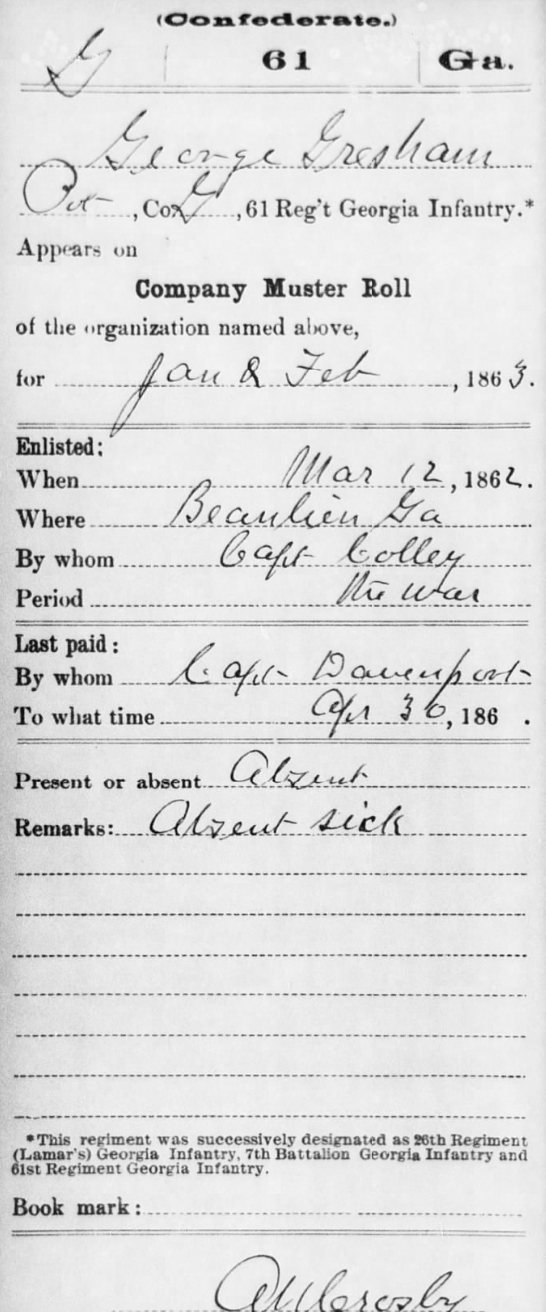

Still missing from his regiment in the spring of 1863, half-hearted explanations began creeping into the Muster Roll Calls:
“absent, sick; was left at Winchester November 1862, has not been heard from since”
and
“absent, wounded, supposed to be dead“
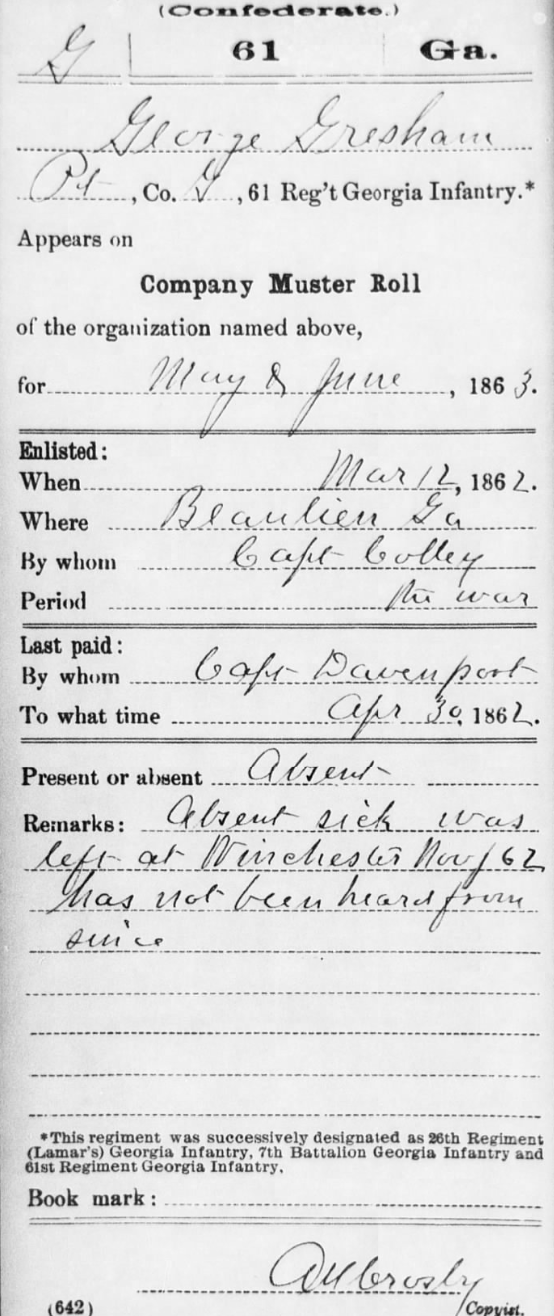
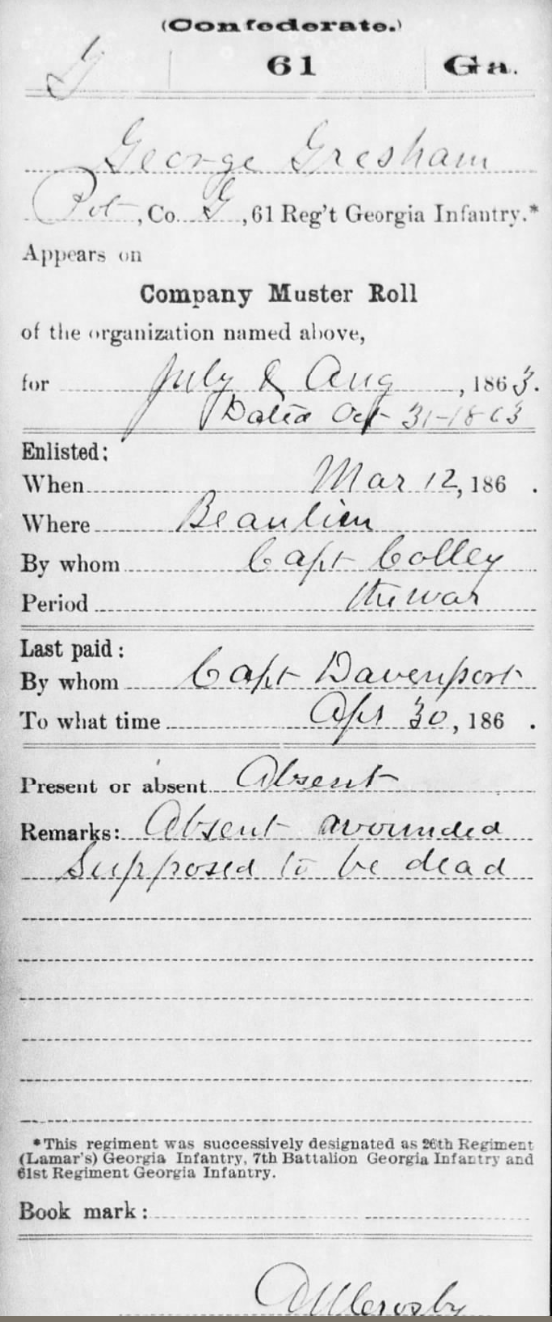
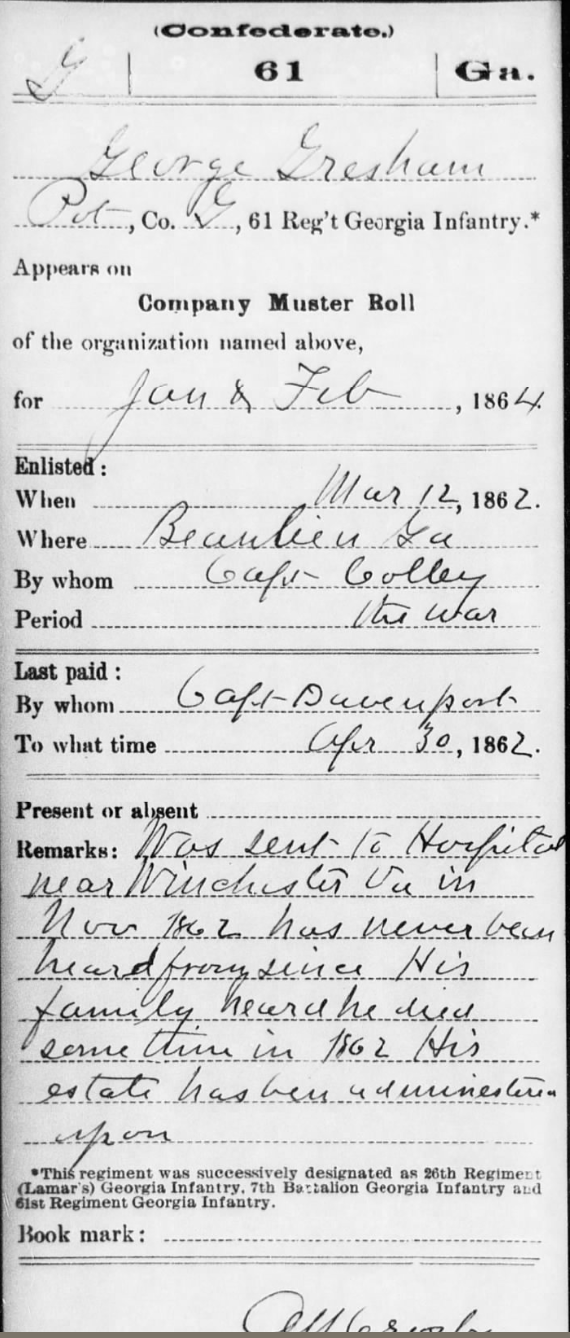
Rumors of his death notwithstanding, George Gresham was reported as “absent, sick” in the Company Muster Rolls of Sept/Oct 1863 and Nov/Dec 1863.
That would change in the new year. The Jan/Feb 1864 Company Muster Roll stated “was sent to hospital near Winchester Va in Nov 1862, has not been heard from since. His family heard he died sometime in 1862. His estate has been administered upon.“
The family of George Gresham back home in Georgia heard of his death, and accepted it as truth. It took the Confederate army fourteen months to finally acknowledge the possibility that the soldier they left behind in Winchester was no longer among the living.


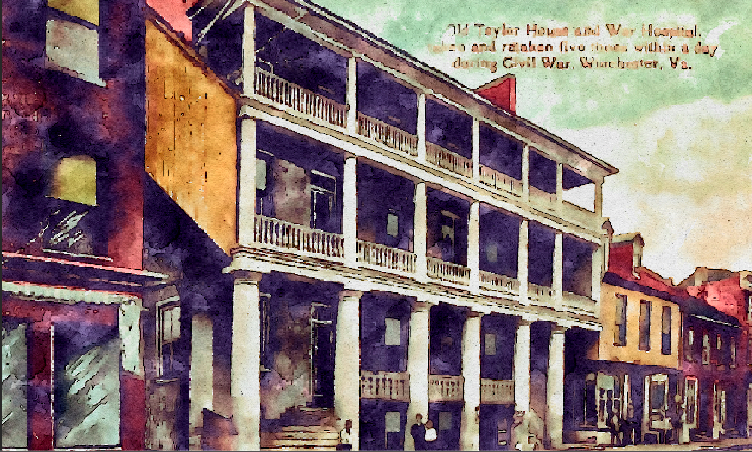
Bushrod Taylor built a hotel on the main street in Winchester, Virginia in the mid 1840s. The hotel was used as a military base for General Stonewall Jackson early in the war. It was later used as a military hospital for both Confederate and Union soldiers.
Was this the hospital that housed George Gresham during his illness?
The name of George Gresham was on an undated List of Deaths in the Confederate Hospital at Winchester, Virginia.
Cause of death: Febris Typhoides (Typhoid Fever).
Date of death: December 5, 1862.
On August 10, 1863, widow Nancy S. Gresham filed a claim for settlement with the Office of the Confederate States Auditor for the War Department.
An undated Bounty Pay and Receipt Roll for Private George Gresham verified that $50 bounty pay was due to him or his estate.


Document showing receipt of Nancy Gresham’s claim for the death of her husband George Gresham.

George Gresham had the foresight to realize the possibility of his death in battle, and the Last Will and Testament that he left behind was presented by his widow Nancy to the Court of Wilkes County, Georgia.

State of Georgia, Wilkes County: Document admitting the Last Will and Testament of George Gresham into record on April 6, 1863.

Nancy Gresham was granted Executorship by the court over her late husband’s estate on July 18, 1863.

Documents related to the military service, death, and estate settlement of Private George Gresham:

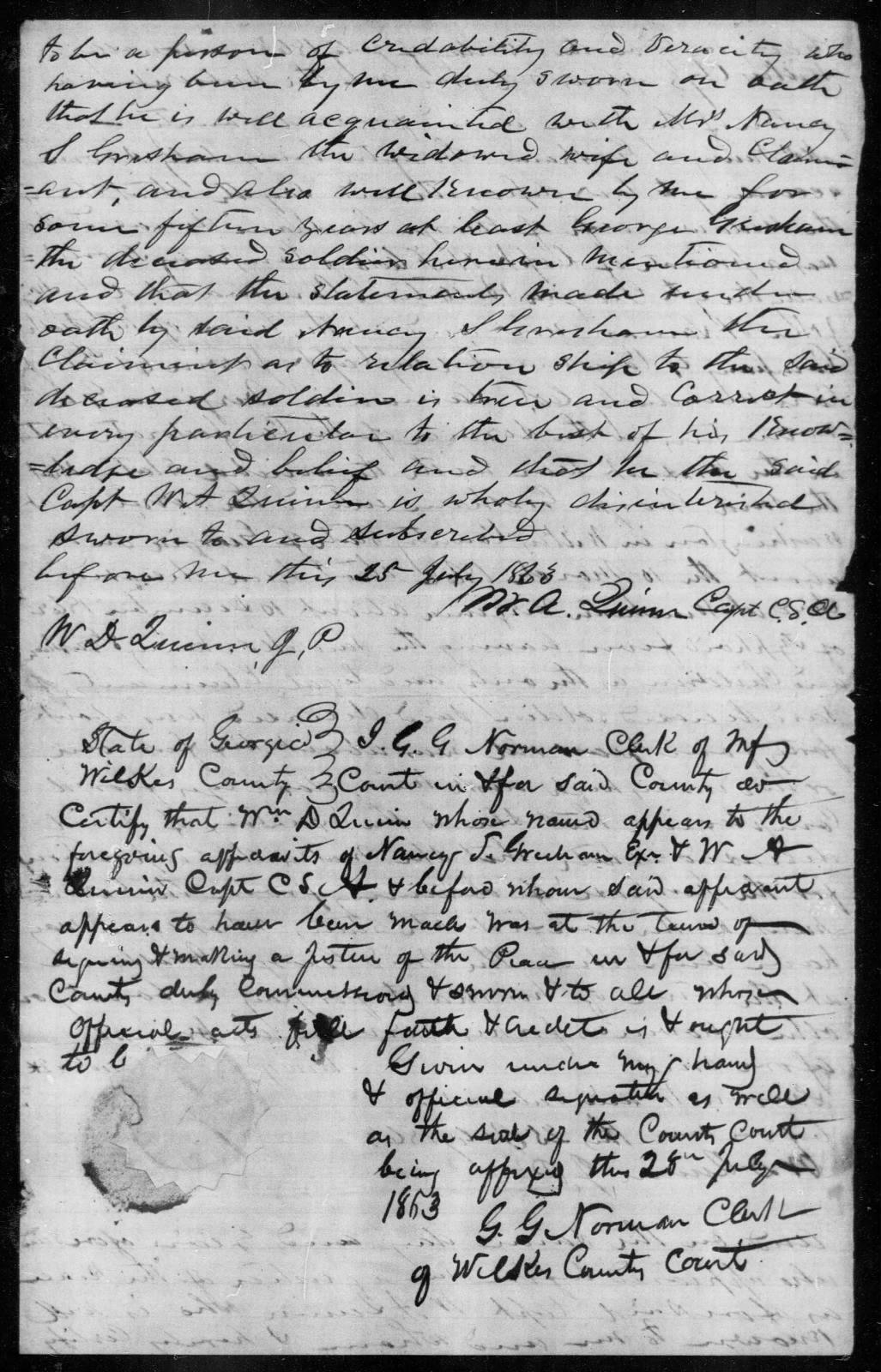
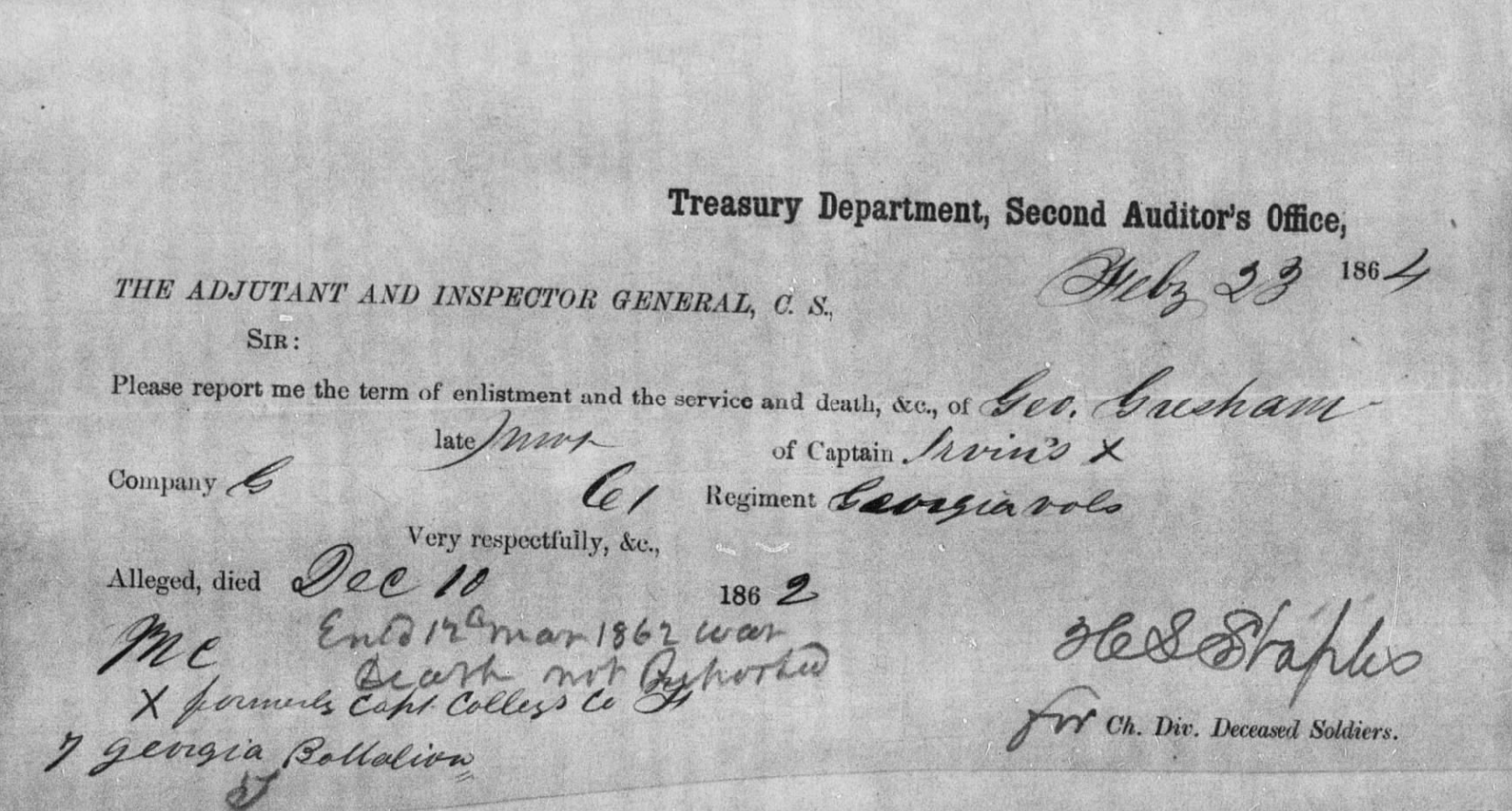
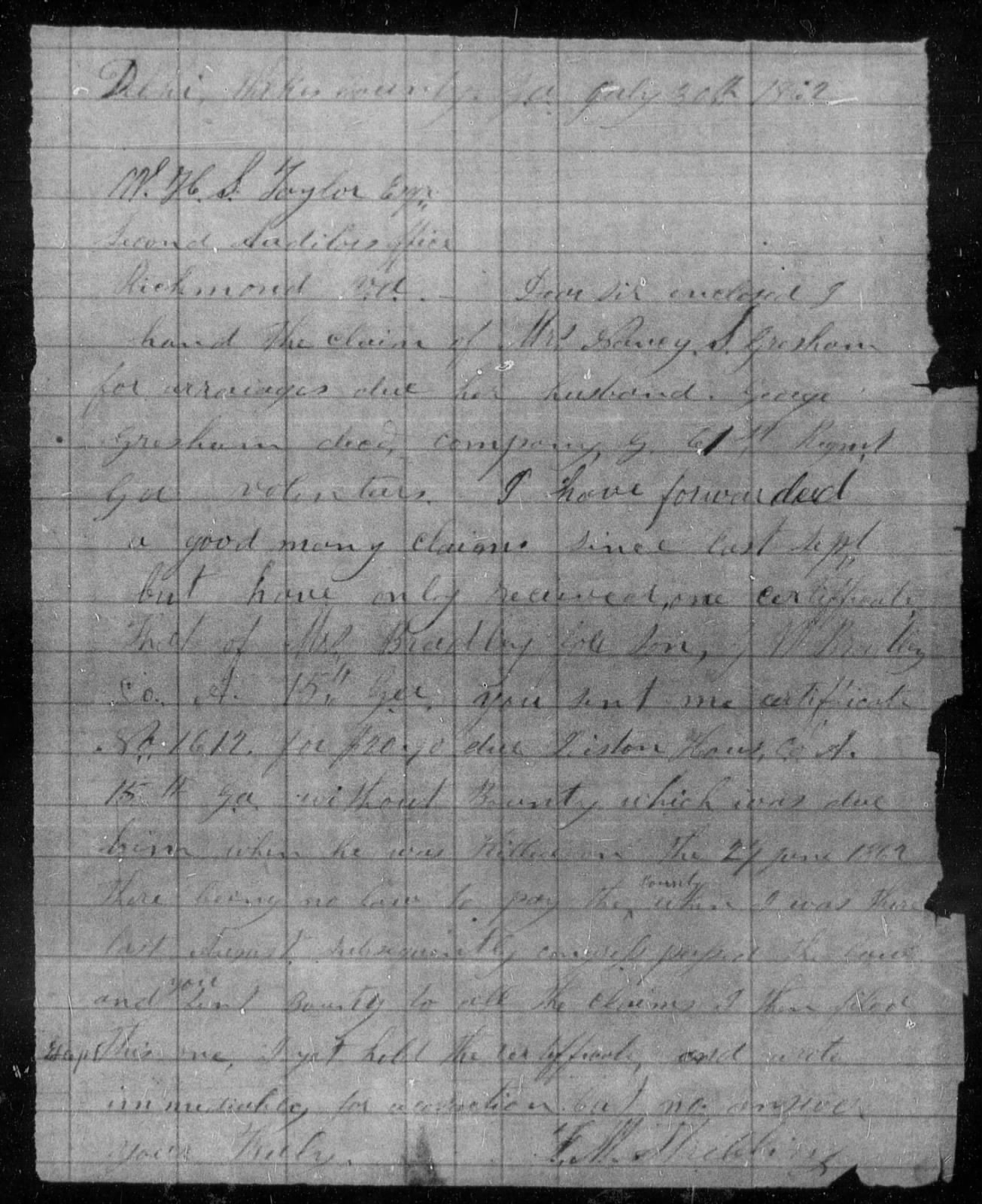
Below is a document dated April 1864 stating that the death of George Gresham was not reported.

George Gresham did not return home from the war. Reading between the lines of the military records, it must be presumed that he died in the hospital at Winchester, Virginia.
If the above is true, then the next question has to be “where is his grave?“
Although it is my belief that George Gresham died in Winchester, Virginia, I have not found any documentation of his burial.
In searching for the final resting place of George Gresham, I stumbled upon an entry on Find a Grave for his memorial in the Stonewall Jackson Memorial Cemetery in Lexington, Virginia. There are 144 Confederate soldiers buried in this cemetery which was originally called the Presbyterian Cemetery and is also referred to as Oak Grove Cemetery.
George Gresham died in Winchester, Virginia —127 MILES AWAY from Lexington, Virginia.
I find it extremely unlikely that the body of George Gresham was carried over a hundred miles away — during a civil war awash in bloodshed — with a confederate graveyard at hand.
Instead, it is my belief that someone confused the Stonewall Jackson Memorial Cemetery in Lexington, Virginia with the Stonewall Confederate Cemetery in Winchester, Virginia.
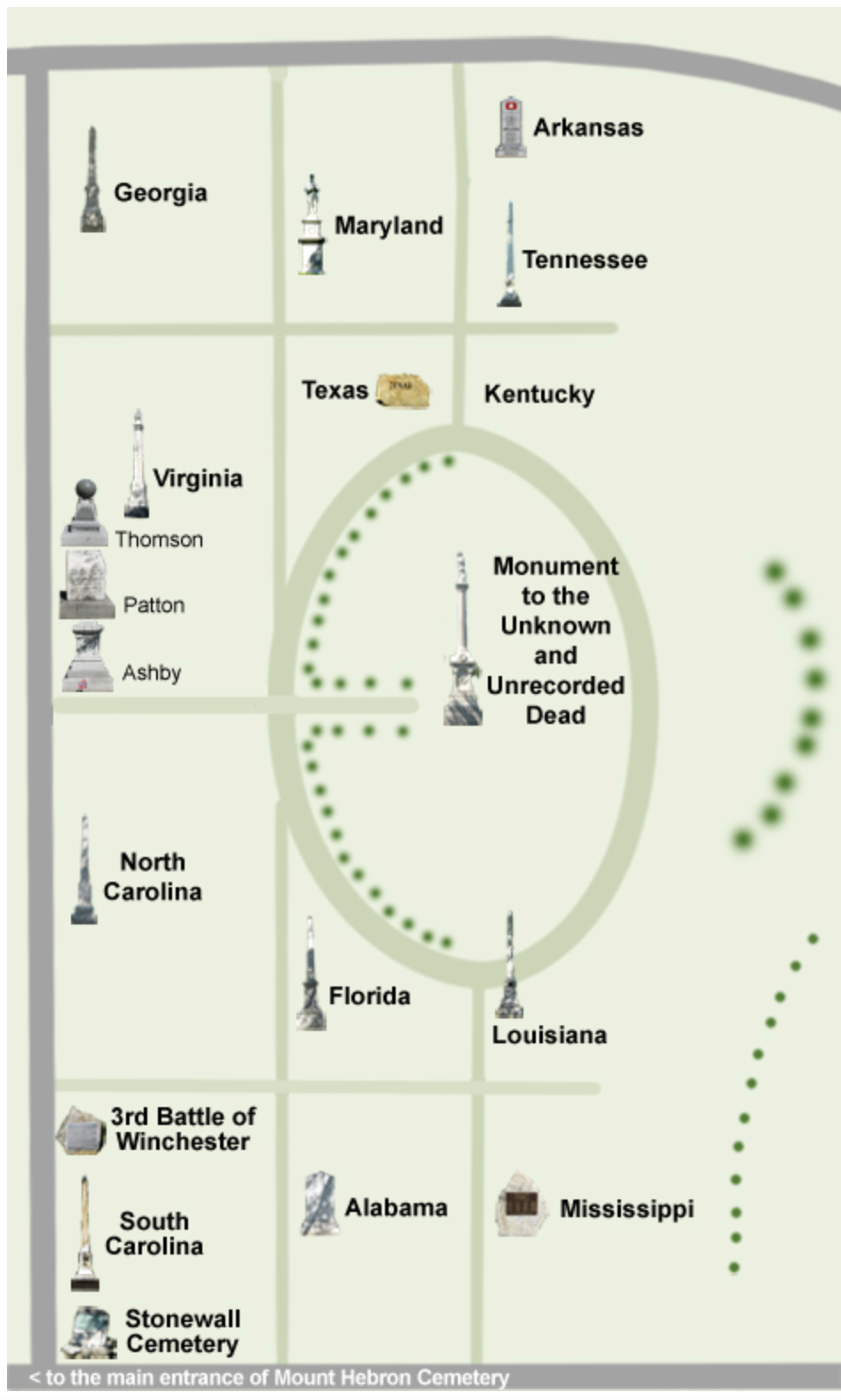
There are over 3000 Confederate soldiers buried at the Stonewall Confederate Cemetery (a subsection of the Mount Hebron Cemetery) in Winchester. Some died on battlefields near Winchester; others — like George Gresham — died in hospitals in Winchester.
The Stonewall Confederate graveyard is the finest I have ever seen.

Each State has its own unique and beautiful monument standing guard over the men who lie beneath … each monument standing upright and at attention in respect for the men who fought and died for their country and her cause.
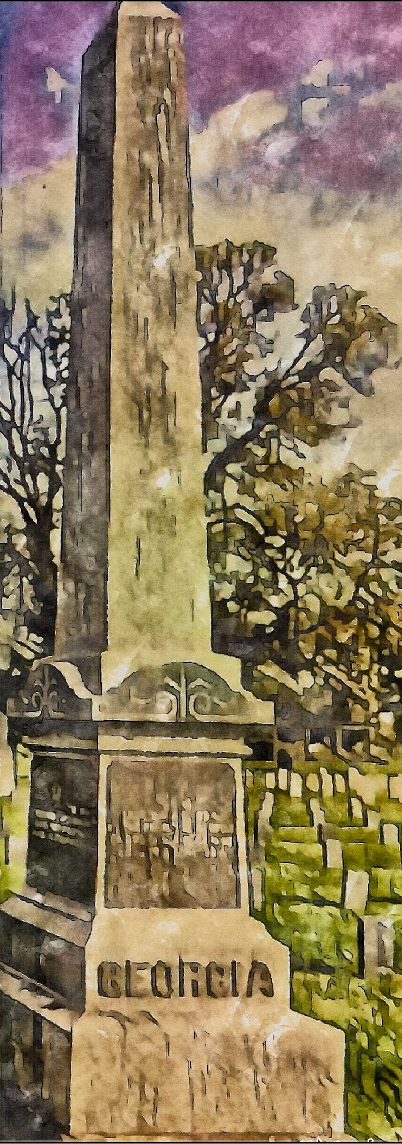
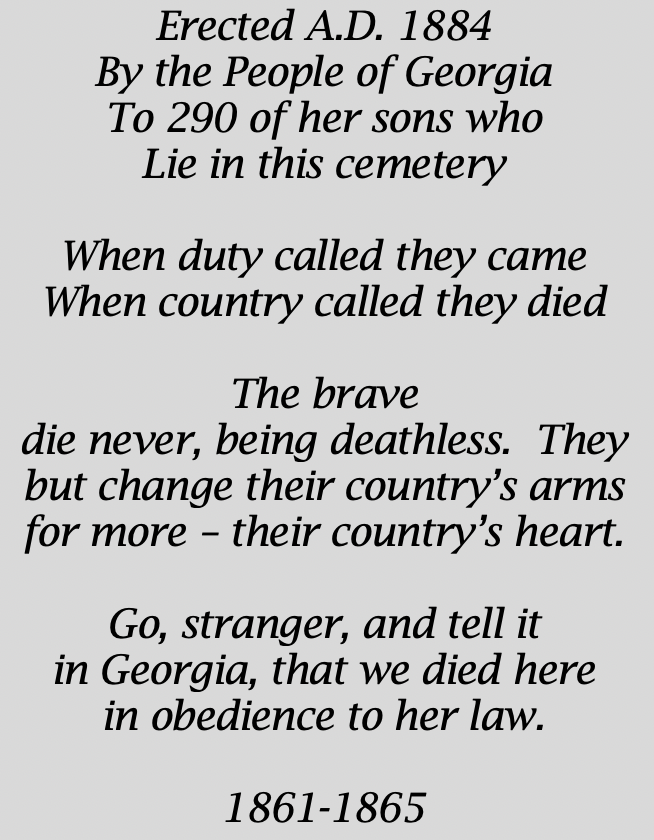
The monument for the State of Georgia was put into place in 1884. Each side is engraved with words to honor the men who died fighting for their country, the men who sleep deeply beneath in the most Holy Ground.
More than 800 Confederate soldiers who lie in the Stonewall Confederate Cemetery in Winchester are unidentified. Was George Gresham one of many men laid to rest with no name on a headstone?
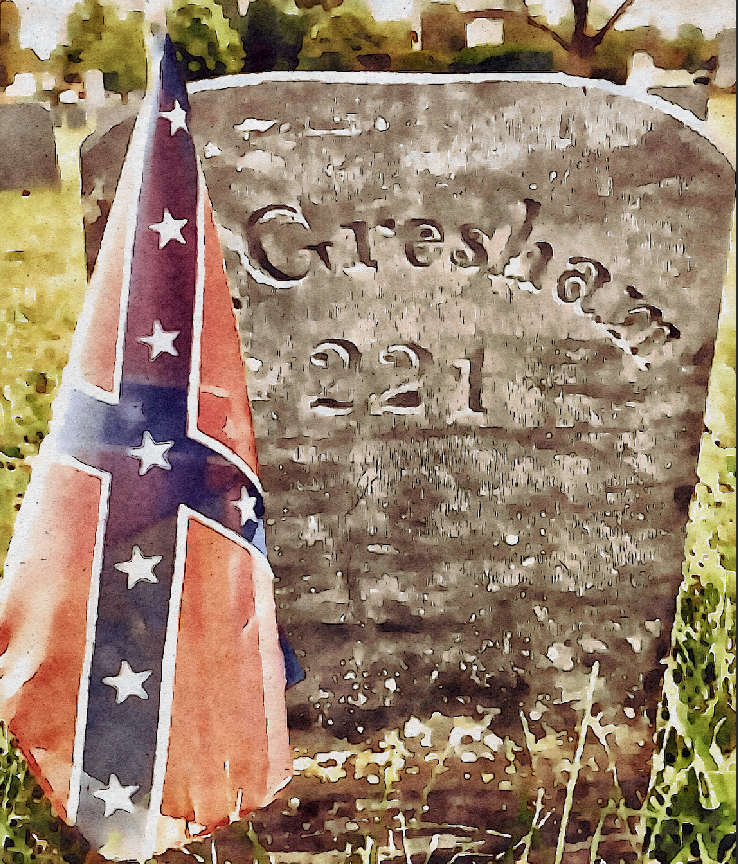
There are two headstones in the State of Georgia section of the Stonewall Confederate Cemetery with the name “Gresham” engraved deeply into the rock. Do the bones of George Gresham lie beneath one of these markers?
I cannot answer that with one hundred percent certainty, but I believe George Gresham and one of his kinsmen lie near each other in this graveyard. I believe the final resting place of a brave soldier has been, finally, found.