Gazaway Fowler married well. Yes, he came from a solid, comfortably established family. His people were steady folk, respectable, with land enough and a name that held its own in courthouse ledgers. But there is no denying he married up when he and Elmira A. Smith walked down the aisle to the altar on January 9, 1855.
Gazaway Fowler was the second son born to Thomas Gillman Fowler and Susannah Hames, the date of his birth — January 1, 1827– carefully written in the family Bible. He was raised in the big house that his father had built by slave labor on the outskirts of Jonesville.
A link to:
THOMAS GILLMAN FOWLER (1798-1880), son of Godfrey Fowler
Elmira belonged to a lineage whose name carried weight, a family marked by land measured in the thousands of acres, influence, and the quiet authority that comes from generations of standing. In choosing her, Gazaway stepped into a world just a shade grander than the one he had been born to.
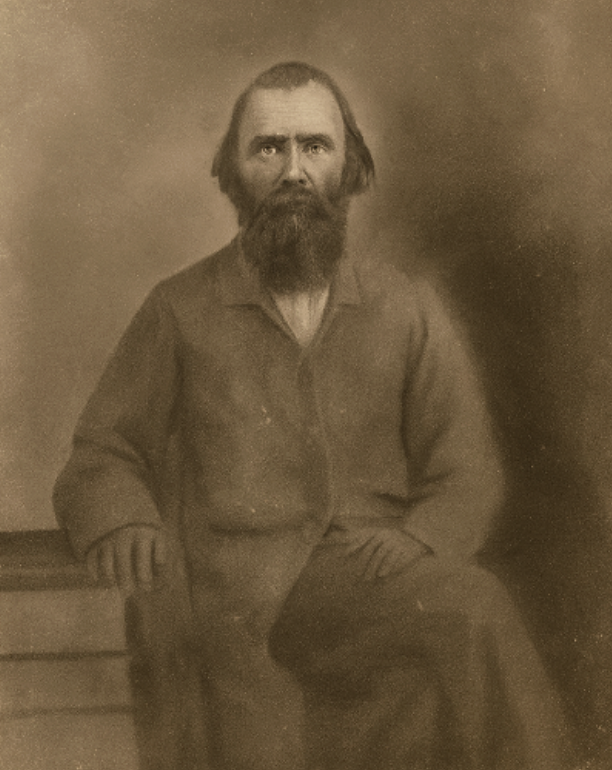
The name Gazaway (or Gassaway, Gasaway, Gazaway) was an unusual one in the Henry Ellis Fowler family line.
Union County census records 1790-1860 show several Gazaway families; the early heads of households were James Gazaway and his sons Caleb, and James. The Gazaway family immigrated from England to Anne Arundel County, Maryland in the 1600s, and later into York, Union, and Pickens Counties of South Carolina.
Was there a connection between the Fowler and Gazaway families? I have not (so far) found anything linking the two famiies. Maybe Thomas and Susannah Fowler just liked the name Gazaway. I will continue to search for a reason for the name.
THE WOOING OF ELMIRA SMITH
In the rolling upcountry of South Carolina, the children of Thomas Gillman Fowler and Susannah Hames grew up with advantages uncommon in their time and place. Their sons and daughters were educated. Most, if not all, could read and write.
Gazaway Fowler, the second son, was no exception. He could read, write, reckon, and navigate the world with the quiet assurance of a man raised in a household that prized learning.
Even so, one may wonder how he wooed and won the daughter of a wealthy planter in anther county.
To answer that, the story must widen — leaving the familiar red clay of the Fowlers’ land and following the winding road toward the Smith family, whose roots ran deep along the Broad River.
Elmira Smith was the daughter of William “Broad River” Smith, a man whose landholdings, reputation, and influence placed his family among the more prosperous planters of the region. Her world was shaped by abundance, by the rhythms of a large agricultural estate, and by the expectations that came with being a Smith.
Yes, I am straying off the research path of Gazaway Fowler in order to take a closer look at the woman he married and the family from which she came. It is a winding road, this in-depth study of the Smiths, but worth the journey.
WHO WAS ELMIRA SMITH, WIFE OF GAZAWAY?
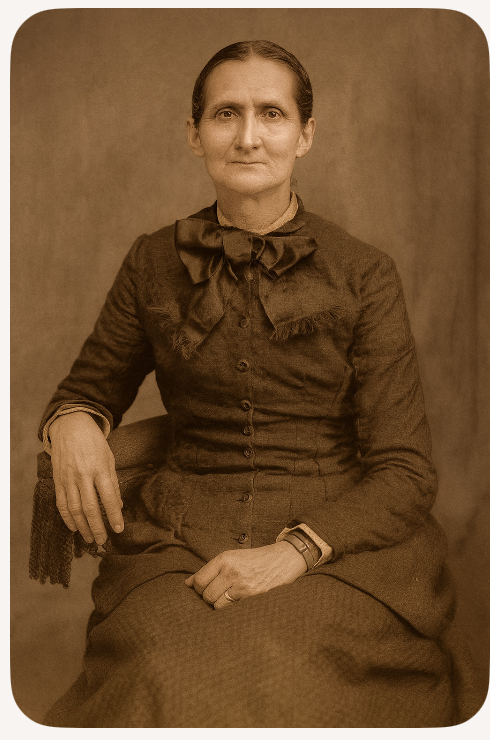
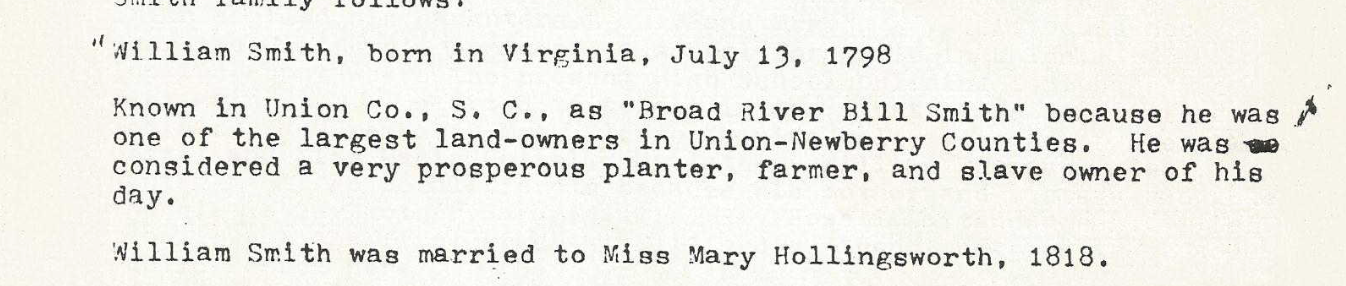
William S. “Broad River Bill” Smith was born in Virginia on July 13, 1798. I do not know the Smith family line from which he descends. There are hundreds of documents archived in York, Union, Fairfield, and Newberry counties which could relate to William Smith. Or not. It is a common name after all. Undocumented on-line family trees providing a father for William Smith are not even crossing my research radar.
It is known for certain that William Smith was in Union County, below Carlisle near the Broad River. He was one of the largest land-owners in the area, having thousands upon thousands of acres.
As a young man in 1820, he had one enslaved soul in his household. That number increased to 4 in 1830, 34 in 1840, 62 in 1850, and 92 in 1860.
He married Mary Hollingsworth in 1818. She was born in 1803, daughter of Benjamin Hollingsworth formerly of Delaware.
Their children:
- Aoma “Omie” Smith (1819–1825)
- James Smith (1820- before 1830)
- Annie Smith (1822–1825)
- Frances “Frankie” Smith (1825-1892)
- Amanda E. Smith (1827–)
- William S Smith (1829–1849)
- Mary Jane Smith (1831–1894)
- Selina Emeline “Lena” Smith (1834–1901)
- Cornelia Catherine Smith (1836–1917)
- Elmira Ann Smith (1839–1911)
- Medora Drucilla “Dora” Smith (1841–1915)
- Martha (Mattie) L. Smith (1845–1918)
ELMIRA’S BROTHERS AND SISTERS
Every son and every daughter of William Smith has a story. Whether a life cut short by childhood illness or a long life well-lived, each story deserves to be told. This is not the place, nor the time, to explore them in full. Yet a few must be mentioned — if only to let their names breathe again in the telling.
“In my end is my beginning” was the deeply held belief of Mary, Queen of Scots. It is an appropriate introduction…
NEGLECTED AND NEARLY SWALLOWED BY THE WOODS…
…there is a graveyard not far from the Broad River’s slow south of the sleepy little town of Carlisle. Locals call it the Broad River Bill Smith cemetery, though few have walked its path in years. The forest presses close around it now, as if trying to fold the place back into itself.
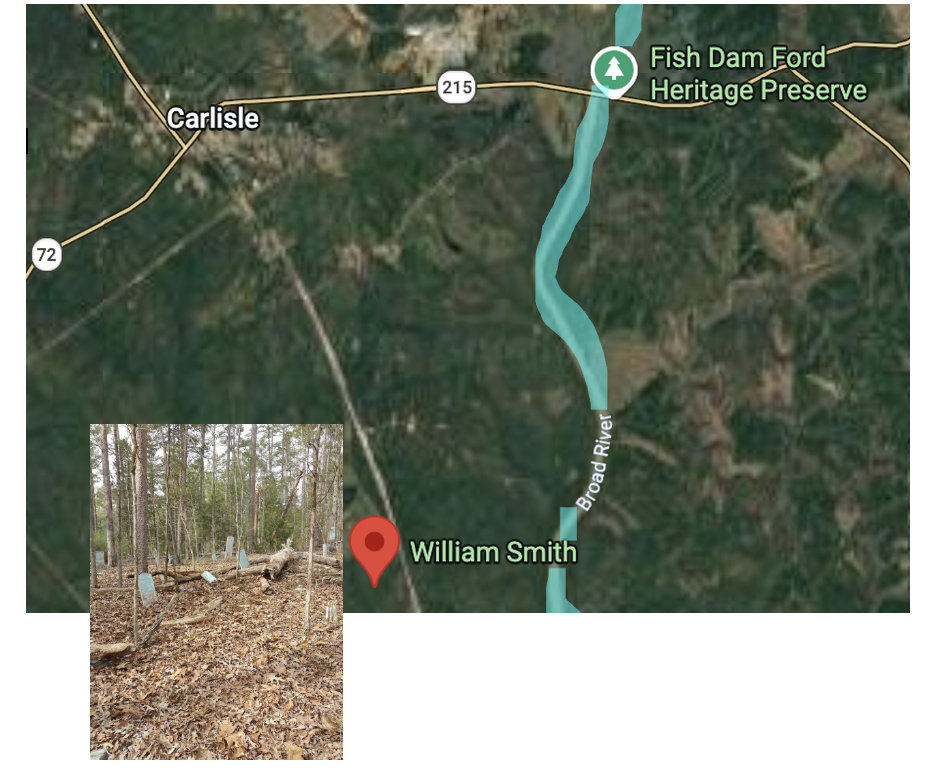
Here lie William Smith—”Broad River Bill“—along with his wives, Mary and Lucy, and several of their children. Stones lean at odd angles, their inscriptions softened by time and moss. yet the ground still feels inhabited by the lives once rooted along this riverbank.
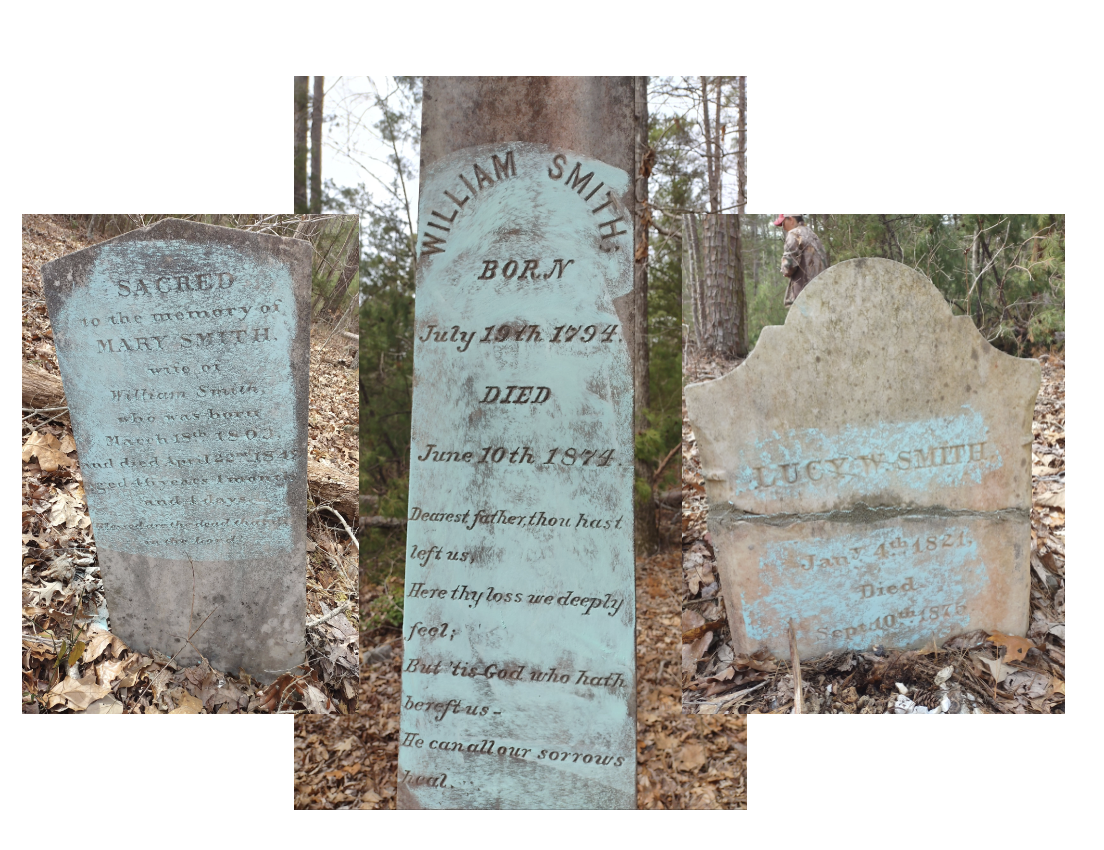
Standing there, you sense the outlines of a family that shaped this stretch of country, their stories held in the hush between the trees.
Six-year old Aoma and three-year old Annie died in 1825, only two months apart. There was an epidemic in South Carolina in 1825–1826, identified as a typhoid form of catarrhal fever. Although primarily in the Camden area, this disease with high fatality rates may have made its way into Union County. Did the sisters die from this disease or did some other misfortune put them into their early graves?
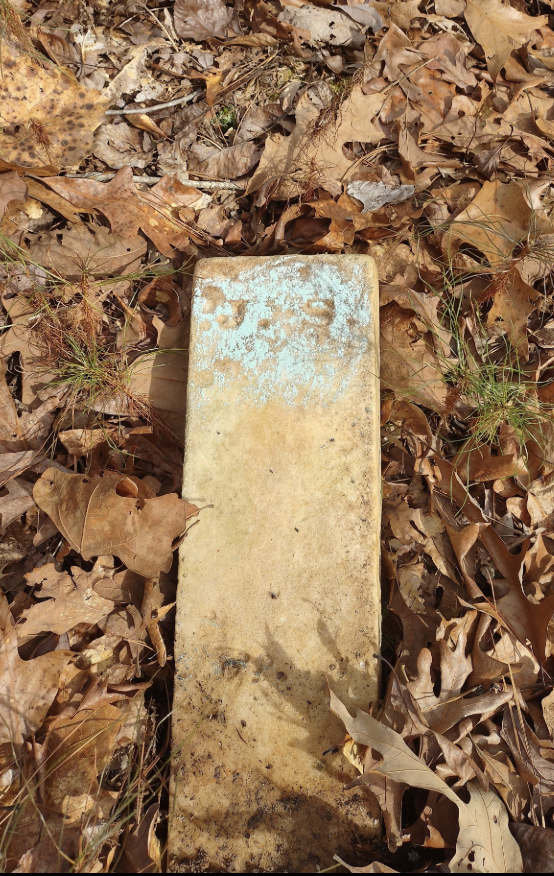
Son James was born in 1820. The headstone with the initials “J. S.” and no dates very likely marks the place he was laid to rest.
The simple headstone lacking the elaborate engraved tributes of his sisters who lie nearby suggests to me that James may have been the first child to depart this life.
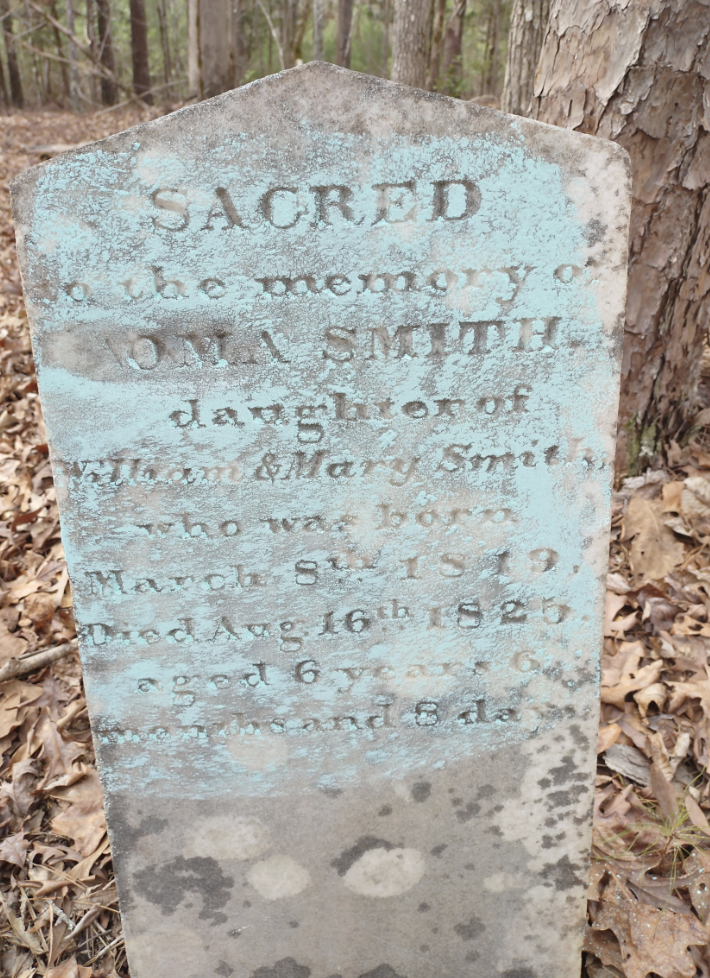
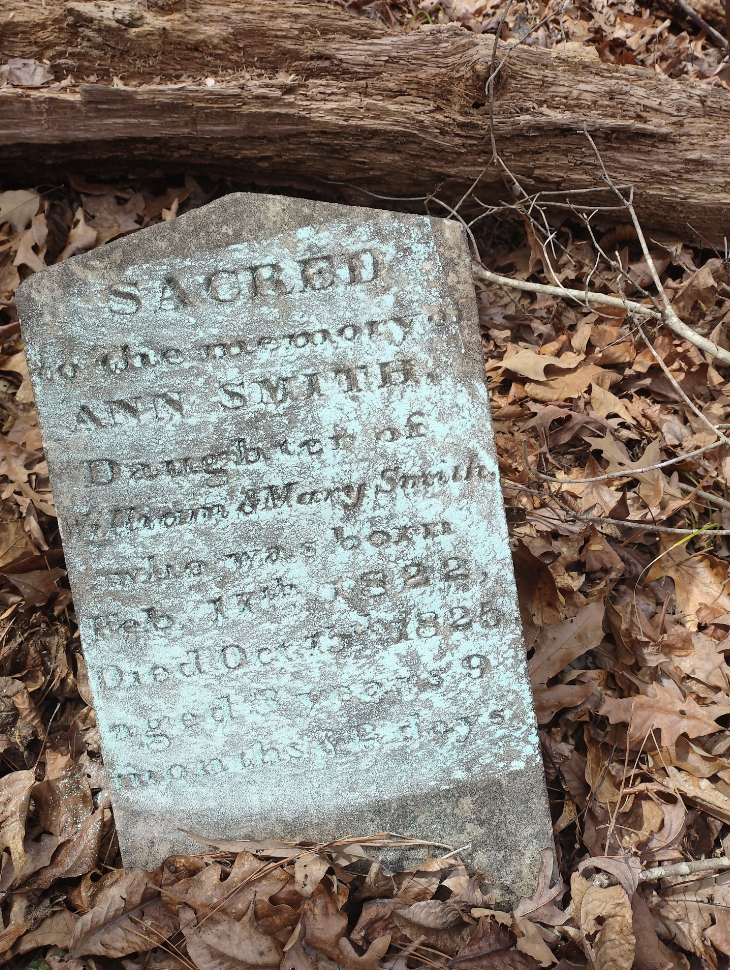
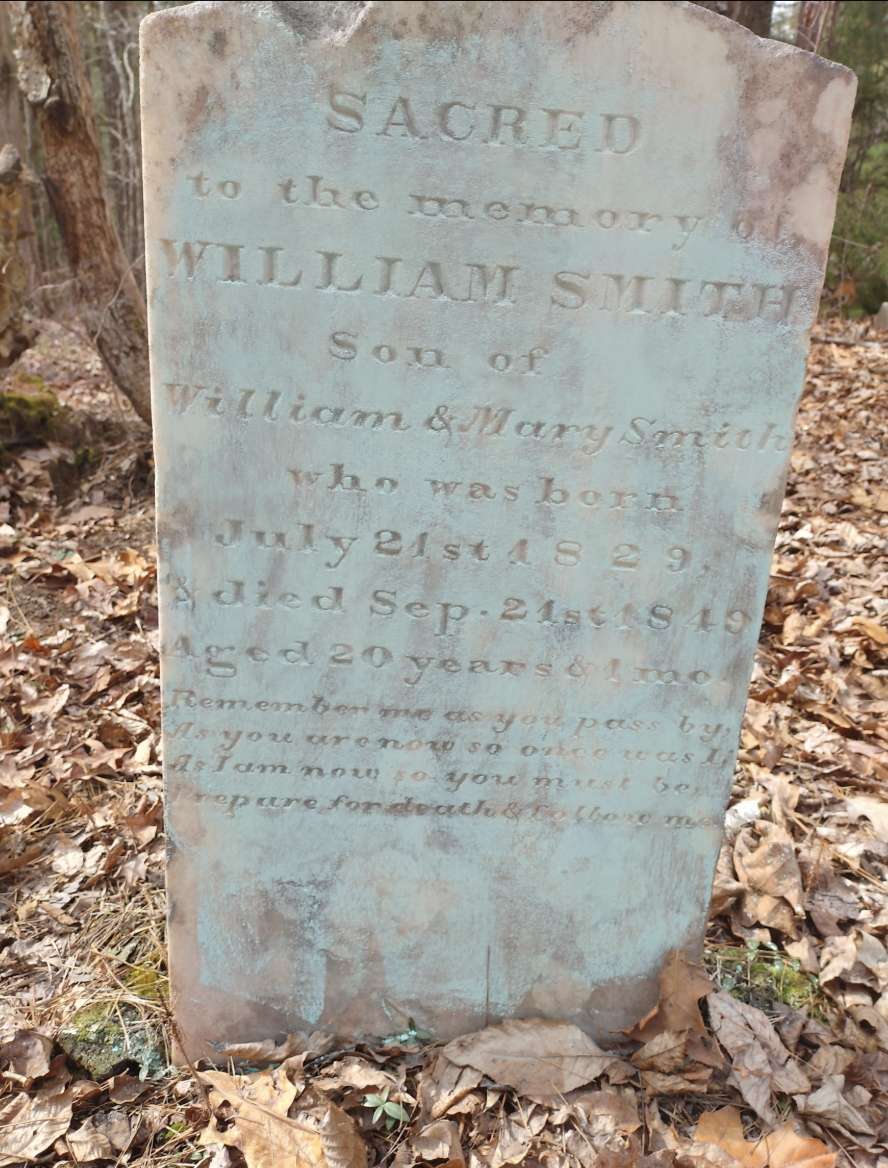
William, his father’s namesake, was born in 1829. No doubt, the hopes of the father were placed on the future of this son. But, alas, William the son was not to outlive William the father.
The young man, only twenty-years old, met his end on horseback, struck by lightning in a storm that rolled through the landscape as the hot, humid summer slipped into autumn.
His death in 1849 was sudden, the kind that leaves silence in its wake, and he was laid to rest in the little graveyard near the river Broad.
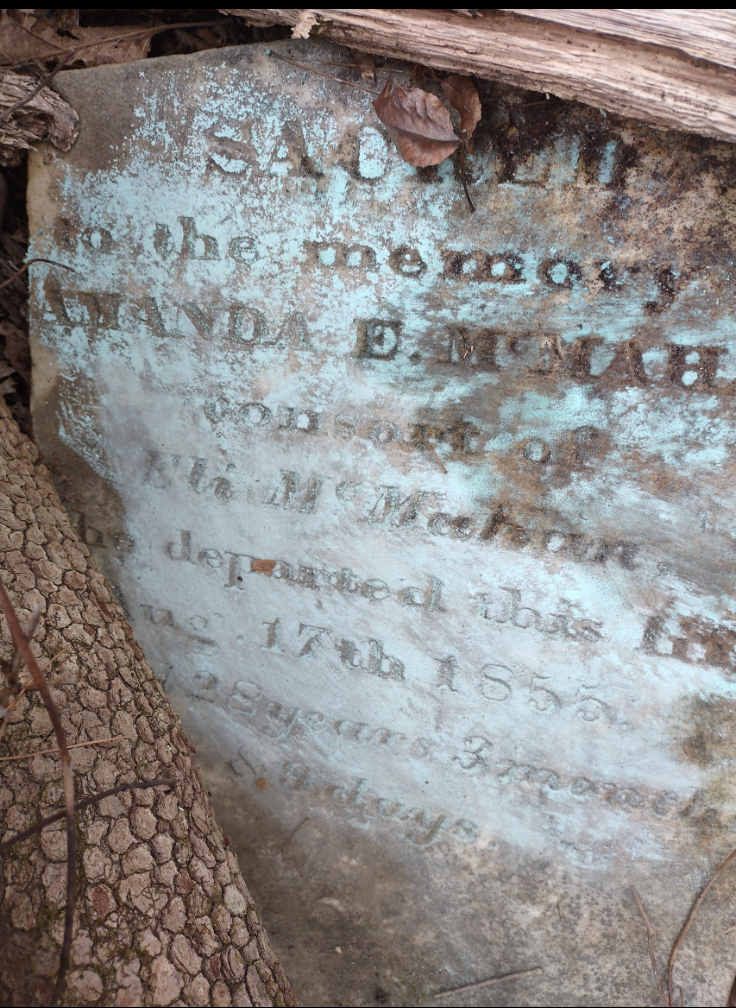
Amanda E. McMahan, born on the eighth of May in 1827, rests in the graveyard near the river, her stone weathered but still legible beneath the shifting shade of the trees. It names her the consort of Eli McMahan, a title of her time, and little else.
I believe she was a daughter of William and Mary Smith, though the records that might confirm it outright have thinned with the years. What remains is her presence here among them, her life ending on August 17, 1855, long before the Civil War reshaped the country she knew.
Her grave, quiet and unadorned, stands as one more thread in the Smith family’s story — a life not fully documented, yet undeniably part of the riverbank’s memory.
After the death of his wife Mary in 1849, William Smith married Lucy W. Boulware (1821–1875). She was the daughter of Allben Boulware (1786-1851) and the widow of David Pierce Crosby (1815-1849) of Fairfield County.
The children of William Smith and Lucy Boulware:
- Winfield S. Smith (1851–1880)
- Josephine L. Smith (1853–1924)
- Alice Carey Smith (1857–1920)
- Florence E. “Pet” Smith (1859–1929)
“The education and empowerment of women throughout the world cannot fail to result in a more caring, tolerant, just and peaceful life for all.“
-Aung San Suu Kyi-

To his credit, William Smith ensured that his daughters received an education far beyond what most girls in the antebellum South could expect. He sent his girls, the ones who agreed to go, to Salem Academy in Winston‑Salem, North Carolina.
Founded in 1772 by Moravian settlers, Salem was built on the conviction that girls deserved an education equal to that of boys. Sixteen girls and women made the original 500‑mile journey from Bethlehem, Pennsylvania, to establish the new community. Among them was 17‑year‑old Elisabeth Oesterlein, who became the first teacher of what would grow into Salem Academy and College.
By 1802 the school was accepting boarding students, and throughout the 19th century it expanded steadily in both size and curriculum. Salem Academy remains the oldest private school in North Carolina and one of the oldest girls’ boarding schools in the United States—a remarkable setting for the education of William Smith’s daughters.
DIARY OF A SMITH DAUGHTER: A TREASURE BEYOND MEASURE
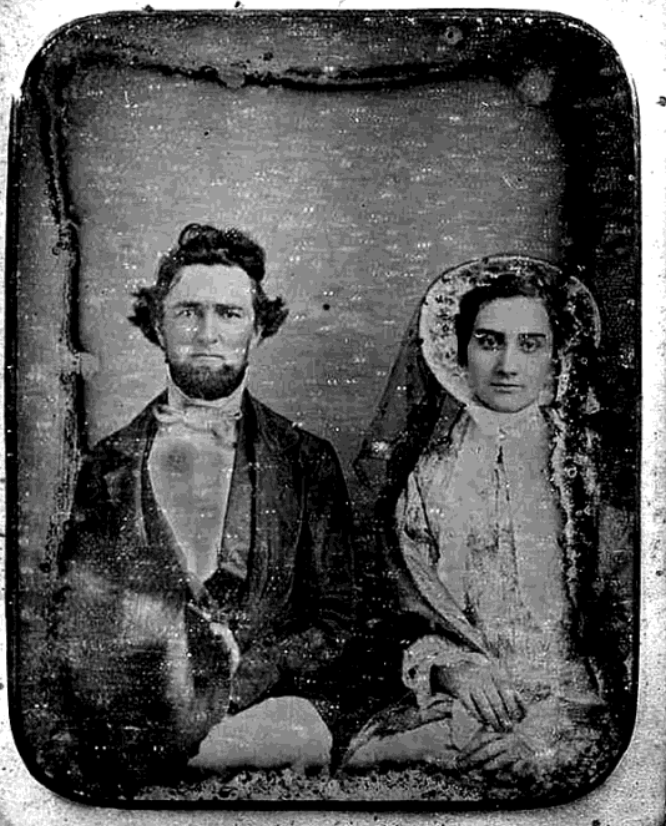
Cornelia Catherine Smith was born on August 19, 1836. I found her name repeated in no fewer than 151 online family trees, most of them insisting she was born in Spartanburg District. The error likely began with a simple mix‑up: a young girl named Cornelia Henry did live in Spartanburg, and our Cornelia Smith later married a man named with the surname Henry, becoming Cornelia Henry on her wedding day. Somewhere along the way, someone confused the two, and thanks to the ease of the “copy and paste” feature on Ancestry.com, the mistake spread until it became accepted as fact.
I do not believe Cornelia Catherine Smith was born in the county of Spartanburg. Research indicates she first opened her eyes in Union District, near the Broad River, close to a place once called Fish Dam — later renamed Carlisle in honor of the Reverend Coleman Carlisle (1770–1824). He was a Methodist circuit rider who began preaching on the Broad River Circuit in 1792.
Four things are known to be true about Cornelia Catherine Smith:
- She was an educated woman;
- She married William Lewis Henry (1823-1900) in 1855
- The couple made their home near Asheville in Buncombe County, NC
- From 1860 to 1868, through war and upheaval, Cornelia kept a diary.
A gift from the past now carries her voice forward. The three surviving volumes of her journal were carefully compiled by Karen L. Clinard and Richard Russell and published in 2008 as Fear in North Carolina: The Civil War Journals and Letters of the Henry Family.
It is a remarkable work — not only for its scholarship, but for the simple fact that Cornelia’s words endured long enough to be read again.
Cornelia speaks to us today from her grave. Each entry seems to rise slowly from the page, and I find myself lingering over every thought, every worry, every small joy she chose to record. Her diary captures the texture of daily life in the year leading up to the Civil War, the hardships she endured as the conflict deepened, and the long, uneven aftermath of a Confederacy that lost its cause on distant battlefields.
Most moving of all are the mentions she makes of her sister “Ell” and her husband “Fowler” — Elmira and Gazaway Fowler. Through Cornelia’s eyes, we glimpse the private grief of Elmira losing a baby whose name has slipped from the record, an infant born and gone between census years. We see Gazaway leaving for war, returning home on furlough, and then departing again — a rhythm that both confirms and complicates the sparse military traces he left behind.
Every word of Cornelia’s diary is a treasure. And perhaps it exists at all because William Smith, against the grain of his time, sent his daughters to be educated. Her voice — steady, observant, unflinching — is the proof of what that decision made possible.
WILLIAM SMITH AND LEGAL DOCUMENTS
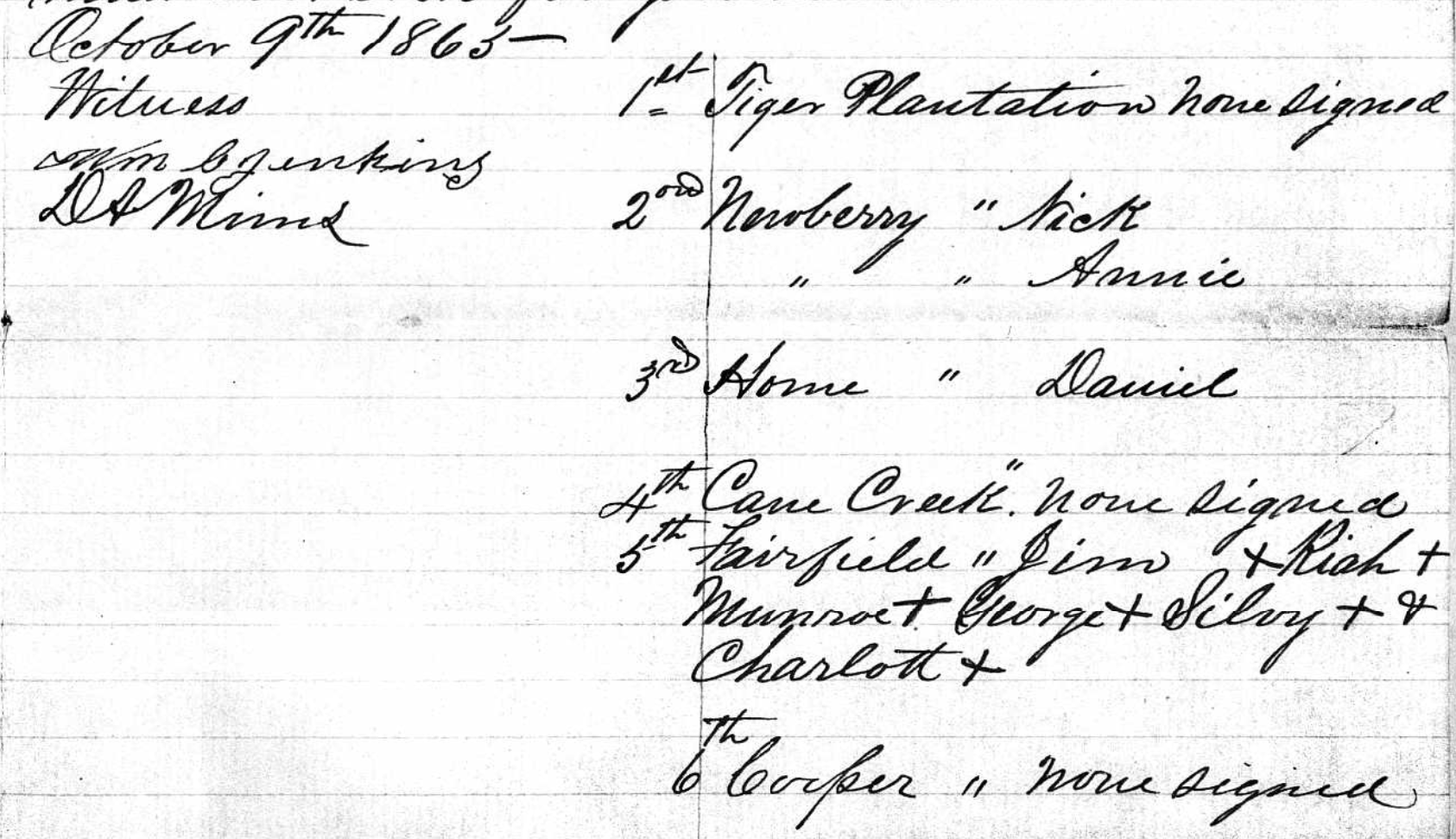
An agreement between William Smith and some of the former enslaved from his plantations was signed on October 9, 1865. From this document, we learn several things about this man.
His plantations were in Fairfield, Newberry, and Union Districts.

He signed the document with “his mark” rather than a signature. Could the wealthy William Smith read and write?

There are six plantations listed in the document. That is double the number the ultra-wealthy Nathaniel Gist had owned in Union District.
THE LAST WILL AND TESTAMENT
I have read (but not yet analyzed) the Last Will and Testament of William Smith. His plantations measured in the thousands of acres.
- Tyger Plantation (850 acres Union County)
- Newberry Plantation (1300 acres)
- Home Place (1000 acres Union County)
- Cane Creek Plantation (Acreage not found)
- Fairfield Plantation (unspecified)
- Cooper Plantation (500 acres Union County)
- Rice Tract (1200 acres Union County)
- Brandon Tract (775 acres near Union)
- 270 acres
Item 4th: I have conveyed by deed to E. B. Hogan in trust for my Daughter Martha Wife of John Elkins & Elmira wife of Gasaway Fowler a tract of land at & near Alston Fairfield County of said State composed of the Cook Welsh & Chappels Tracts , which is all I intend to give to my said daughters except as hereinafter provided as to Elmira.
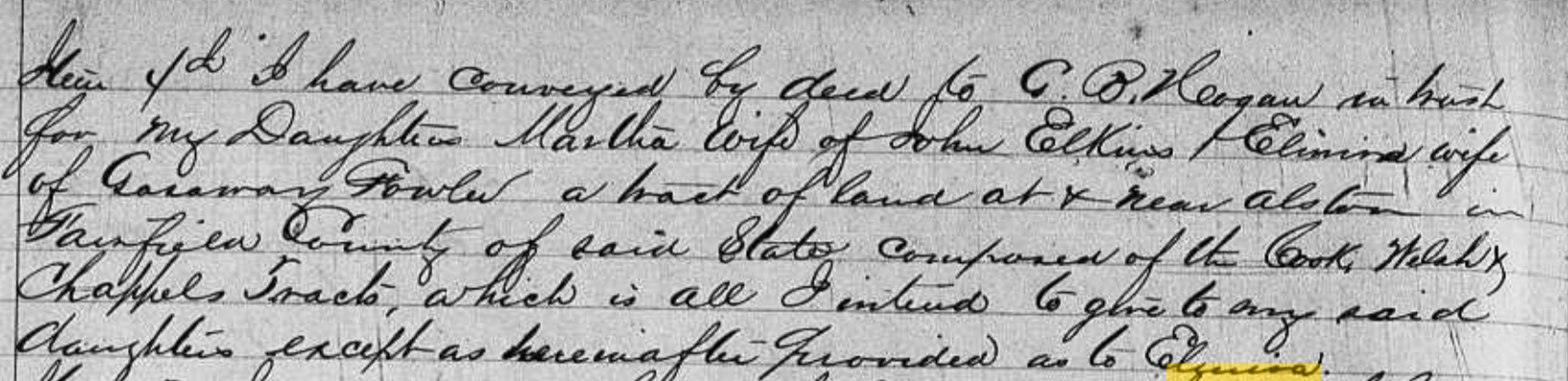
It is my will & desire that my tract of land known as the Glenn & Rodgers tract lying in Union County on Padgets Creek & Tyger River joining lands of W. Evans , Alfred Aughtry eight hundred, fifty acres more or less be sold …
…I will & desire that the proceeds of said sale be disposed of by my Executor when realized as follows to wit …
… he shall pay out of the proceeds of said sale to G. B. Hogan for the use of my daughter Elmira wife of Gasaway Fowler the sum of One thousand dollars to be held by the said Hogan subject to the same trusts as are attached to other property conveyed by deed by me to the said Hogan for the use of my said daughter Elmira.
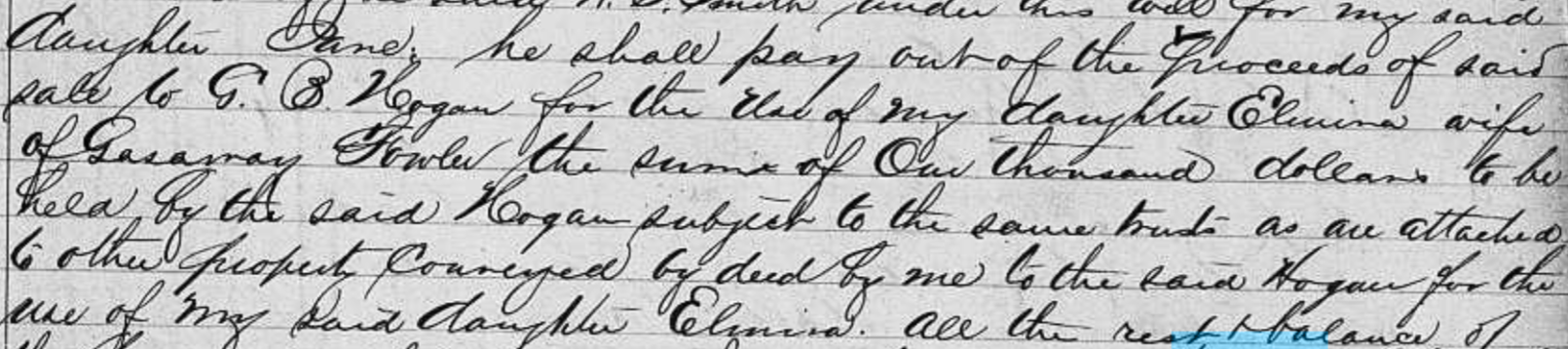
Aoma, Annie, Amanda, James and William— children of William’s first wife Mary — died long before their father set pen to paper for his Last Will and Testament. Mary’s surviving daughters—Frances, Jane, Selena, Cornelia, Elmira, Medora, and Martha—were grown, married, and provided for in more modest measure, as though their father believed their futures no longer depended on him.
Lucy Wytch Boulware (1821–1875) was the second wife of William Smith. Her son Winfield and three daughters — Josephine, Alice, and Florence — were heavily favored in their father’s will.
As the only surviving son, Winfield Smith inherited the bulk of his father’s considerable estate, a distribution that reflected both custom and the deep imprint Lucy’s branch of the family had left on William’s later life.
In the end, the will reads like a map of the household’s shifting center of gravity: the first family remembered, the second family cherished, and the future placed squarely in the hands of Lucy’s only son.
GAZAWAY AND ELMIRA MEET AND MARRY
Perhaps we will never know how or where the paths of Gazaway Fowler and Elmira Smith crossed. The distance from the Fowler home place at Jonesville and the lands of the Smith family on the Broad River was not great. Thirty miles separated the two families, and although I have not researched every possible family connection, the Fowler and Smith families likely knew of each other, or even have been related in some way.
But meet they did — Elmira and Gaz — and they married in 1855. They lived in Fairfield County, perhaps establishing their household on land owned by her father.
By 1860, three daughters and a son had been born. Life was as good as life could be in those years. But a war was looming and life would change, not just for the Gazaway Fowler family but for the entire nation.
Gazaway, like so many men of his generation, would soon be called away from the life he had just begun to build. Elmira would be left to keep the homeplace steady, to raise their children in a world suddenly uncertain, to wait for letters that might never come.
A SOLDIER IN THE CIVIL WAR
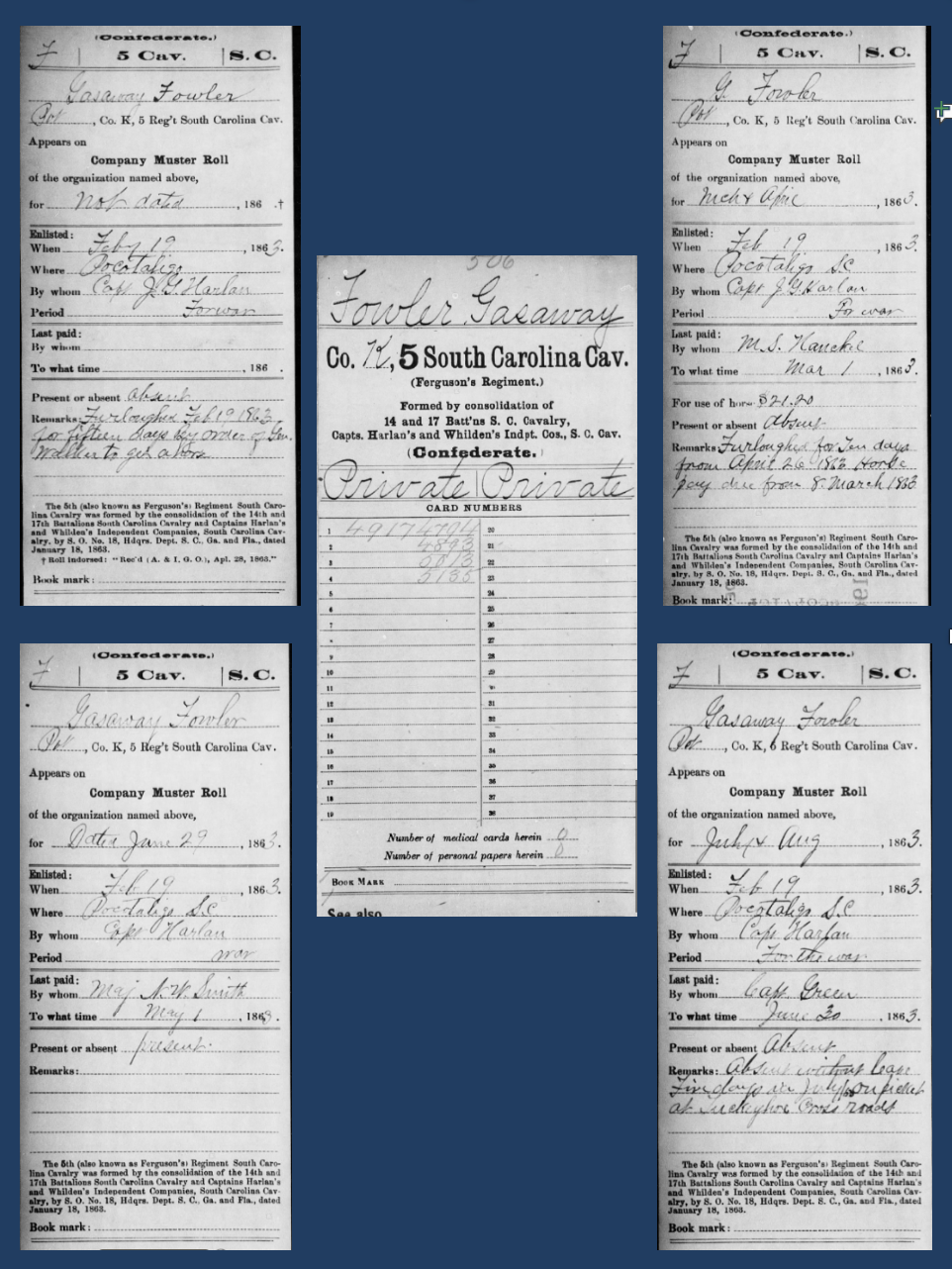
Gazaway Fowler was thirty‑six years old when he enlisted in Company K of the South Carolina 5th Cavalry. He was mustered in by Captain J. G. Harlan on February 19, 1863, at Pocotaligo, South Carolina.
Two battles had already been fought at Pocotaligo — May 29, 1862, and October 22, 1862 — both part of the Union Army’s effort to sever the Charleston & Savannah Railroad and isolate Charleston from the rest of the Confederacy. The attempts failed, but the region remained a strategic pressure point throughout the war.
The surviving military records for Gazaway Fowler are sparse. Beyond the standard header card, only a handful of entries remain: two noting that he was “on furlough,” one showing him “present” for muster, and a final card for July/August 1863 listing him as “absent without leave,” with a brief reference to five days of picket duty.
Why Confederate Military Records Are Often Incomplete
Researchers frequently encounter gaps in Confederate service files, and Gazaway Fowler’s fragmentary record is a typical example rather than an exception. The Confederate War Department operated under chronic strain: limited clerical staff, inconsistent reporting from field officers, and the constant movement of units made accurate record‑keeping difficult even in the best circumstances. As the war progressed, shortages of paper, ink, and trained clerks compounded the problem.
Large collections of Confederate documents were also lost outright. Some were destroyed intentionally during retreats; others burned in depot fires or were abandoned as armies collapsed in 1865. Surviving records were later gathered by the U.S. War Department, but many companies’ muster rolls were already incomplete or missing by that time.
Because of these losses, a soldier may appear only sporadically in the surviving files—present on one muster roll, absent on the next, with no explanation in between. Not every gap indicates desertion or misconduct; often it simply reflects the uneven survival of the paperwork itself.
Gazaway Fowler’s record sits squarely within this pattern. What remains is valuable, but what is missing may never have been preserved.
Whether Gazaway Fowler deserted while on picket duty and returned home, or whether the remainder of his records were simply lost — as so many Confederate files were — is impossible to say with certainty. The question remains open, and I’ll continue searching for an answer.
In the meantime, the few Civil War records that survive are shown below.
ARRESTS, AND OTHER LEGAL TROUBLES
During the 1860’s, the Gazaway Fowler family moved north of the Pacolet River to Draytonville, Union County. The family lived next to Elijah T. Fowler, younger brother of Gazaway.
The document below describes several legal actions in Fairfield District in May 1866, where Gazaway Fowler was arrested. Witnesses named William Cowley, Edward Taylor, James Carter, Osbourn Bouleware, and D. Stevenson were called, and bench warrants were issued, primarily for distilling without a license.
E.W. Oliver served as sheriff, with J.W. Clarke responsible for the arrests, all occurring on 11th September 1866. Milton Sole is listed as the attorney in these proceedings.
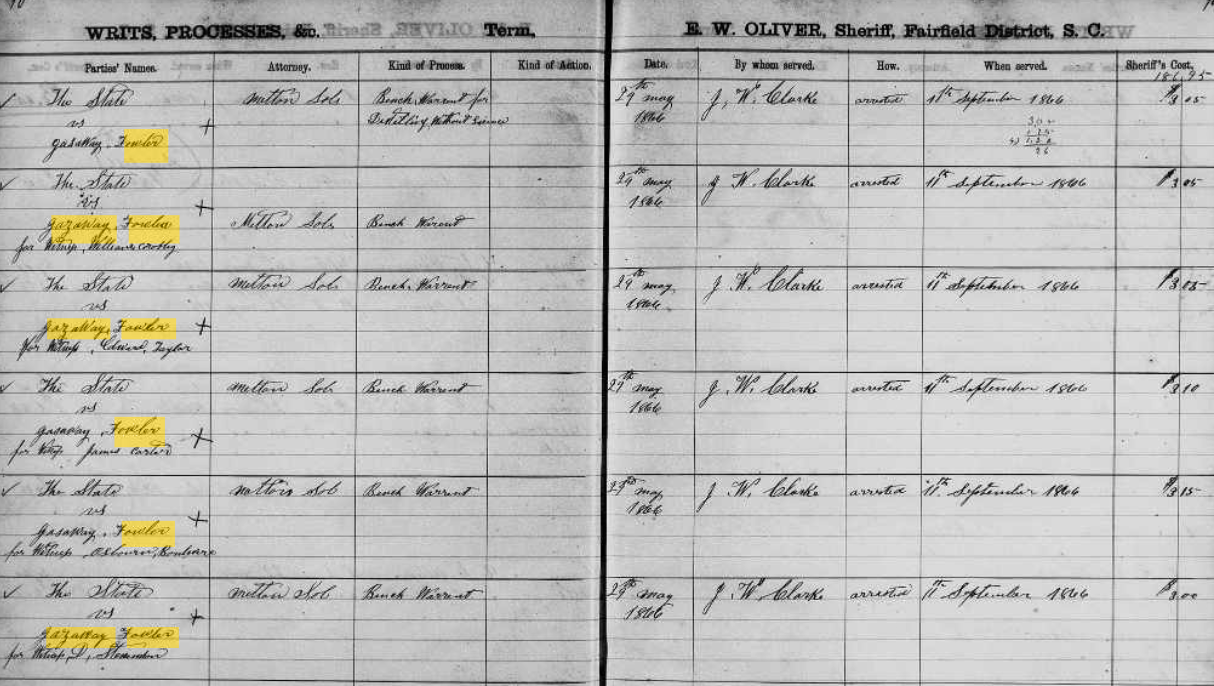
Why the move from Fairfield County to Union County? Perhaps it was the arrest of Gazaway Fowler for Distilling Liquor With A License. The court decided not to prosecute in the spring term of 1867.

THE GAZAWAY FOWLER FAMILY IN CENSUS RECORDS
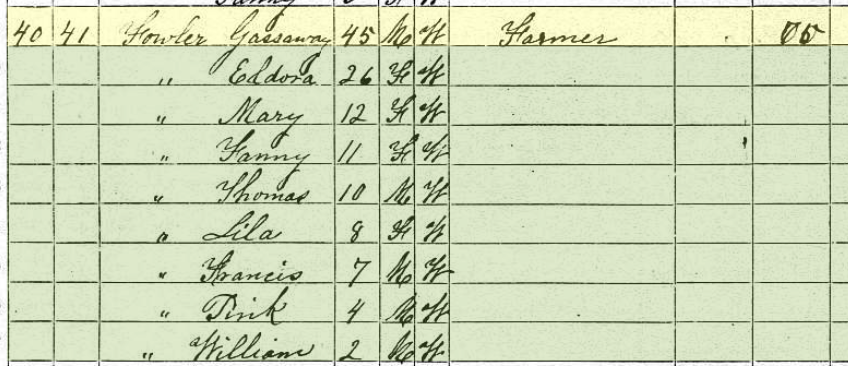
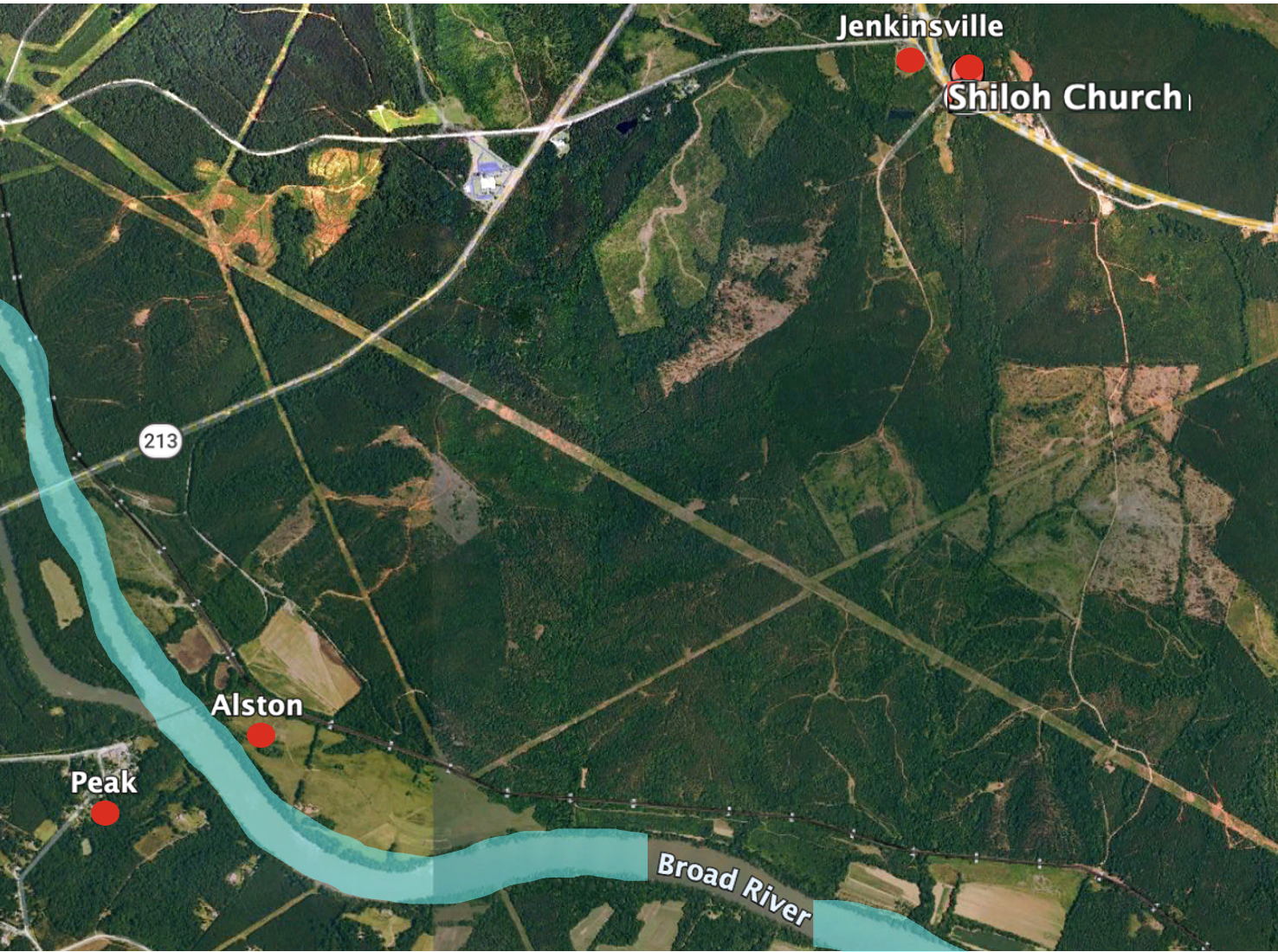
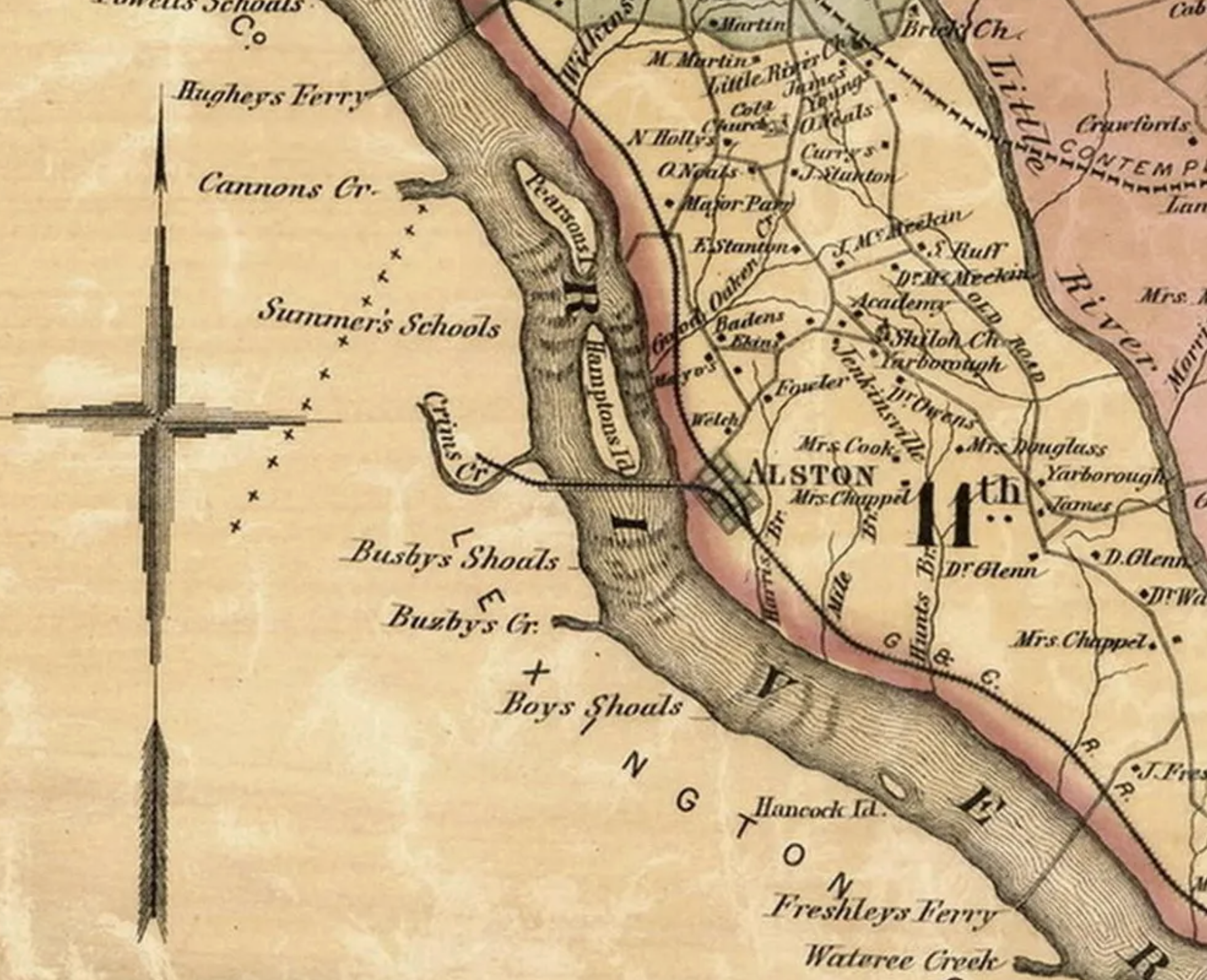
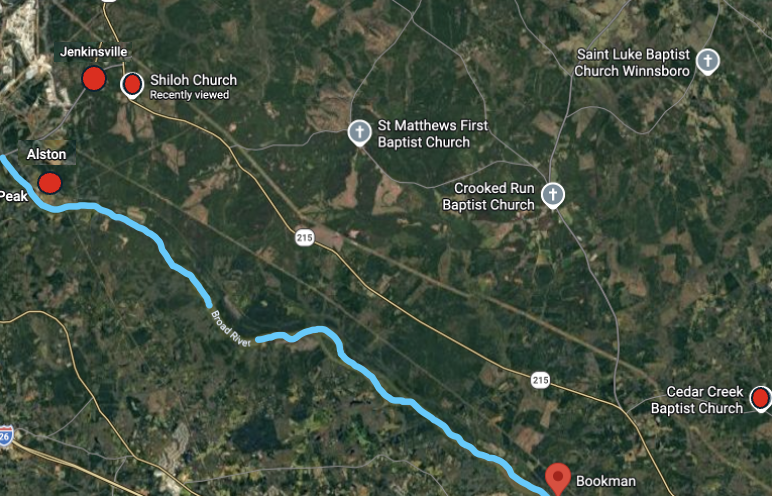
After moving back to Fairfield County in the decade between 1870 to 1880, Gazaway Fowler and family may have moved closer to the Broad River. The Little River runs into the Broad a few miles south of Alston.
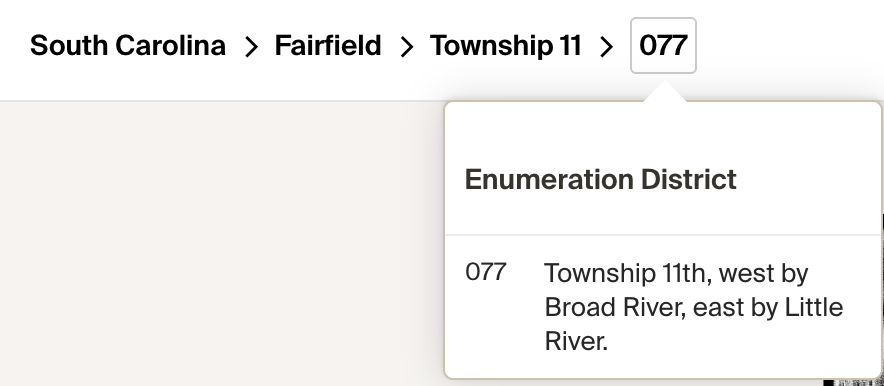
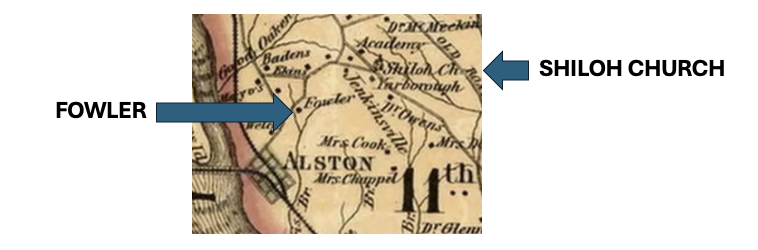
Jenkinsville found on the upper right part of the map was identified as the early Fairfield County home of the Gazaway Fowler family. Both Gazaway and Elmira Fowler were buried at the graveyard at nearby Shiloh Church.
As you will read below, Alston on the north side of the Broad River was mentioned as being close to Fowler’s Spring, no doubt named after Gazaway Fowler.
Fowler’s Spring and the Lost Town of Alston
A Narrative Reconstruction of the 1885 Fowler–Shell Incident
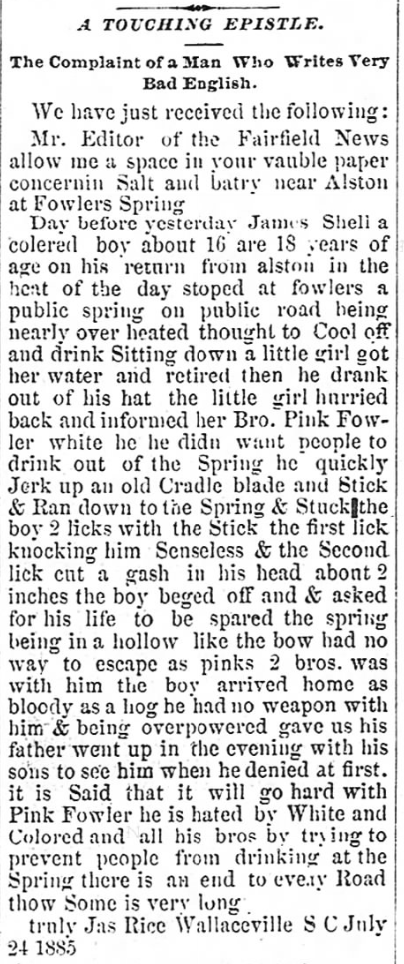
An incident involving Dora, Pink, two of their brothers, and the young Shell boy—almost certainly Glenn Shell, who would have been about sixteen in 1885—reveals more than a moment of conflict. It opens a small window into the landscape and social world of the Fowler family in the years after the Civil War.
The event took place at a local watering place known as Fowler’s Spring, a public spring near the village of Alston in Fairfield County. Although the spring was technically open to all, the Fowlers appear to have exercised a kind of informal authority over it.
On the afternoon in question, fourteen‑year‑old Dora Fowler walked down to the spring to fetch water. As she filled her container, a young man—identified in both accounts as a Shell boy, likely Glenn Shell, about sixteen—approached the spring to drink. What happened next is the point at which the two surviving reports sharply diverge.
According to one version, Dora objected when the boy dipped his hat into the spring, telling him to remove it. In this telling, the boy responded angrily, cursing her and frightening her so badly that she fled toward home, screaming for her mother. In the other version, Dora simply left the spring and ran home after seeing the boy drink from his hat, without any mention of cursing or threats.
The geography helps explain the dynamics. The Fowler home stood close enough to the spring that Elmira Fowler could hear her daughter’s screams, suggesting that the family lived within immediate walking distance of the site. Learning that something had happened at the spring, she sent her son Pink Fowler—a young man in his late teens or early twenties—down to confront the situation.
Here again, the accounts diverge. One describes Pink rushing down with a stick and an old cradle blade, striking the Shell boy twice—once hard enough to knock him down, and again leaving a cut on his head. The other describes a single blow delivered only after the boy cursed Pink as well. Both agree that the Shell boy was injured and that Dr. J. M. Glenn later dressed the wound.
By evening, James Shell, the boy’s father, came to the Fowler home with one of his sons to ask about the incident. One account says they made threats; the other says they came to “see about the matter.” Either way, tensions were high, and warrants were sought in Winnsboro soon afterward.
The two newspaper reports—printed only two days apart—present opposite interpretations of the same event. One portrays Pink Fowler as a violent young man who tried to control a public spring and attacked a defenseless boy. The other casts him as a protective brother defending his sister from an older youth who behaved improperly and used abusive language.
What remains consistent across both accounts is the setting:
- a public spring,
- a family living close enough to hear every cry,
- a community where boundaries—social, racial, and territorial—were sharply felt.
The nearby village of Alston, now vanished, once anchored this corner of Fairfield County. In the late nineteenth century it was a thriving settlement along the Broad River, complete with a train station, post office, and small commercial district.
But the town’s life was cut short in the early 1900s when a catastrophic Broad River flood destroyed much of the village. What remains today is little more than a wooded area and the Alston Trailhead of the Palmetto Trail.
Against this backdrop, the 1885 altercation at Fowler’s Spring becomes more than a family anecdote. It reflects the rhythms of a rural community clustered around a spring, a vanished river town, and the everyday negotiations of space, ownership, and authority.
The Fowlers’ proximity to the spring—and their instinct to defend it—speaks to how deeply rooted they were in that landscape, long before Alston washed away and Fowler’s Spring slipped into memory.
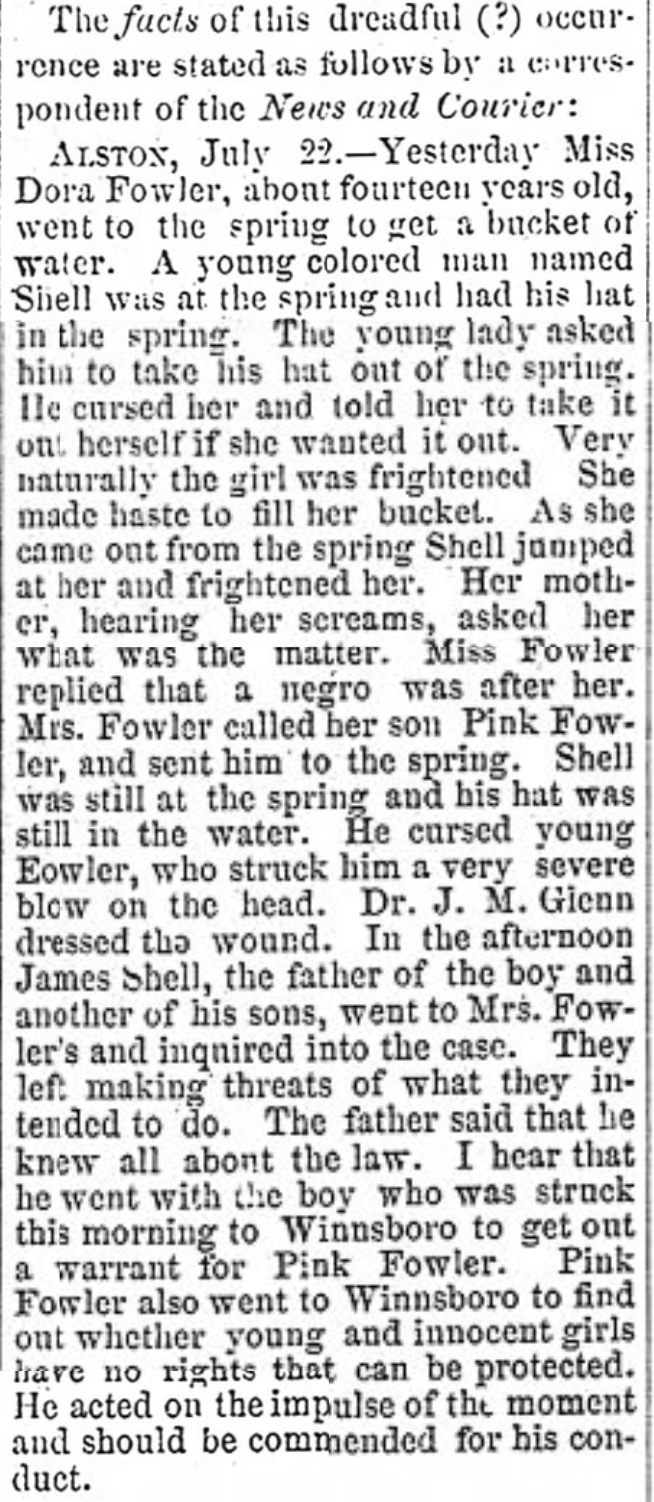
Wed, Jul 29, 1885 ·Page 3
ONE MORE OBSERVATION OF THE SHELL INCIDENT
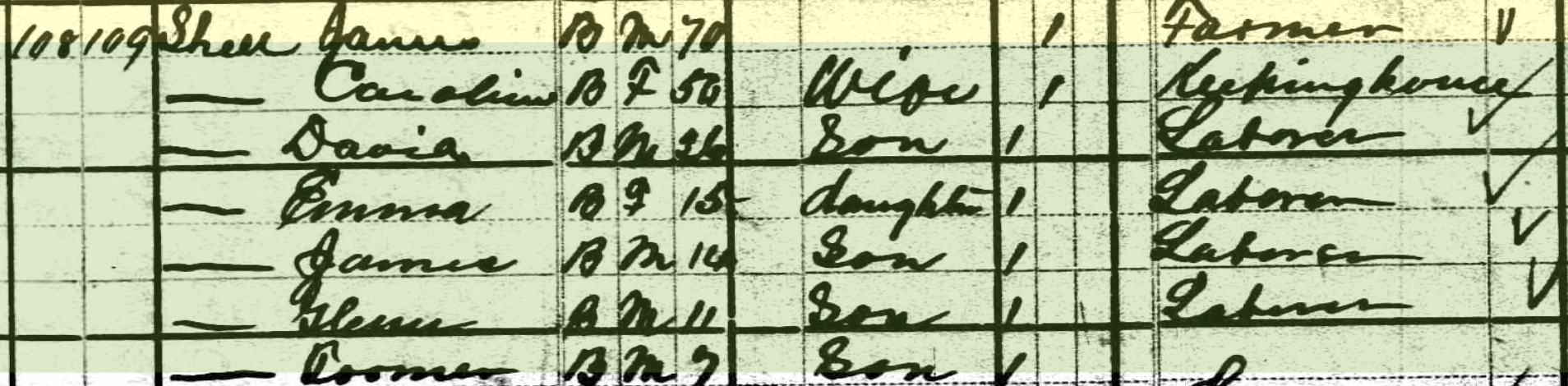
In 1880, the James Shell family also lived in the same county and district as the Gazaway Fowler family. The two families undoubtedly knew each other before the altercation at the spring.
THE DEATH OF GAZAWAY FOWLER
The final years of Gazaway Fowler’s life are less clearly documented than the decades that preceded them, but the broad outline can still be traced. After the Civil War, Gazaway lived near family in Union County before returning to Fairfield County, where he and Elmira resumed the steady rhythms of farm life.
The couple raised their children in the same rural community where Elmira’s Smith family had long been rooted, and where Gazaway himself had lived for most of his married life.
By the early 1880s, Gazaway’s health appears to have declined. No medical records survive, but the pattern is familiar: men who served in the Confederate cavalry often carried the long-term effects of exposure, chronic infections, and untreated injuries. Whatever the cause, Gazaway Fowler died in Fairfield County in 1887.
He was buried in the quiet red clay of Fairfield County, not far from the home he shared with Elmira. His grave, like many from that era, is modest—its inscription weathered by time, its story preserved more in family memory than in stone.
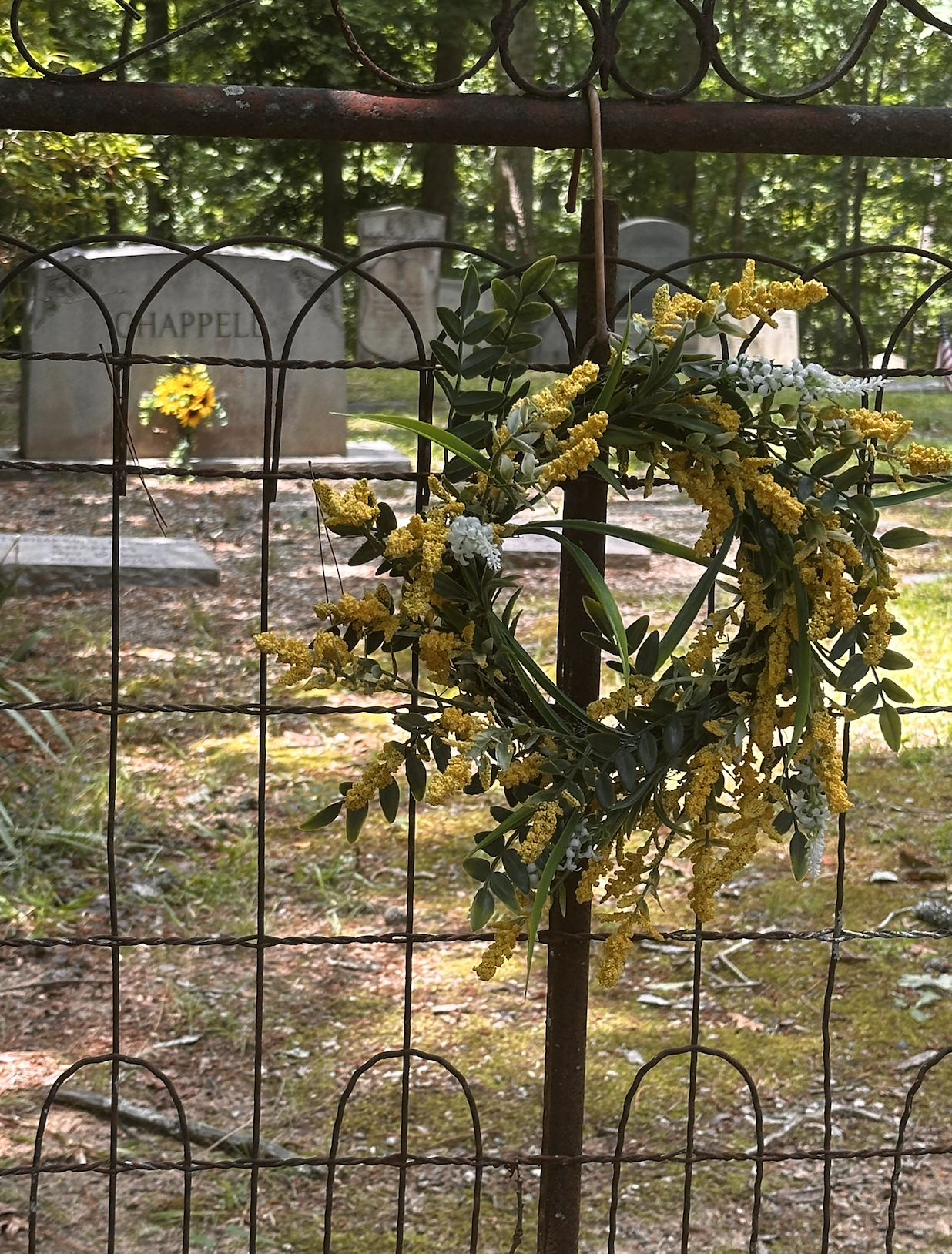
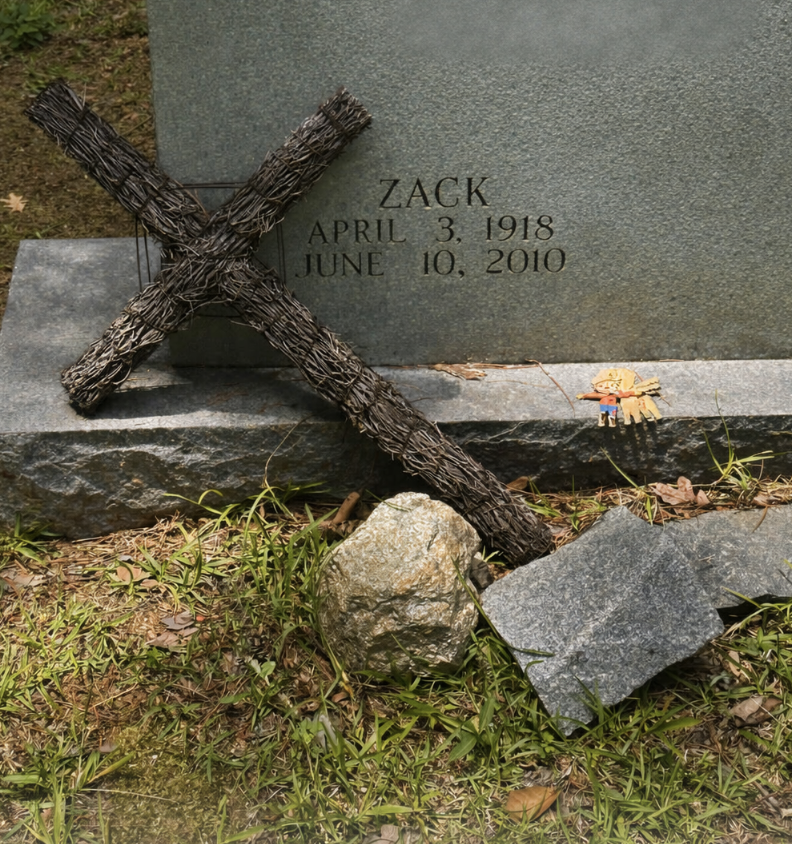
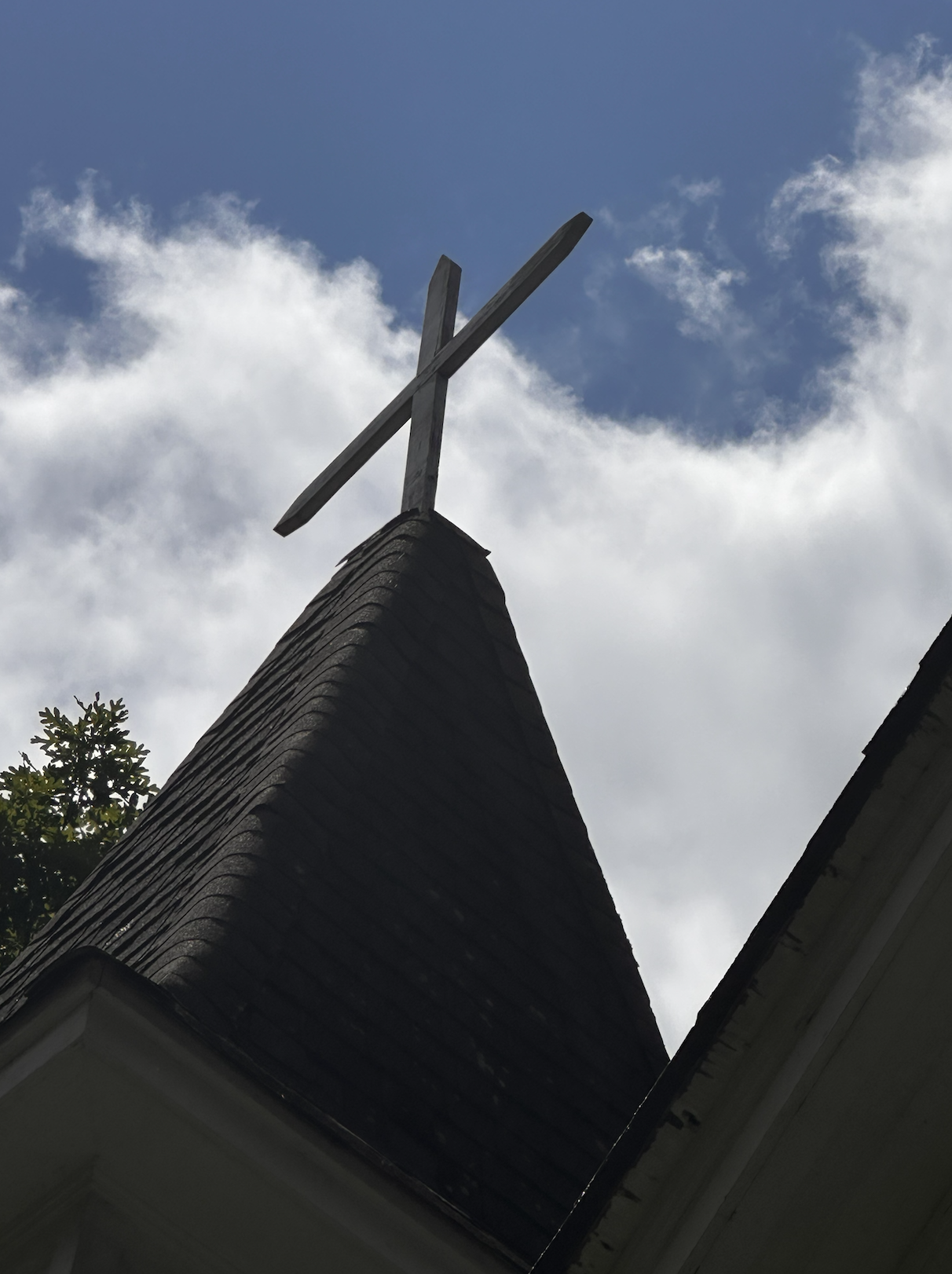
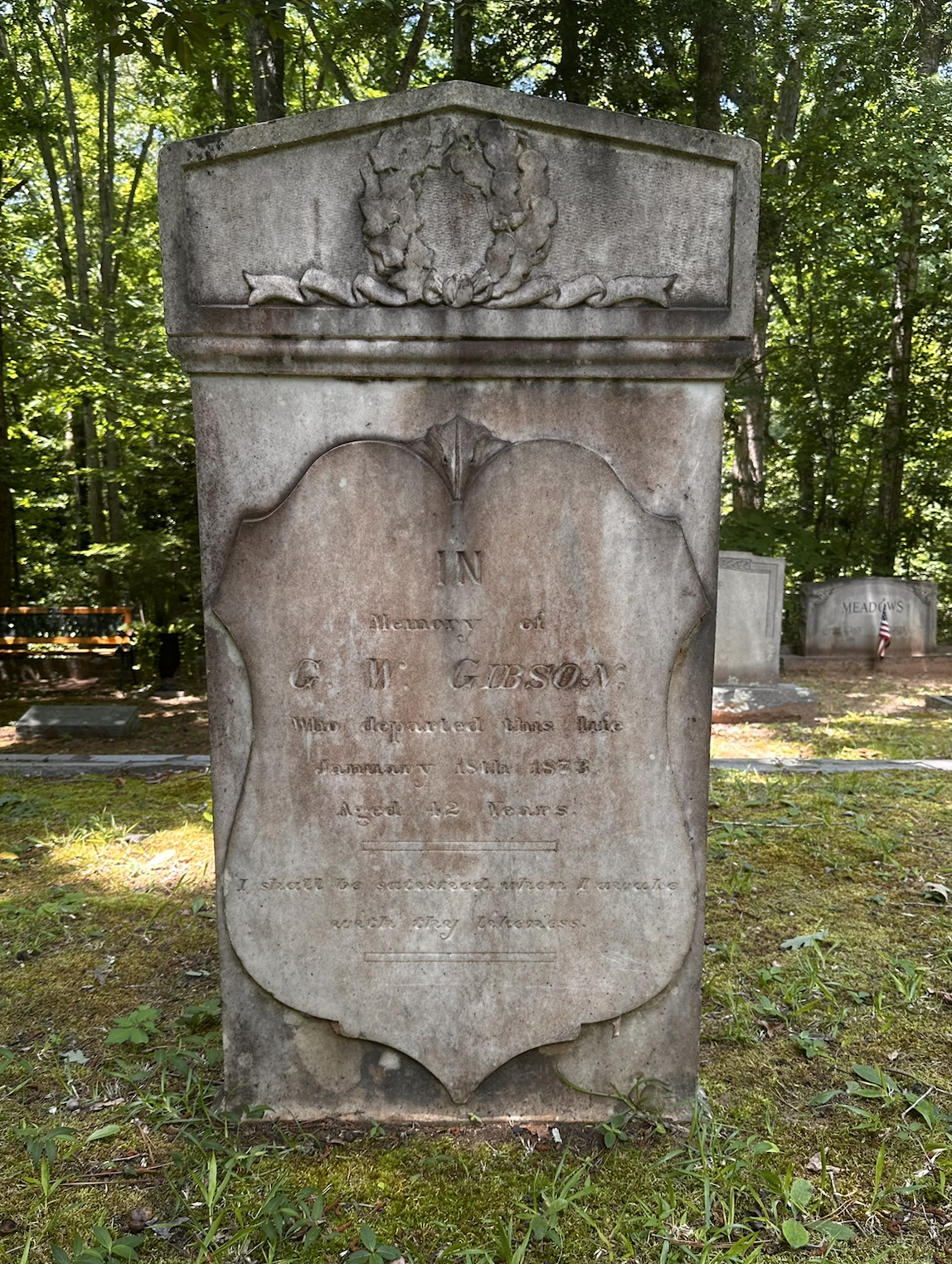
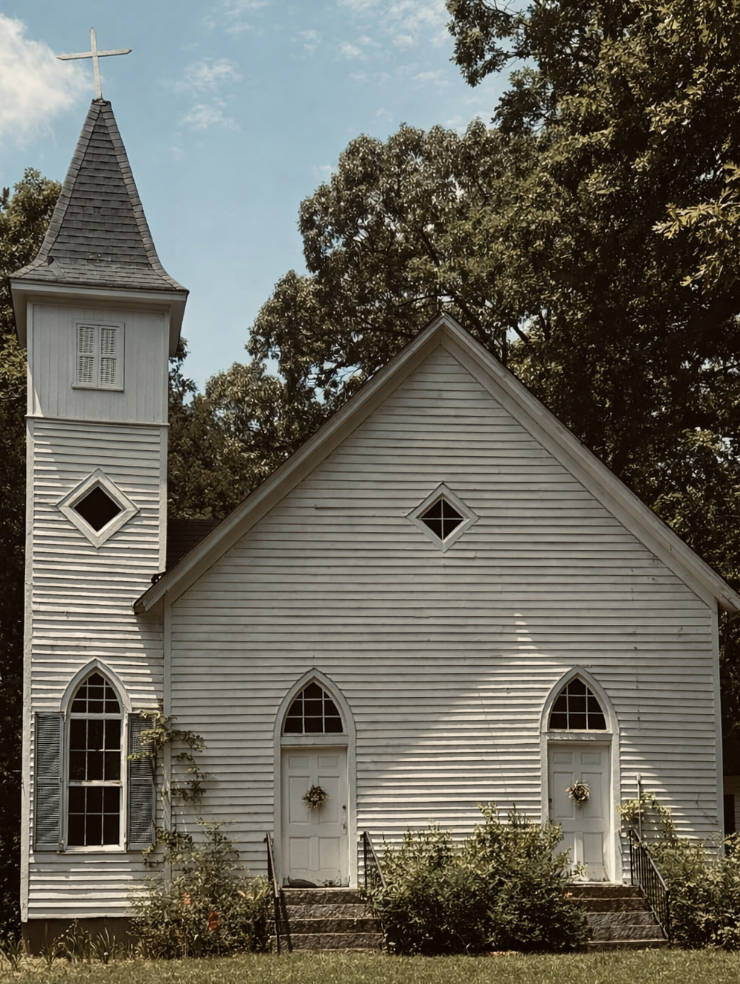
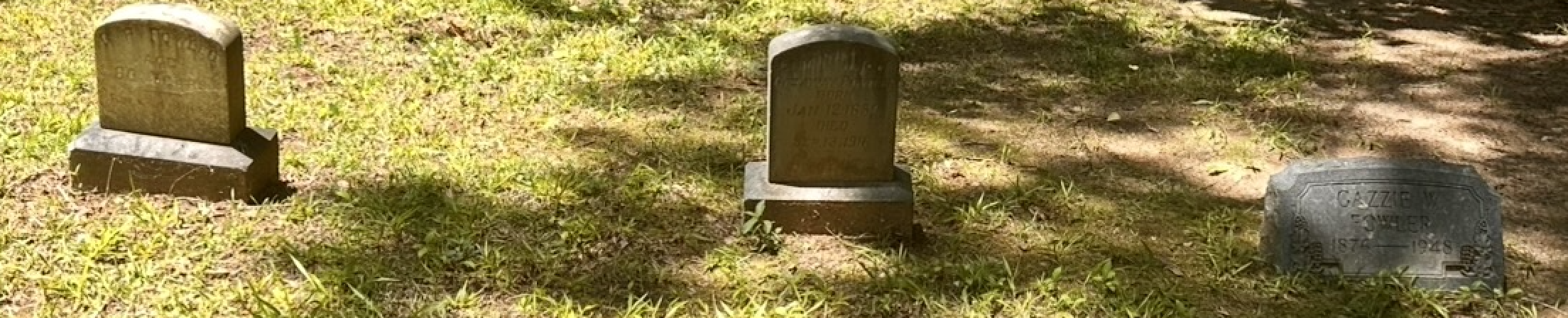
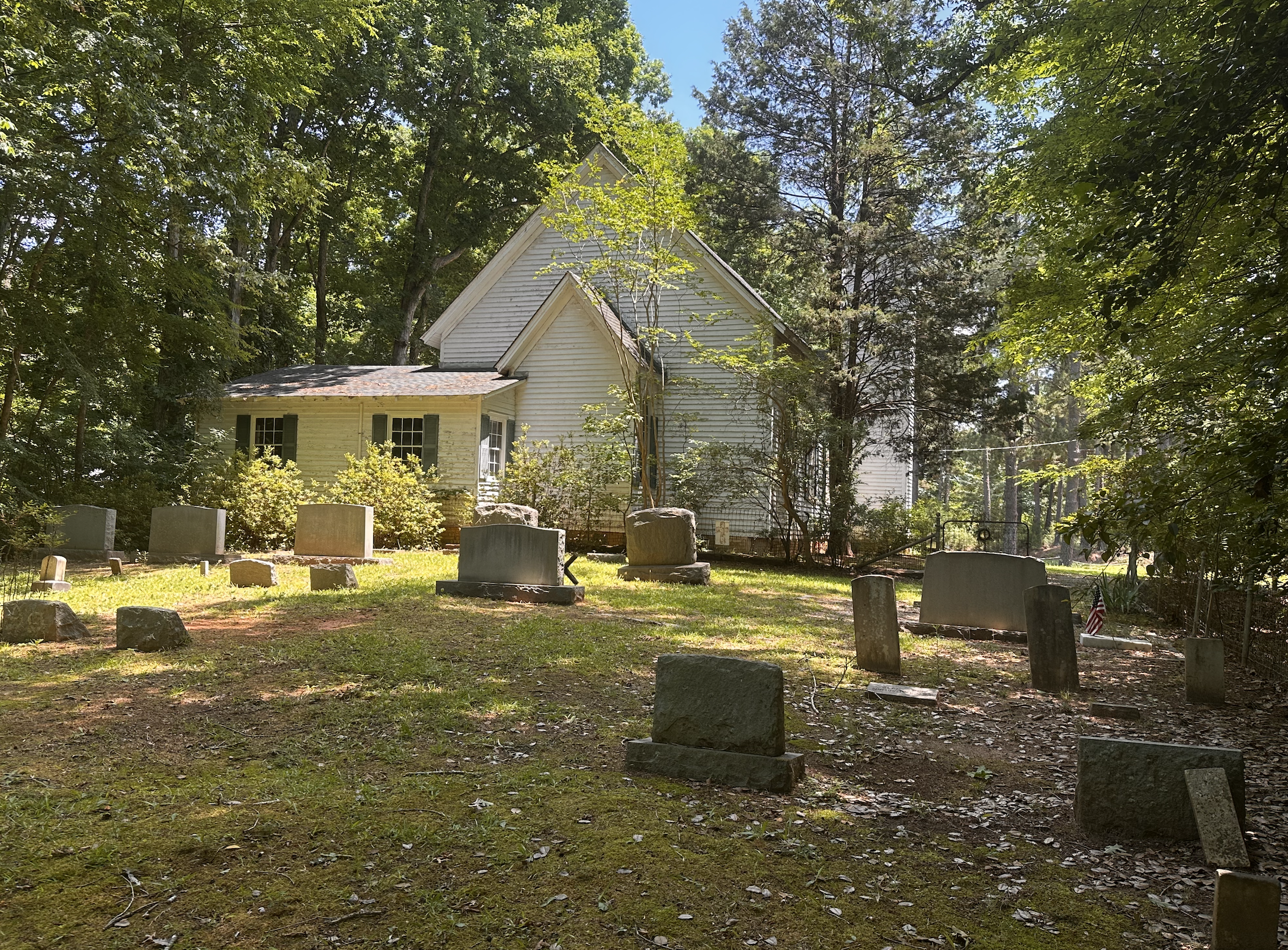
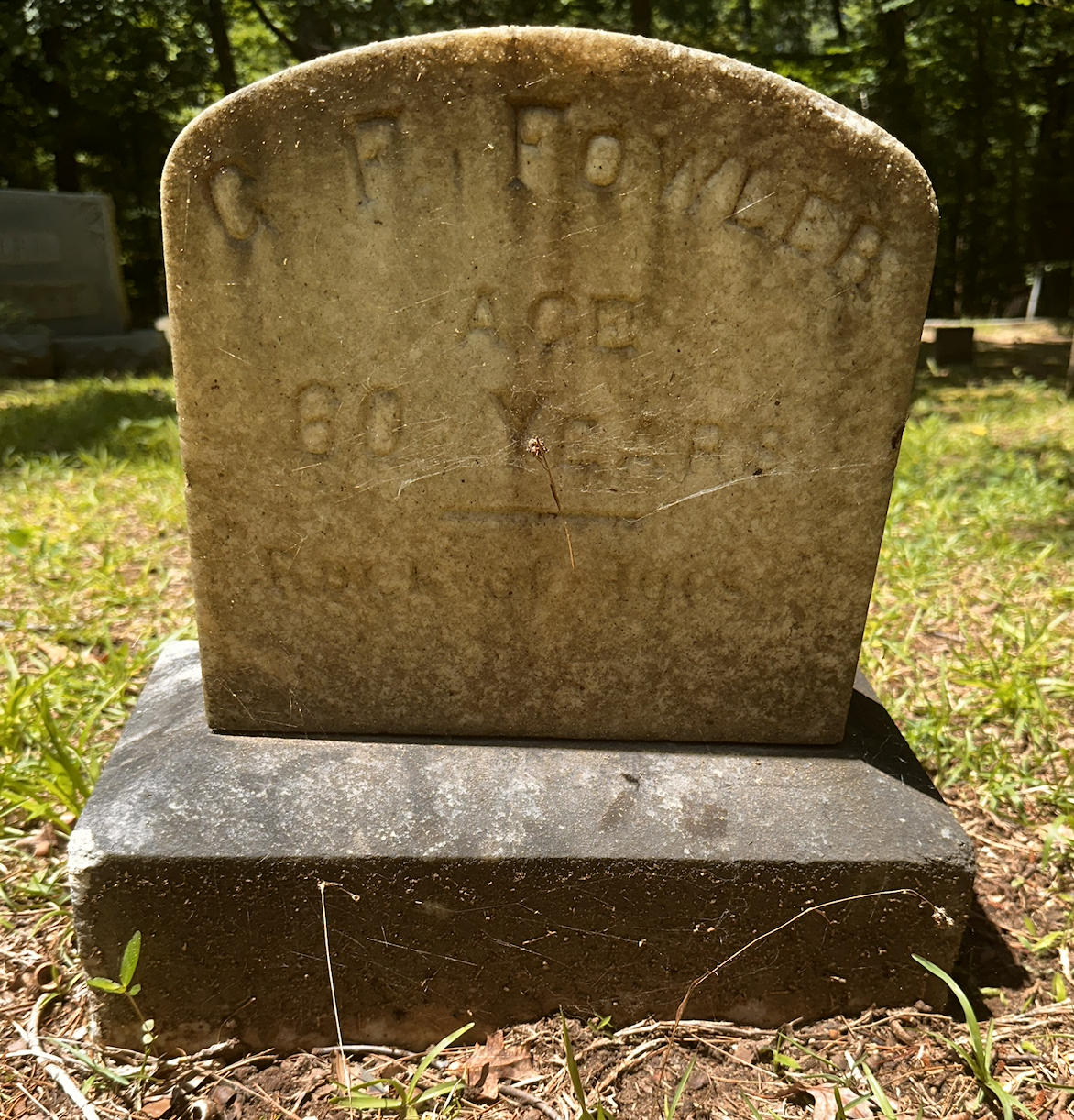
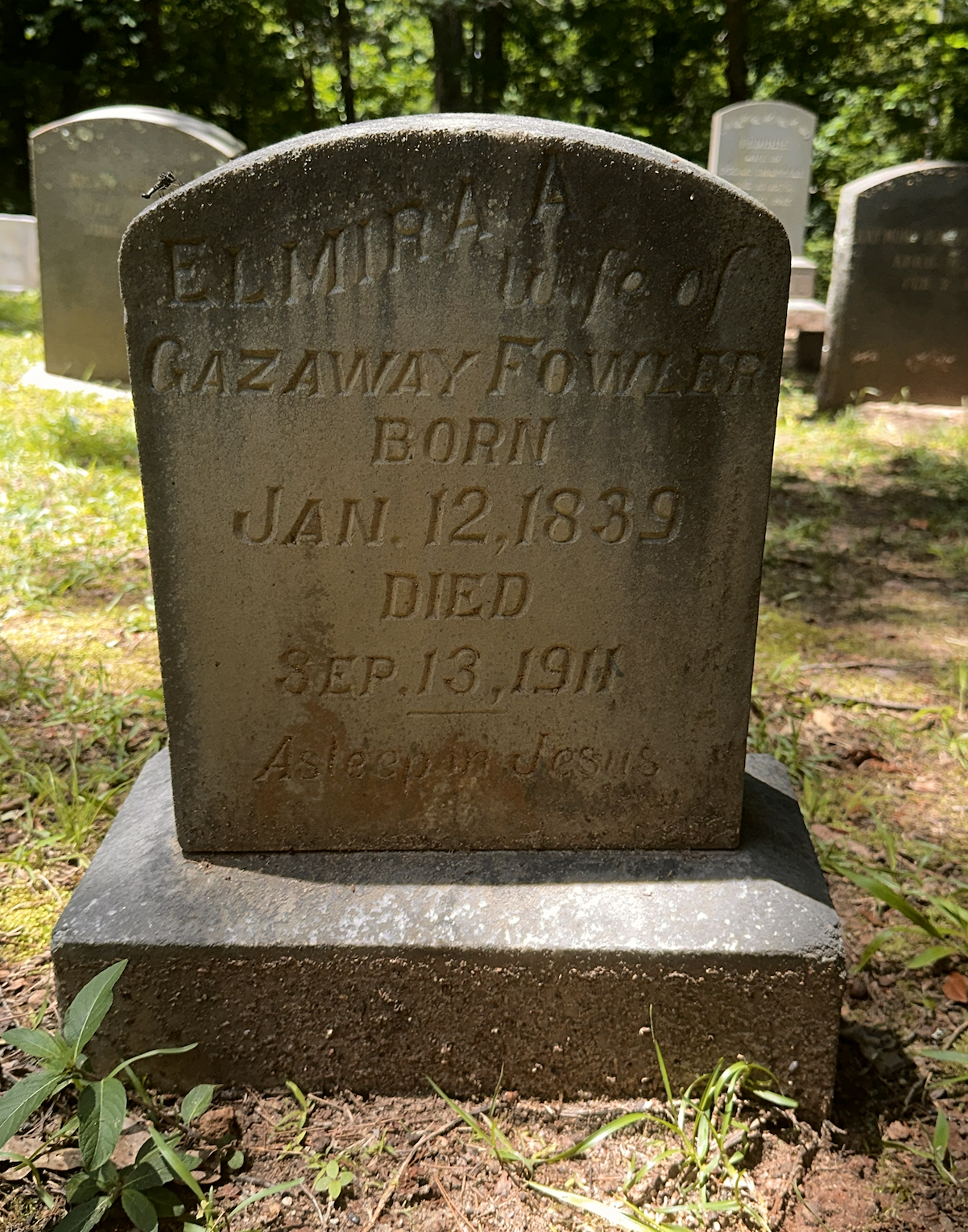
Time wears away family memory as loved ones follow the departed into the next world. Eventually all that is left of the story is only found in the crumbling pages in dusty courthouse archives, often buried so deeply that no eyes have gazed upon the faded words in decades long gone.
Elmira lived on for many years after his passing, surrounded by children and grandchildren, anchoring the family in the same community where she and Gazaway had built their life together.
Though his military record is fragmentary and his final illness unrecorded, the arc of Gazaway Fowler’s life remains clear: a man shaped by the upheaval of war, rooted in family, and ultimately laid to rest in the county he called home.
He and Elmira lie in the Holy Ground of the graveyard at Shiloh Methodist Church near Jenkinsville in Fairfield County.
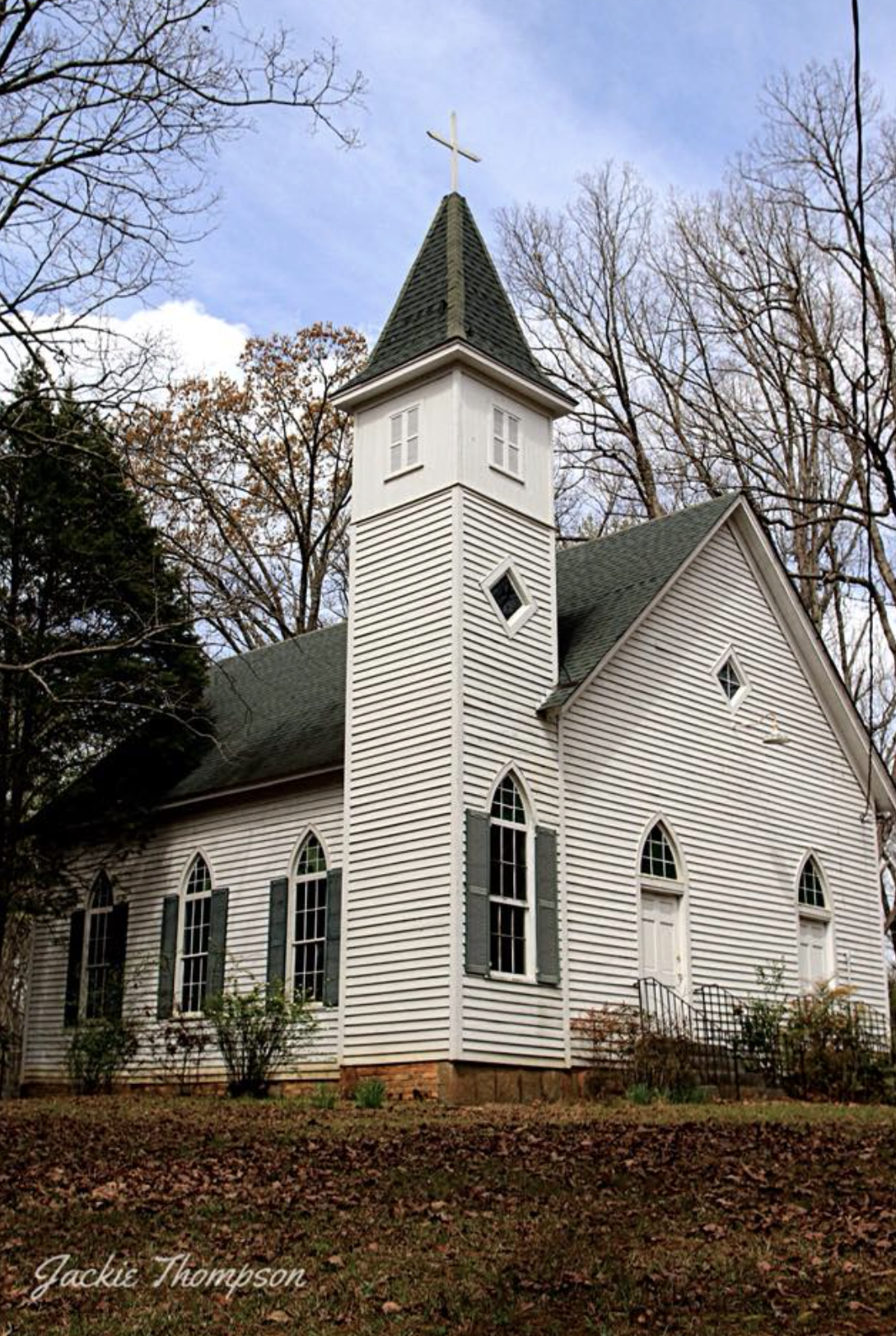
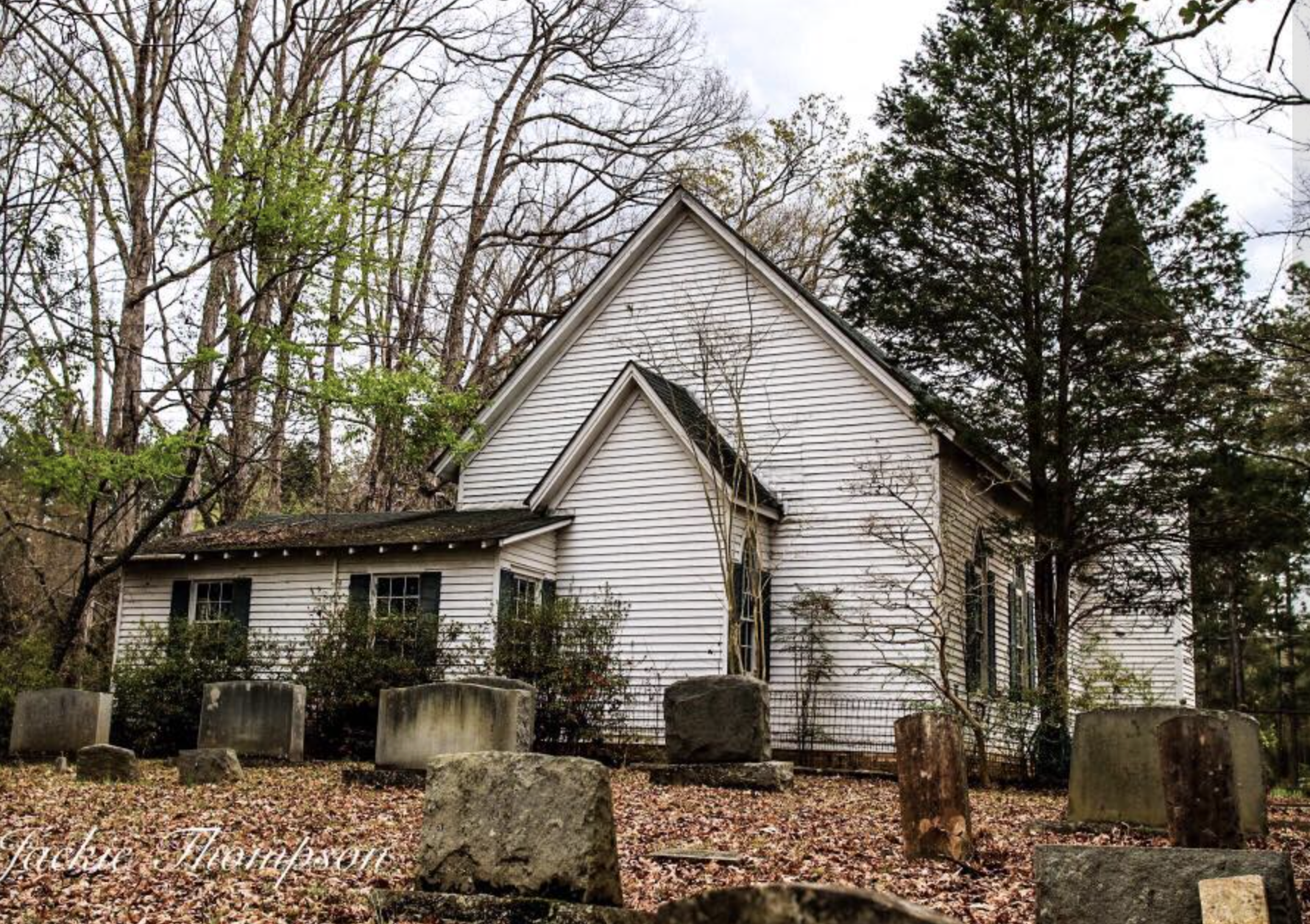
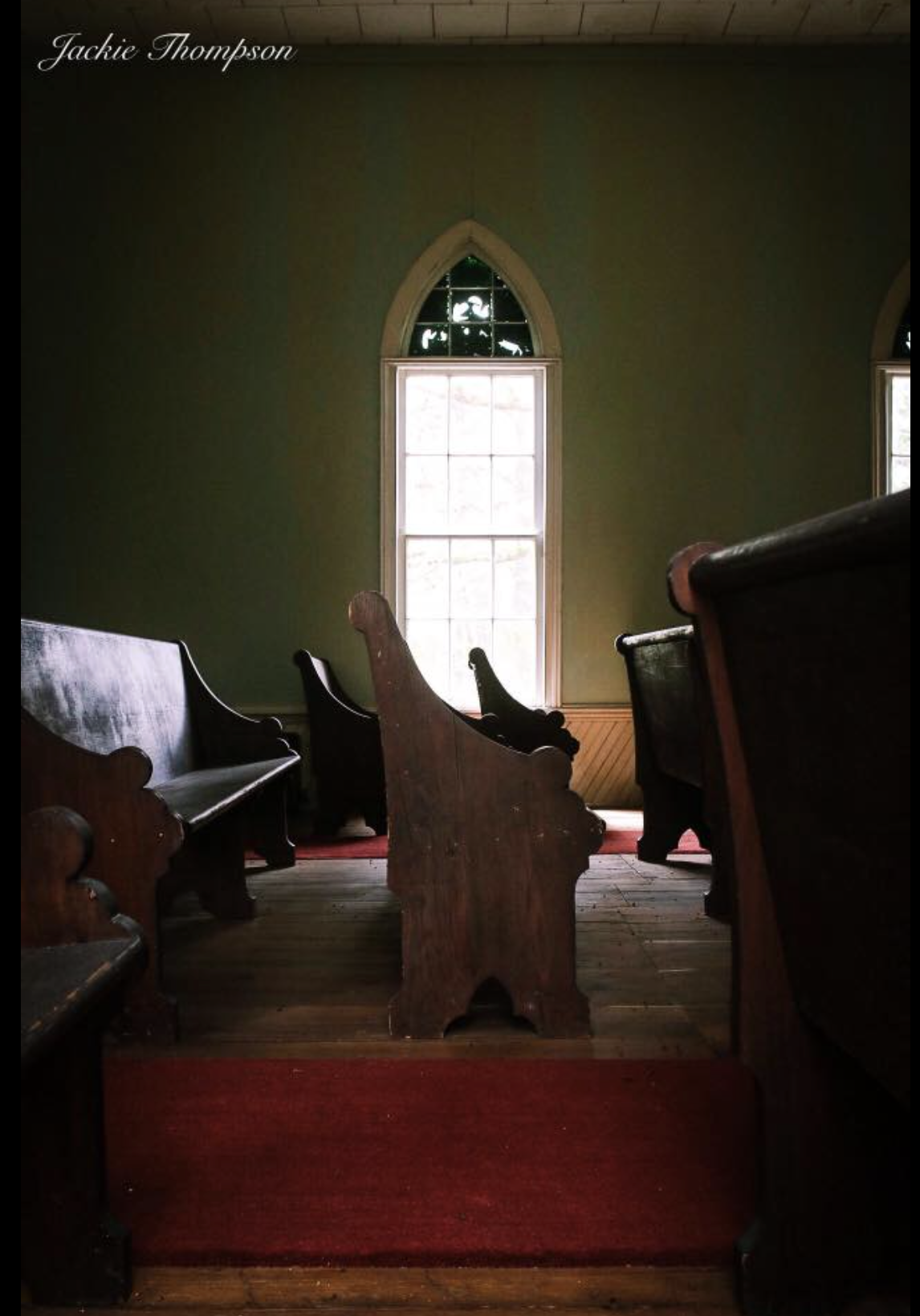
church images used with permission of the photographer Jackie Thompson
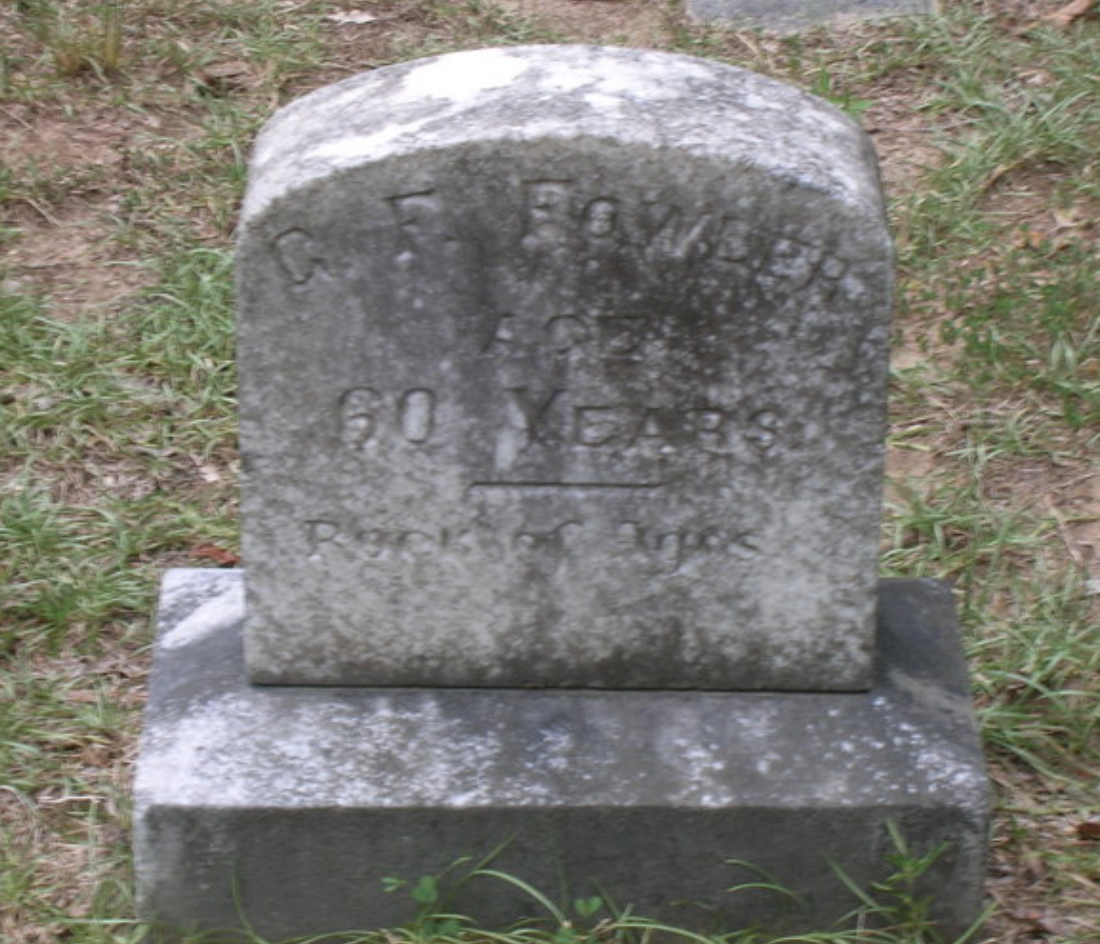
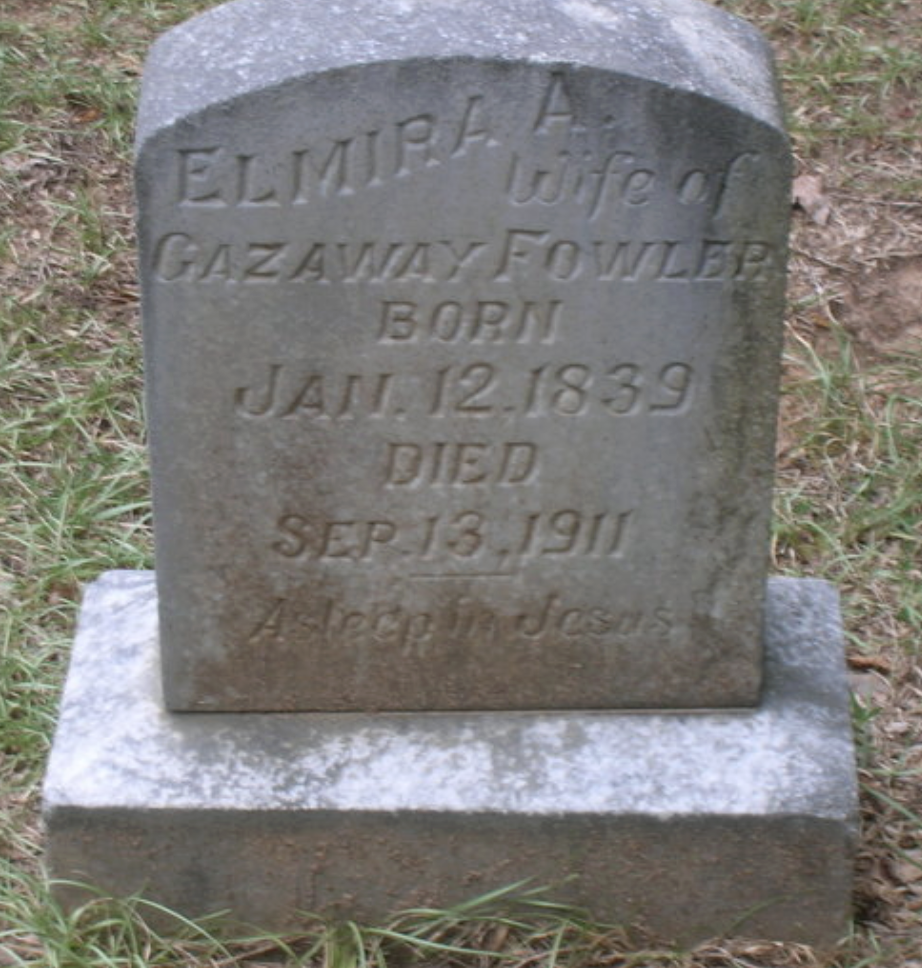
headstone images from Find A Grave
THE SONS AND DAUGHTERS OF GAZAWAY AND ELMIRA
It is not at all unusual to have some confusion surrounding the births of 19th century children in rural South Carolina. Unless meticulous records were kept in a family bible or ledger, the lack of legal birth certificates until 1915 meant that the exact dates of birth for many children were sketchy at best.
Sometimes the only “documentation” was a guess made when the census taker came around every ten years. He wasn’t gathering precision so much as impressions. Ages were rounded, guessed, or offered with a shrug. Children aged two years between one census and the next, or stayed the same age for three.
And so the Fowler children, like so many others, slipped into the record with soft edges. Their years blur and overlap, not because anyone meant to confuse the future, but because the present was busy enough. A baby who lived only a short while might be remembered only as “the little one we lost,” his name never written down.
The truth is simpler, and more human: these families lived in a time when memory was the archive, and the archive was fragile. What survives now are echoes — census lines, headstones, half‑remembered stories — and the quiet understanding that the past was never meant to be measured with the precision we try to impose on it.
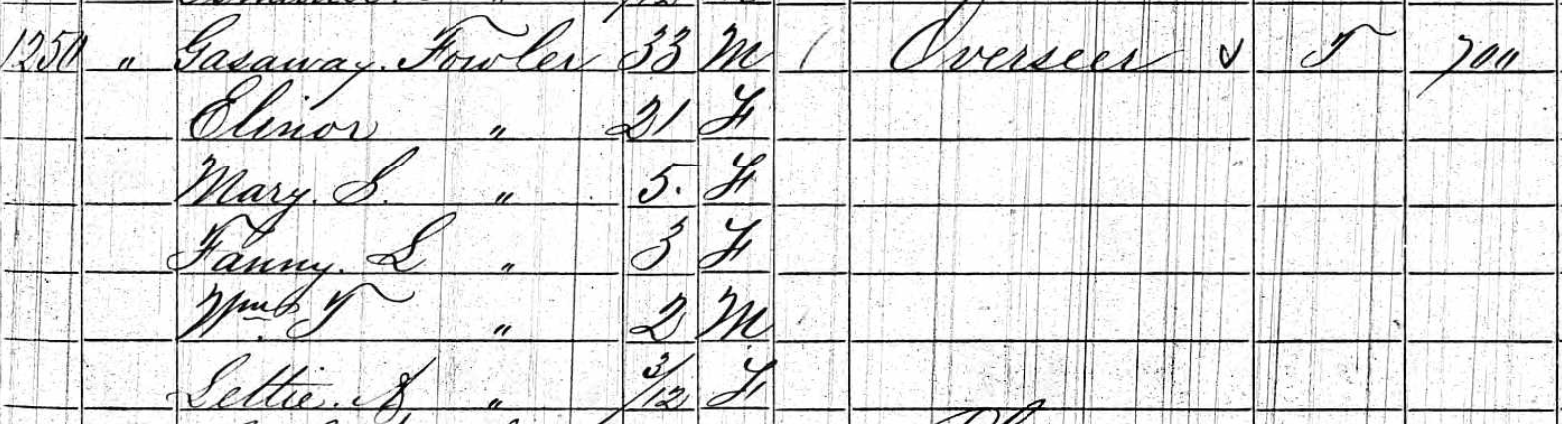
Using 1860, 1870, and 1880 census records, I have compiled the names of twelve children in the household of Gazaway and Elmira Fowler. Only the birth of their eldest child, Mary, was written down in the family bible of her grandparents, Thomas Gillman and Susannah Hames Fowler.
Elmira lived through two census records –1900 and 1910 — whereas the number of children born to a woman and the number of living children were noted.
The data for the year 1900 shows that Elmira had given birth to twelve children, and seven were still living. By 1910, two more children had died; the numbers were twelve children born and only five still living.
Assuming my research is accurate, I think I have a good grasp on the names of the children born to Gazaway and Elmira Fowler.
MARY S. FOWLER (1855–1882)
The first born child of Gazaway Fowler and Elmira Smith arrived into the world on October 18, 1855.
Born in Fairfield County, she was given the name Mary.
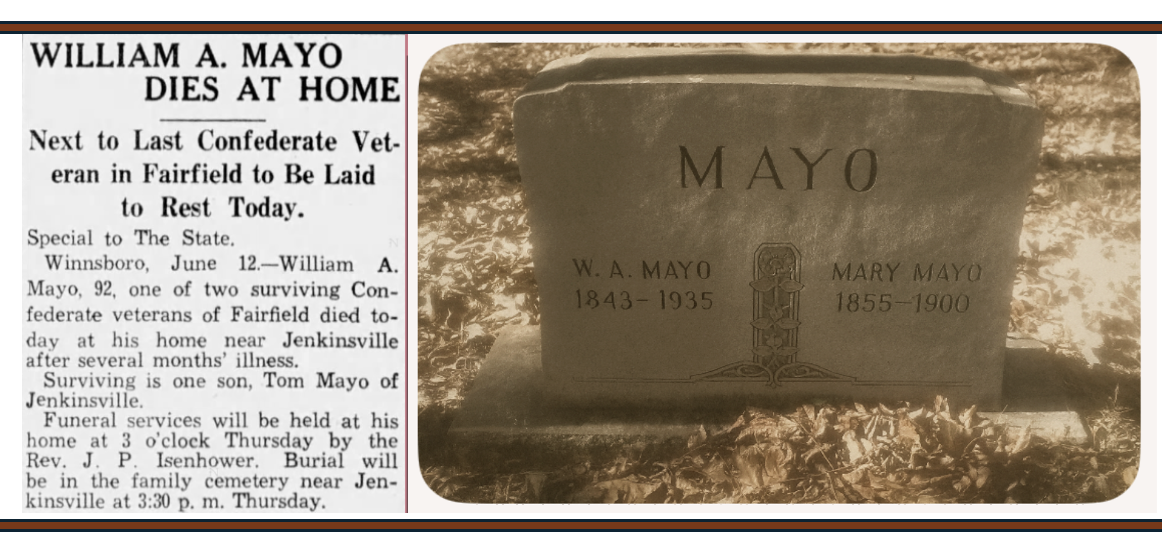
She married William A. Mayo (1848-1935). They were the parents of at least four children:
- William David Mayo (1877–1929)
- Ella Nell Mayo (1879–)
- Thomas Mayo (1882–1952)
- Mary Mayo (1888-1921)
Mary Fowler Mayo died in 1900, having spent her life in Fairfield County, where she raised her children amid the familiar rhythms of rural life. She was buried with her husband’s family in the old Mayo Burying Ground, located on the Phillip Mayo Plantation about two miles from Jenkinsville — a resting place shaded by generations of kin and memory.
William Mayo lived to be an old man. By the time of his death, thirty‑five years later, his name appeared in the local paper as one of only two surviving Confederate veterans in Fairfield County.
He was laid to rest beside Mary — once united in marriage, now united again, side by side, in the red‑clay soil that had shaped their lives.
FRANCES L. FOWLER (1856–1931)
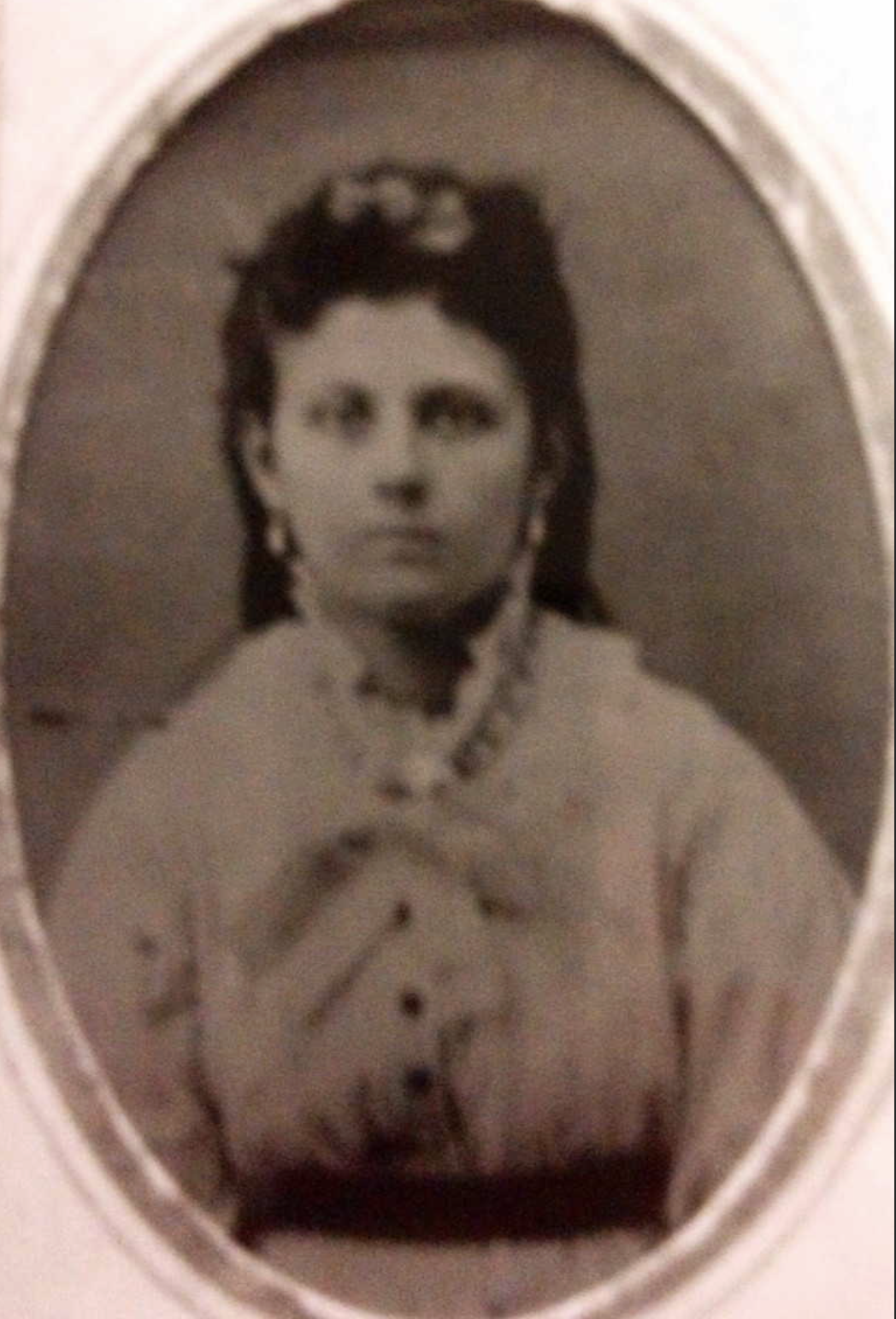
Frances Fowler was born on April 7, 1856. Known within her family circle as Fannie, she married Thomas Charles Hart (1857–1926), a marriage that anchored two long‑established Union County families.
Together they built their household in Union County, where they raised seven sons, followed at last by a single daughter—the final child and only girl born into the family:
- Robert Hart (1882–)
- Lee Hart (1884–1938)
- Grover Cleveland Hart (1885–1956)
- Claud Hart (1886–)
- Miles Hart (1889–1902)
- Gazzie Hart (1890–)
- Edgar Hamlin Hart (1890–1956)
- Atavie Hart (1893–1912)
A few years ago, I bought a large lot of Union County, South Carolina genealogy books at an online auction. It became clear the moment I opened them that they had once belonged to a descendant of the Fowler–Hart family.
Dozens of names were marked in yellow, not randomly, but with the unmistakable precision of someone tracing their own bloodline.
Page after page, the same surnames appeared — Fowler, Hart, and the extended kin who wove themselves through Union County’s history. The highlighting felt almost like a quiet dialogue with the previous owner, as if they were guiding me toward the very people they had spent years trying to understand.
It was a rare kind of find: not just books, but a preserved trail of someone else’s research, someone who recognized these names as their own and left a map for the next genealogist to follow.
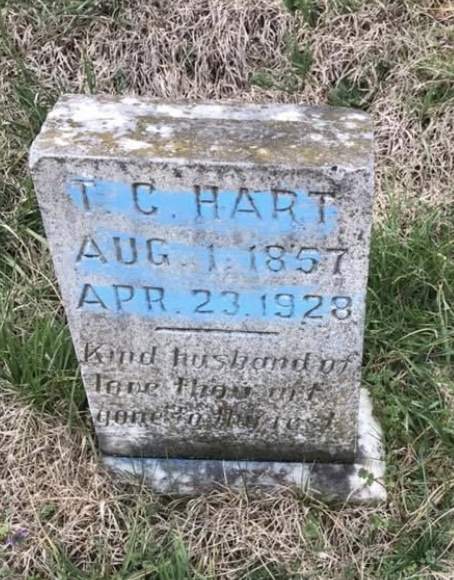
Thomas Hart died on the twenty-third of April in 1928. His beloved wife Fannie followed him to the grave on October 6, 1931. They lie in eternal rest at Rosemont Cemetery in Union.
THOMAS WILLIAM FOWLER (1858-1903)
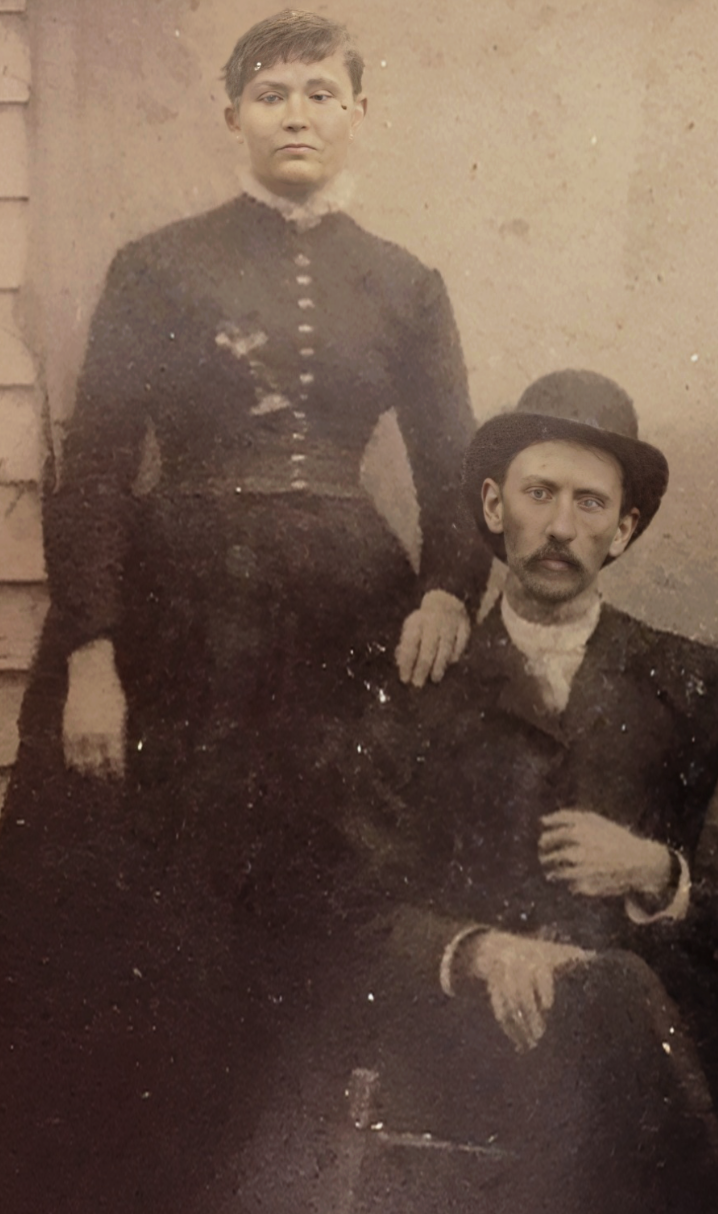
Gassaway and Elmira Fowler had a son named Thomas Fowler, born circa 1858 in Fairfield County.
I have seen many family trees on-line that have Thomas Fowler buried in the Philippi Cemetery as the son of Gazaway Fowler. This is wrong. Please do your research and stop the spread of incorrect information!
There is no evidence that any of the Gassaway Fowler family ever lived near the Philippi Cemetery, nor were any of them ever buried there.
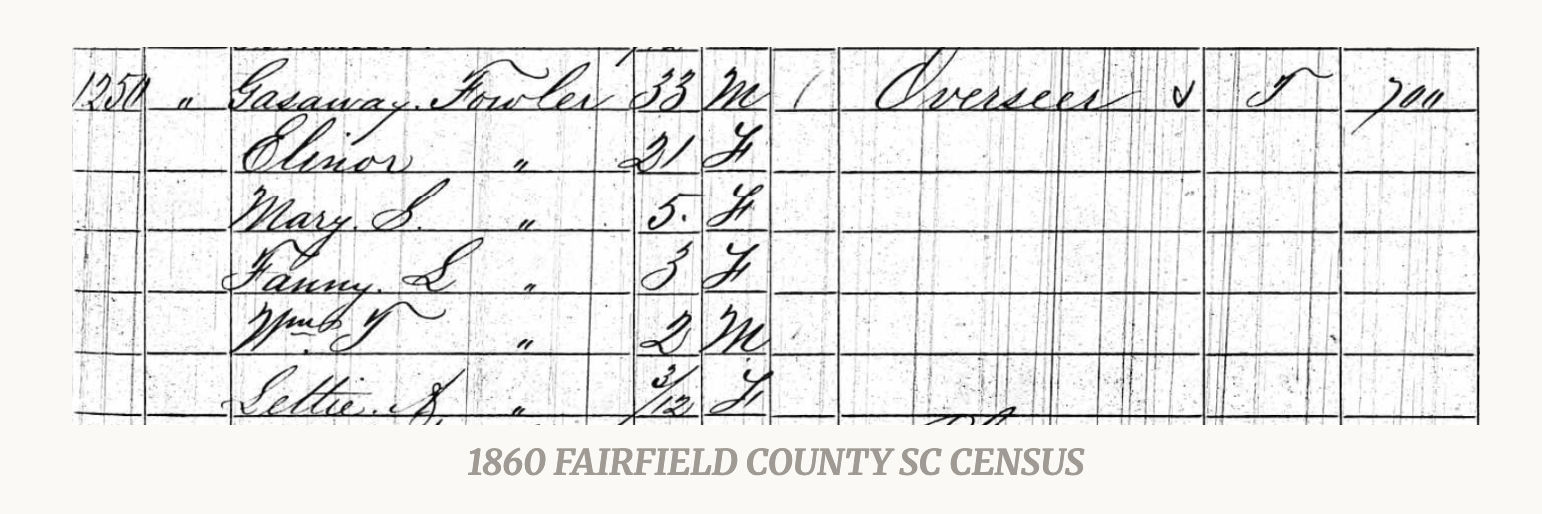
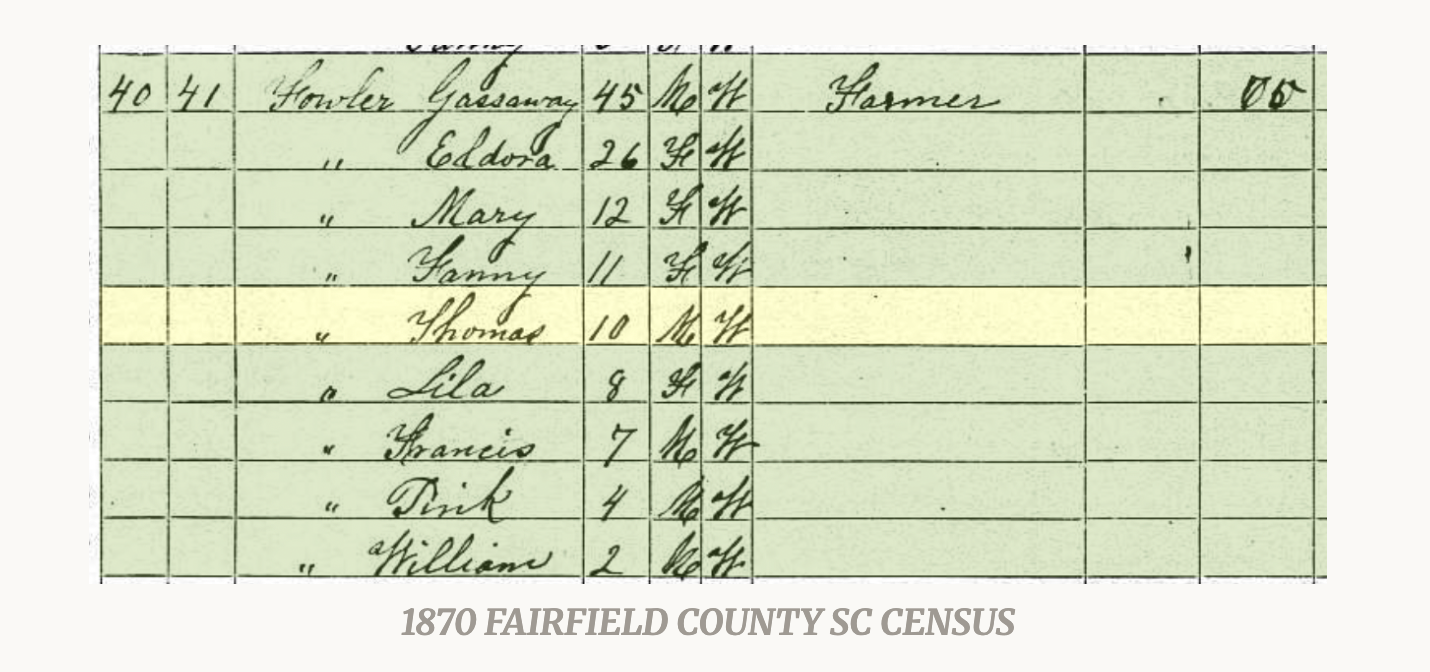
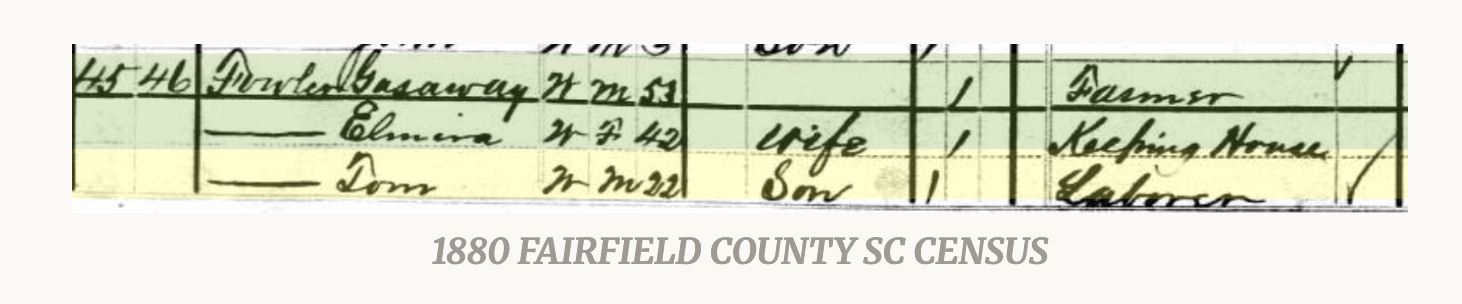
The son of Gassaway Fowler was “William Thomas” Fowler, “Thomas” Fowler, and “Tom” Fowler in early census records, and later “Thomas William” Fowler in his marriage announcement of 1883:
.
1860 FAIRFIELD COUNTY SC CENSUS
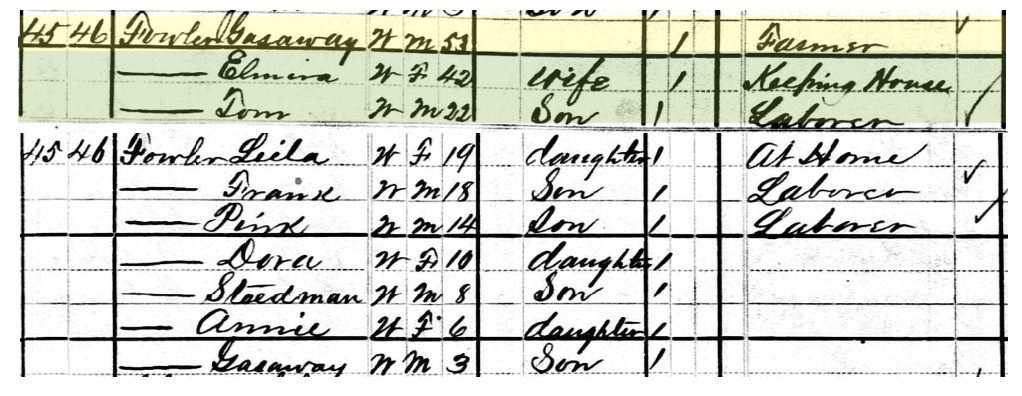
1870 FAIRFIELD COUNTY SC CENSUS
1880 FAIRFIELD COUNTY SC CENSUS
A son and daughter of Gazaway Fowler married a son and daughter of William M. Hart:
Thomas William Fowler — son of Gazaway Fowler — married Ida Alice Hart, daughter of William M Hart.
Frances L. “Fannie” Fowler — daughter of Gazaway Fowler — married Thomas Charles Hart, son of William M. Hart.
Ida Allice Hart was born December 26, 1863, married Thomas William Fowler in 1883, and died March 17, 1886.
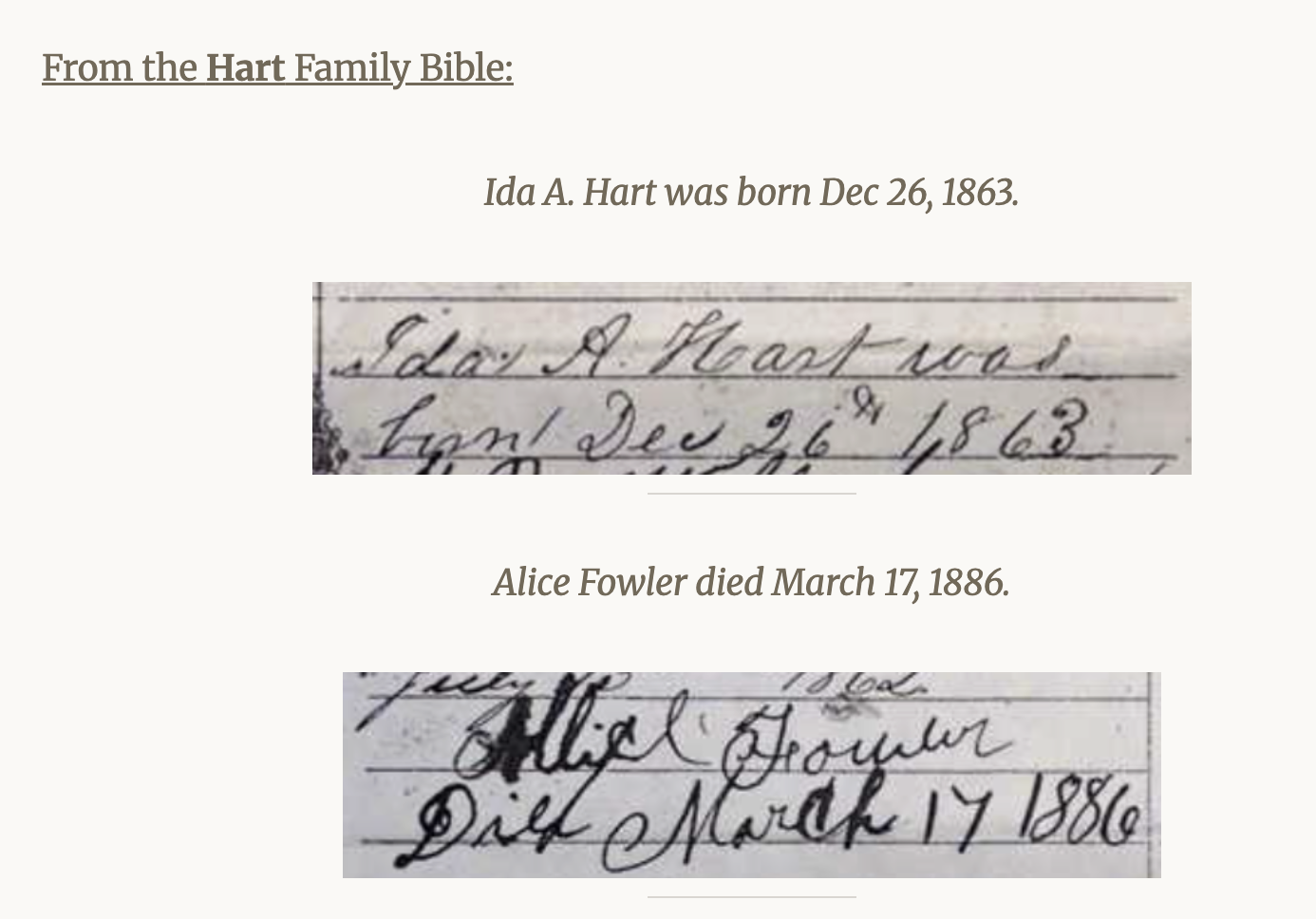
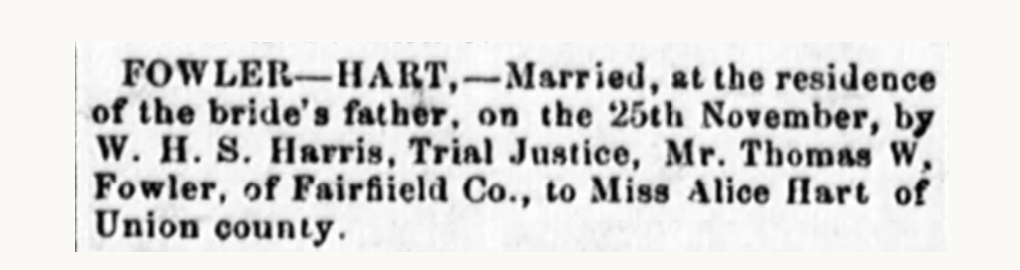
The paper trail seems to end for Thomas William Fowler after the death of his young wife.
Except……. something caught my eye……..
Previous Speculation:
Thomas W. Fowler was a policeman in Columbia SC. His illness and subsequent death were announced in The State newspaper in 1903.
Thomas W. Fowler, the policeman, was born in Fairfield County in 1858.
Thomas William Fowler, the son of Gazaway Fowler was also born in Fairfield County in 1858.
Jenkinsville in Fairfield County is located about thirty miles north of Columbia in Richland County. It was more than feasible that Thomas W. Fowler born in small-town Jenkinsville would have sought work in the big city of Columbia.
And there is more. Thomas W. Fowler, the policeman, married Carrie Louise Bagley, the daughter of Samuel J. Bagley (1814–aft 1880) and Rebecca Jane Croslin (1833– after 1910).
Carrie Louise Bagley was born in Fairfield County in 1873.
Carrie and Thomas W. Fowler had five children:
- Iola L Fowler (1892–1921)
- Julia Blanche Fowler (1894–1974)
- Thomas Wales Fowler (1897–1938)
- Maude Fowler (1899-1971)
- Boliver Norman “Bob” Fowler (1901-1953)
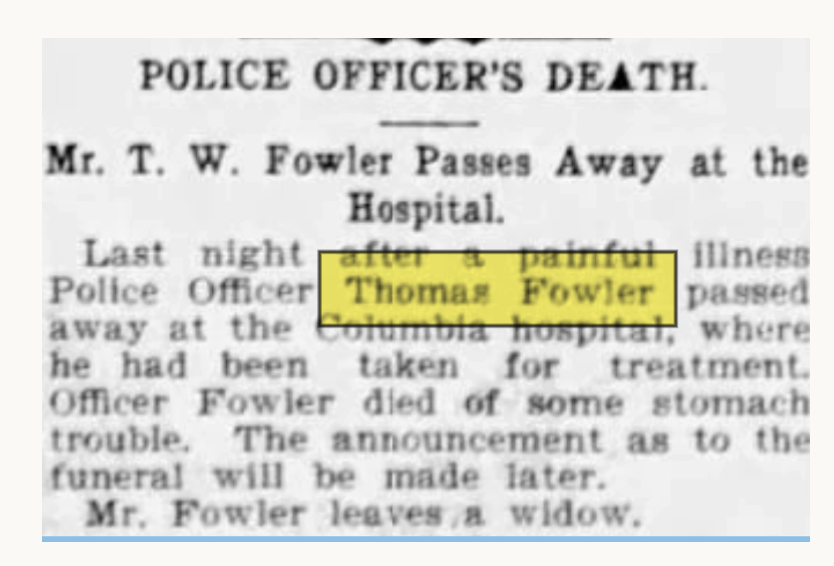
After his death in 1903, Thomas William Fowler, the policeman, was buried at Elmwood Cemetery in Columbia.
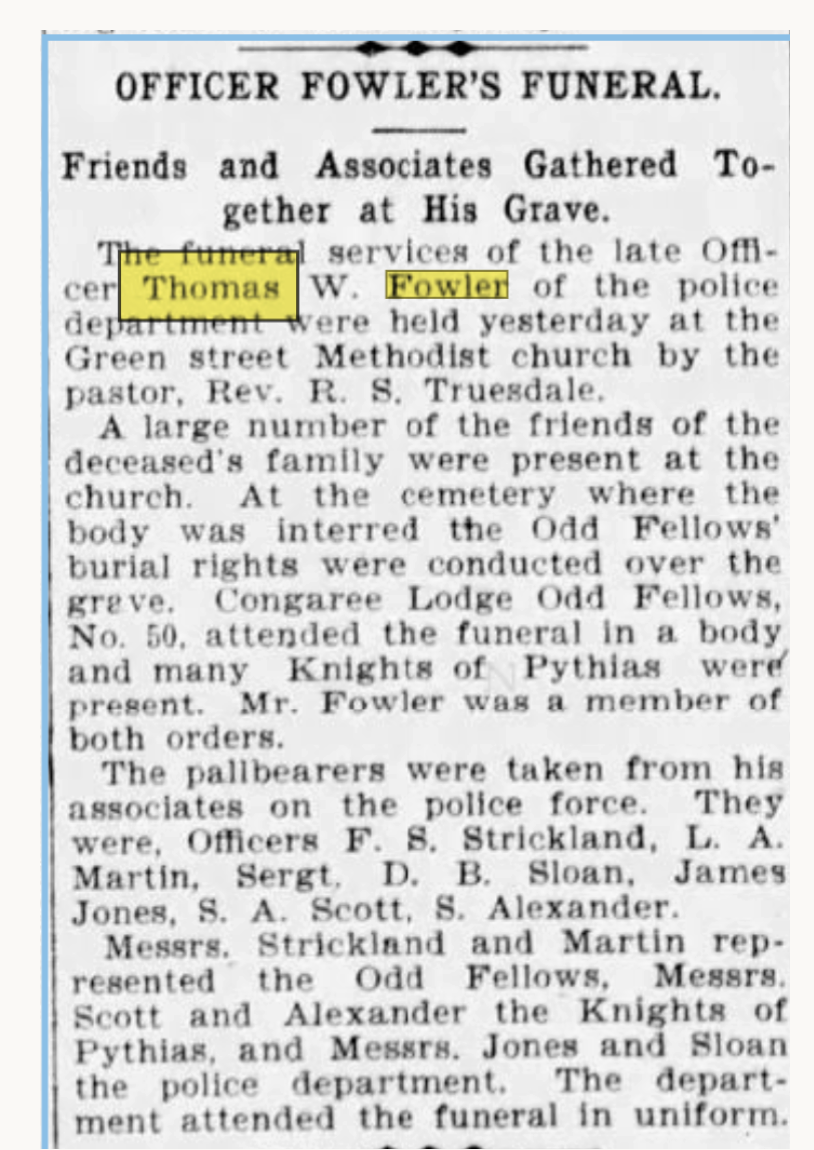
Call it speculation—good speculation, born of shadows, records, and the quiet logic of blood. I am willing to bet the farm that the boy born William Thomas Fowler in 1858, son of Gazaway Fowler and Elmira Smith, turned his name like a coin in his hand and stepped into manhood as Thomas William Fowler.
And now, DOCUMENTED ABSOLUTE TRUTH BASED ON FACTS:
The probate petition below concerns the estate of Elmira A. Fowler of Fairfield County, South Carolina, who died intestate in September in 1911. She left a modest estate and several adult children and grandchildren as heirs.
The petitioner, her son J. S. Fowler, requested administrative authority to settle her debts and distribute the estate. The document provides detailed intergenerational family relationships among the Fowler, Mayo, Sharpe, Kelly, Hart, Heron, and Reeves families.
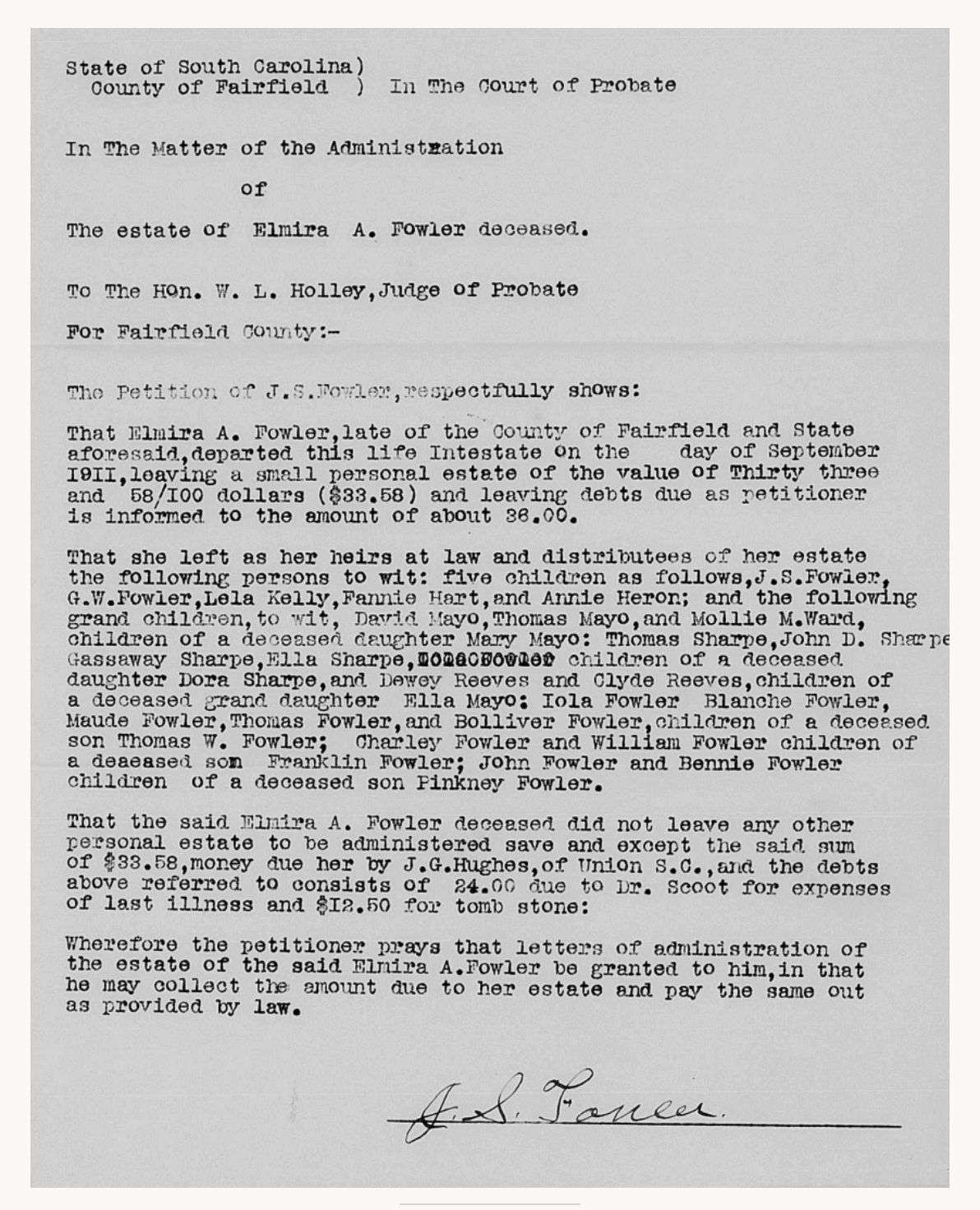
A summary of the petition is below:
Elmira A. Fowler: deceased, mother of :
J. S. Fowler,
G. W. Fowler
Lela Kelly
Fannie Hart
Annie Heron
and deceased children:
Mary Mayo
Dora Sharpe
Thomas W. Fowler
Franklin Fowler
Pinkney Fowler:
and grandchildren:
Mary Mayo (deceased): daughter of Elmira A. Fowler, mother of David Mayo, Thomas Mayo, Mollie M. Ward, and the deceased Ella Mayo
Dora Sharpe (deceased): daughter of Elmira A. Fowler, mother of Thomas Sharpe, John D. Sharpe, Gassaway Sharpe, and Ella Sharpe
Thomas W. Fowler (deceased): son of Elmira A. Fowler, father of Iola Fowler, Blanche Fowler, Maude Fowler, Thomas Fowler, and Bolliver Fowler
Franklin Fowler (deceased): son of Elmira A. Fowler, father of Charley Fowler and William Fowler
Pinkney Fowler (deceased): son of Elmira A. Fowler, father of John Fowler and Bennie Fowler
Ella Mayo (deceased): granddaughter of Elmira A. Fowler, daughter of Mary Mayo, mother of Dewey Reeves and Clyde Reeves (the two Reeves boys were great grandsons of Elmira Fowler)
The petition to settle the estate of Elmira Smith Fowler is solid proof that Thomas William Fowler — son of Gazaway Fowler and Elmira Smith — did NOT die in 1937 and is NOT buried at Phillipi Cemetery in Union County.
In the end, the truth stands exactly where the records left it, steady as a gravestone in a Carolina sunset. Two men named Thomas Fowler walked through the nineteenth century, but they walked on different roads, in different counties, toward different destinies.
One rests beneath the oaks of Elmwood in Columbia; the other lies in the quiet earth of Philippi. Their stories were never one story at all. And now, with the evidence gathered and the lines restored, each man can return to his rightful place in the Fowler family history—separate, distinct, and finally seen for who he truly was.
LETTIE FOWLER (1860–)
Her name — Lettie — appeared in one census record only. Then the trail ended.
A decade later, her name was absent from the census taken in 1870. Instead, the household included an eight‑year‑old daughter named Leila, whose age would place her birth around 1862.
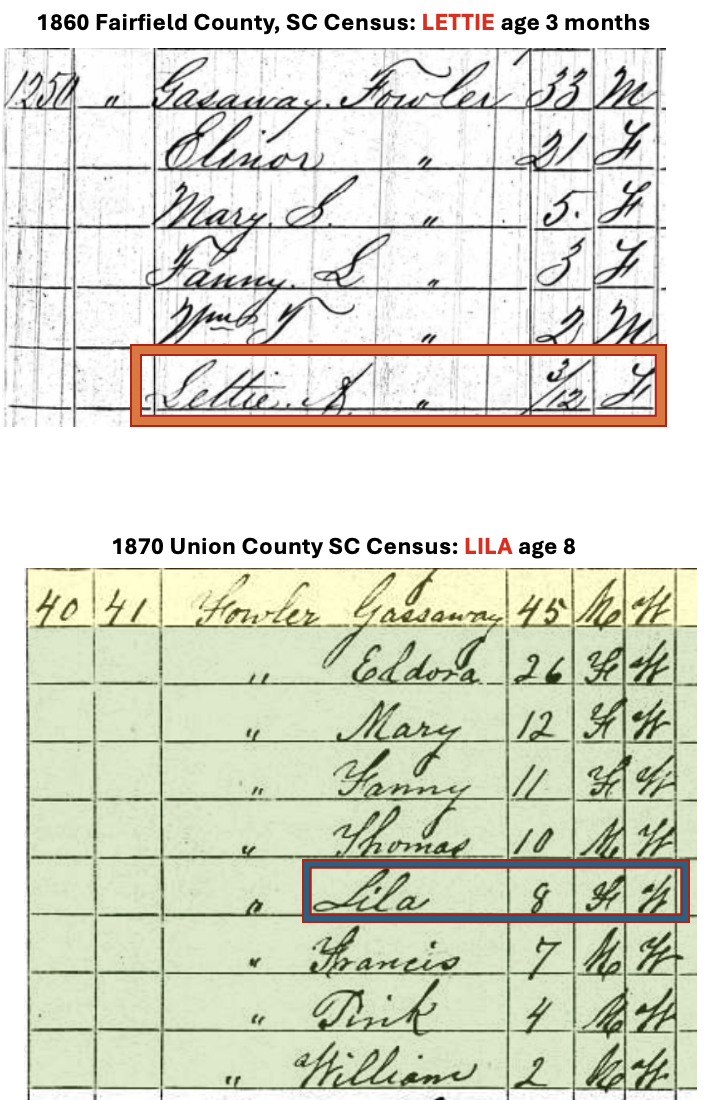
The surviving evidence does not clarify the relationship between these two entries. It is possible that the two names refer to the same child, recorded differently across census years.
It is also possible that Lettie died between 1860 and 1870, and that Leila represents a later daughter born after that loss. No burial record, Bible entry, or civil documentation has been found to confirm either scenario.
Without additional documentation, the truth remains just beyond reach. Whether through loss, renaming, or the arrival of a new child, the records preserve only the outline of what happened. The full story, like so many in nineteenth‑century families, rests in the quiet space between the lines.
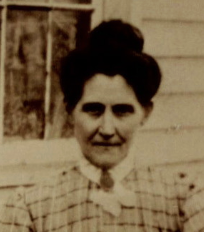
To confuse researchers even more, there is a photograph widely circulated in online family trees, often labeled as depicting the sisters Lettie and Leila.
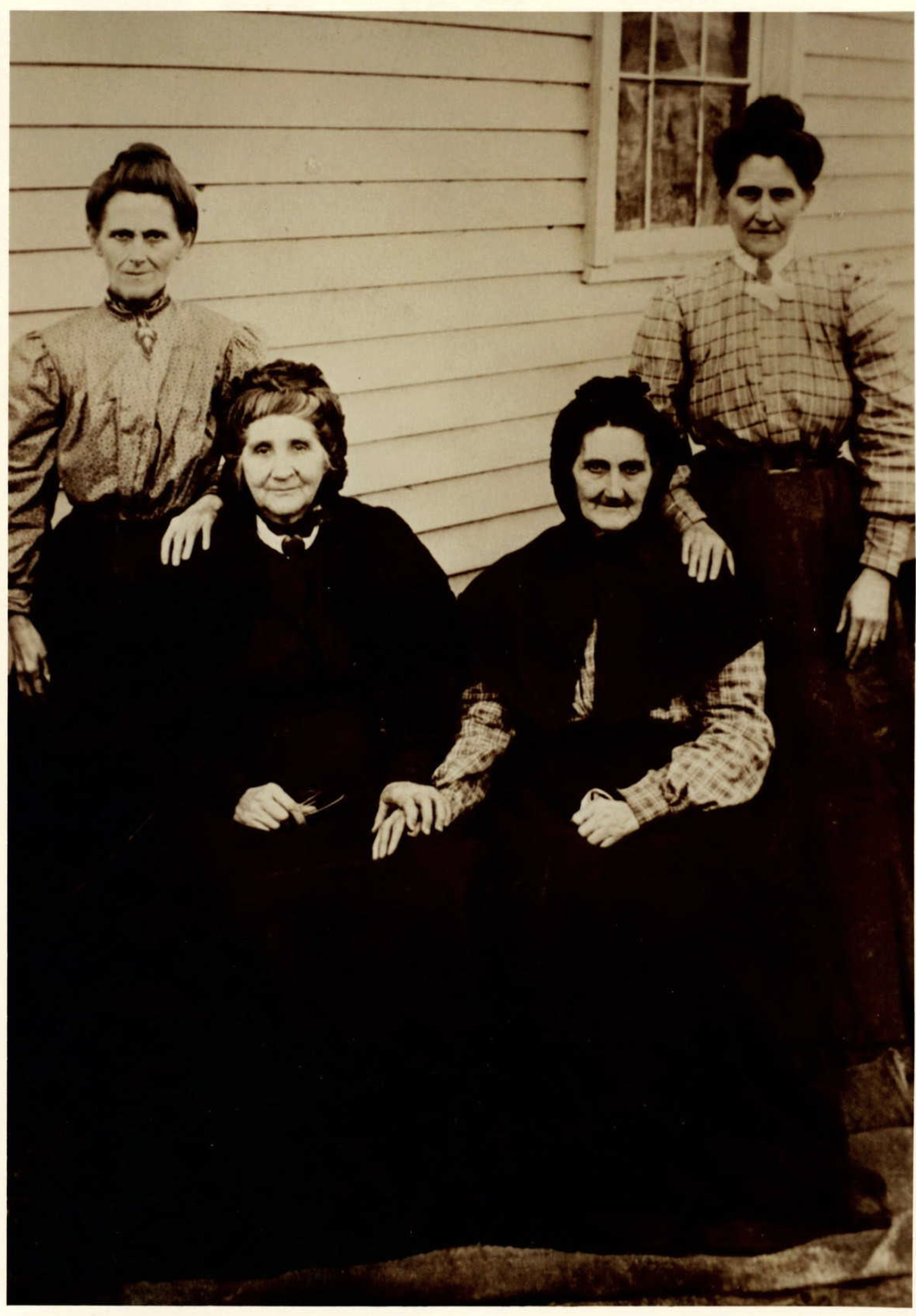
Does someone have evidence that alludes me, or are the names attached to the image extreme speculation?
To lend credence to the photograph, it was originally added online by a direct descendant of Leila Fowler.
The little girl looking out the window is Maybelle Kelly, the daughter of Leila Fowler and her husband Abram Silas Kelly. Maybelle was born in 1897; the photograph was taken around 1900.
As an adult, Maybelle identified the women in the image as her aunt Lettie, her mother Leila, her grand- mother Elmira, and possibly her grandmother’s sister.
Maybelle’s own grand- daughter gave me this information. Lettie was a child separate from Leila, and Lettie lived to be an adult, about age forty in 1900.
Where was ten-year old Lettie in 1870? I do not have any answers as of this moment, but I have — of course — speculation!
In 1860, Lettie is three months old and found in the household of Gazaway and Elmira Fowler.
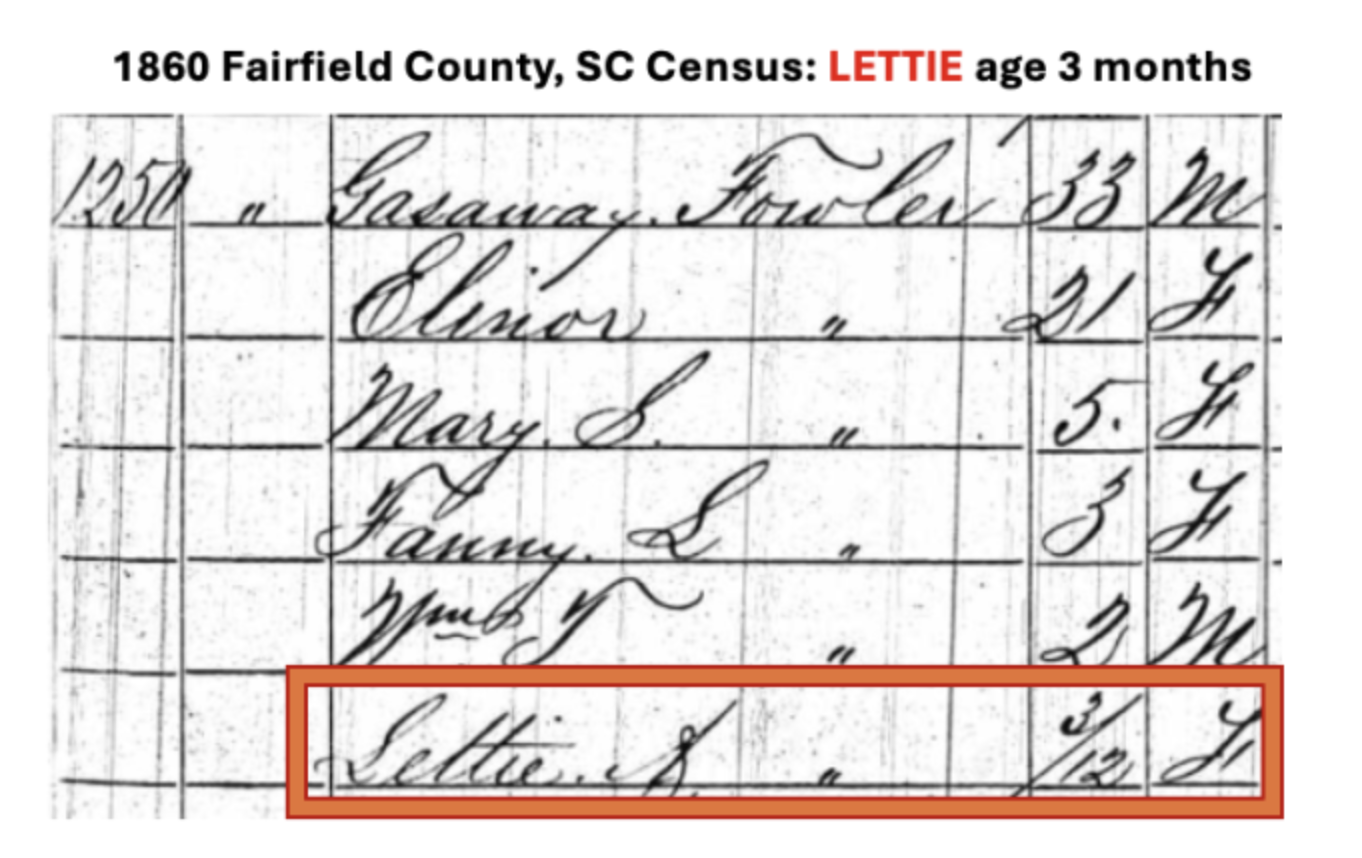
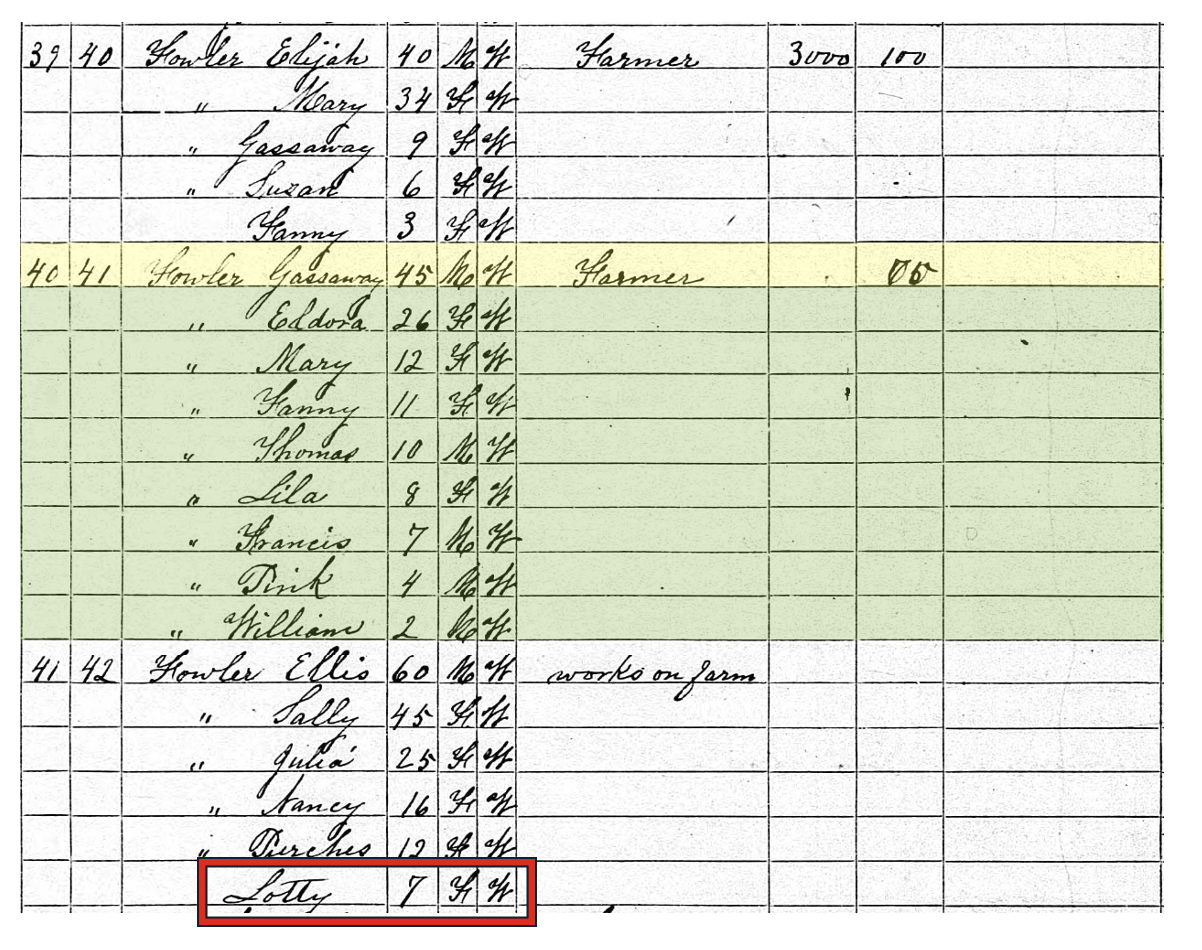
In 1870, the Gazaway Fowler family lived in Union County sandwiched in-between two Fowler families —
Elijah Fowler, in the adjoining household was the younger brother of Gazaway. He and his wife Mary named their first daughter Gazzaway Josephine “Josie” Fowler.
Born ca. 1810, Ellis Fowler (son of Ellis Fowler born 1770, son of Henry Ellis Fowler d. 1808) lived on the other side of Gazaway and Elmira. The younger Ellis Fowler and Gazaway Fowler were first cousins once removed.
Was “Lotty” in the Ellis Fowler household of 1870 the “Lettie” in the Gazaway Fowler household of 1860? I do not know.
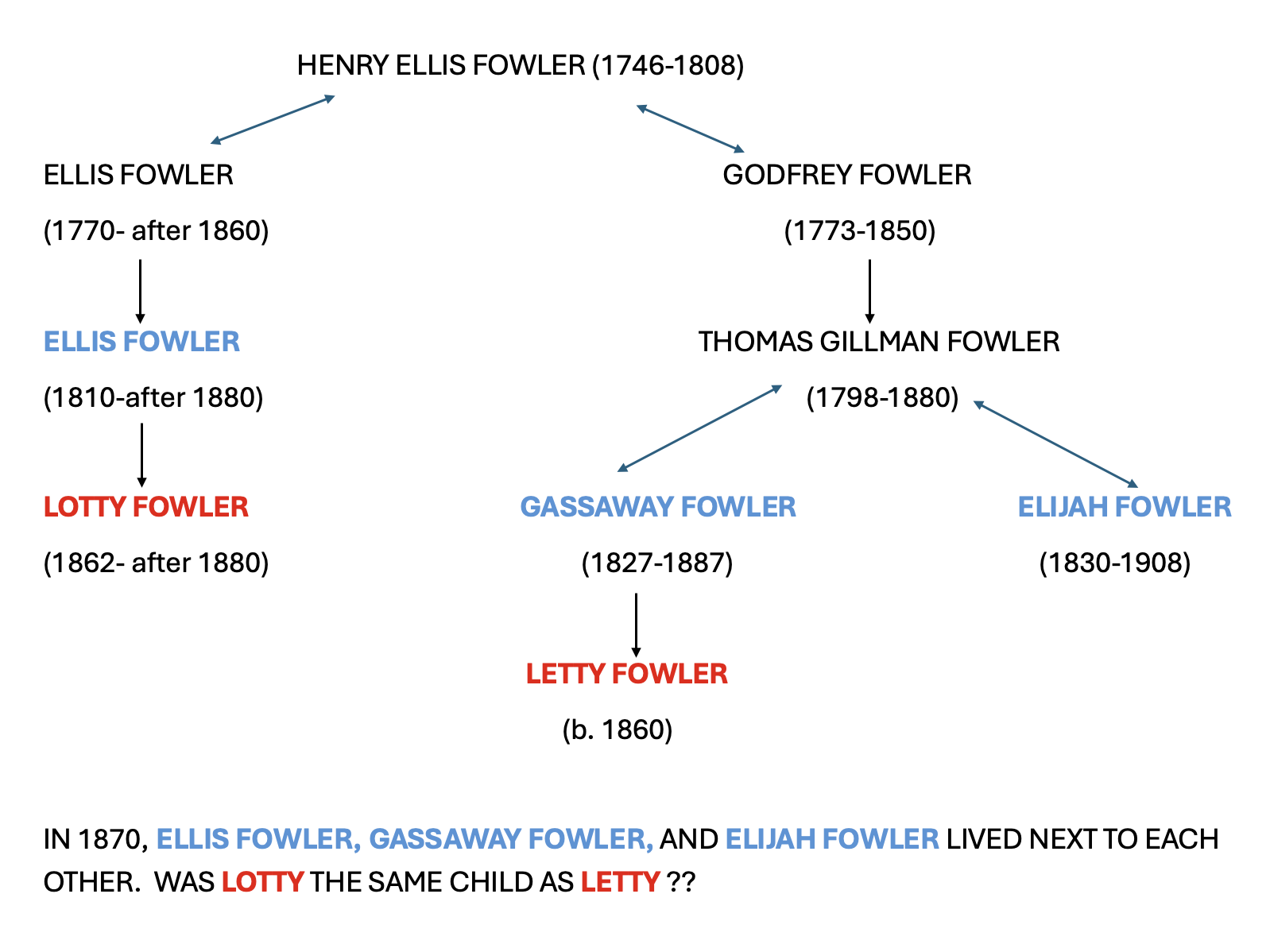
I have no concrete answer now, but my research will continue on the child named Letty.
LEILA A. FOWLER (1862–1947)
Leila Fowler was born about 1862. That is, unless she was the daughter named Letty born in 1860. Although her early years may be surrounded in confusion and mystery, what is certain is her marriage about 1882 to Abram Silas Kelly (1848-1911).
Abram was the son of Jimeson Gazaway “J.G.” Kelly (1836-1906). It was this Kelly family in which the small town of Kelton in Union County was named after.
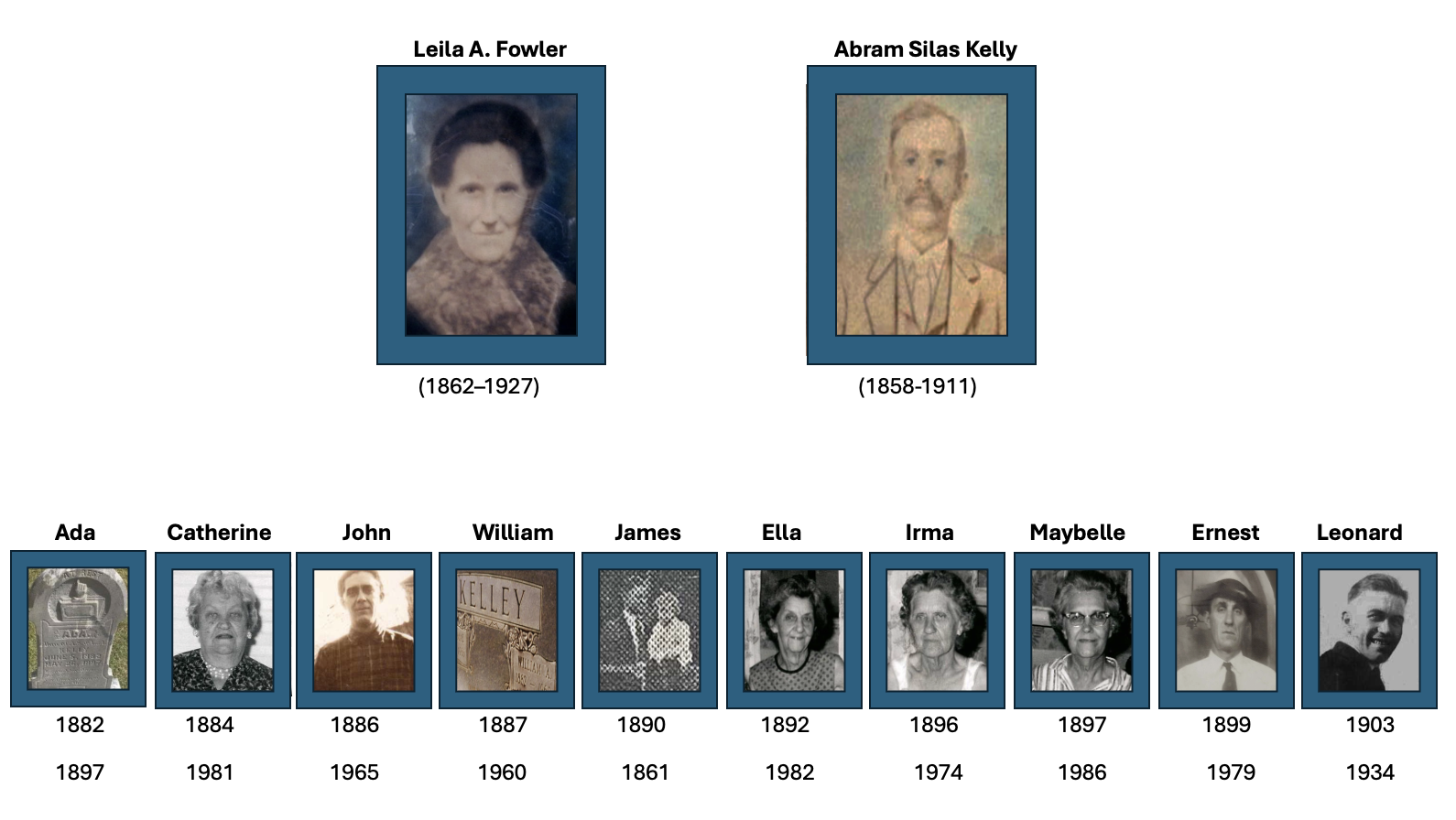
In the early years of their marriage, Abram Kelly and his wife Leila Fowler lived in Kelton where they raised their five sons and five daughters:
- Ada Kelly (1882–1897)
- Catherine Elizabeth Kelly (1884–1981)
- John Belton Kelly (1886–1965)
- William “Willie” Abram Kelly (1887–1960)
- James Joe (Jim) Kelly (1889–1961)
- Ella Lane Kelly (1892–1982)
- Esma Elizabeth Irma Kelly (1895–1974)
- Maybelle Kelly (1897–1986)
- Ernest Everett Edward Kelly (1899–1979)
- Leonard Kelly (1903–1934)
Like so many families in the upstate, the Kellys were swept into the great shift that remade the Carolina Piedmont at the turn of the century. Farming had become a thin, uncertain living, and the cotton mills — rising one after another along the rivers — promised wages, housing, and a ready-made community.
But the promise was a thin one. Long hours, backbreaking labor, lint-filled air, and the absence of child‑labor laws meant that whole families, children included, were pulled into the machinery of mill life. The mill houses, the mill store, the mill-sponsored events — all of it created the appearance of stability, even generosity. But anyone who looked closely could see the truth: the “benefits” were a smokescreen for dependence.
By 1900, Silas Kelly had moved his family into the Pacolet mill village, joining the thousands who traded fields for spinning frames. Silas worked in the mill alongside his sixteen‑year‑old daughter Catherine, and his sons John, Willie, and Jimmie, ages fourteen, thirteen, and eleven. Children that young were prized by overseers — small hands, quick fingers, and no power to refuse.
Then came the disaster that reshaped the region’s memory for generations.
In June of 1903, the Pacolet River rose in a sudden, violent flood, destroying the mills at Clifton, Glendale, and Pacolet. Entire mill villages were swept away. Houses, machinery, cotton bales, and human bodies tumbled downstream in a churning mass.
Many of the dead were never recovered. Others were found months later, miles away, buried under mud and debris, unrecognizable. They were laid to rest in hurried graves along the riverbanks, their names lost.
The Abram Silas Kelly family survived — a miracle, or perhaps simply luck. But the trauma of that flood left its mark on the region. And ten years later, the Kellys were nowhere near a river.
By 1910, they had moved to the Union mill village. Silas himself no longer worked in the mill, but the next generation had taken his place. Jimmie, now grown, worked the looms, as did the younger daughters Ella, Irma, and thirteen‑year‑old Belle. The pattern was familiar across the Piedmont: one generation worn down by the mills, the next pulled in by necessity.
The Kellys’ story is part of the larger tapestry of families who traded one hard life for another, hoping for stability, finding instead a world where survival depended on endurance, community, and the stubborn will to keep going.
Abram Silas Kelly died in 1911. Fast forward to 1920: Leila was head of household in Union, South Carolina, her younger children still toiled in the mill.
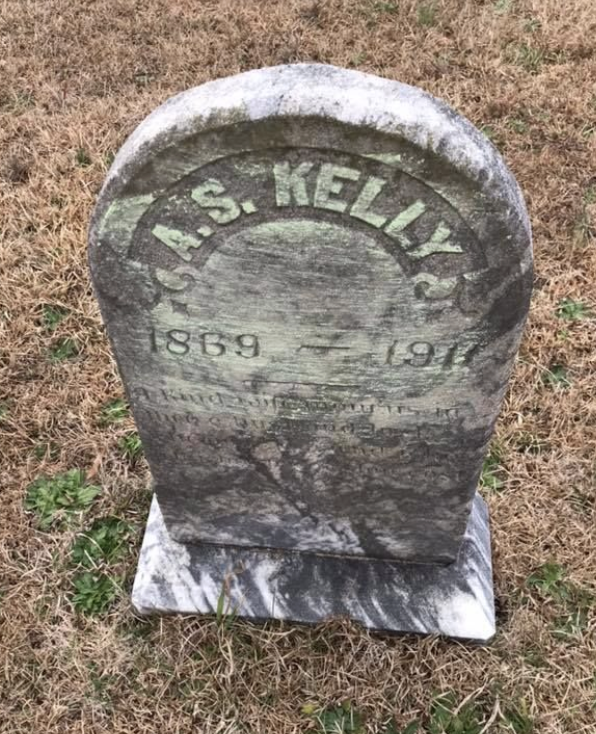
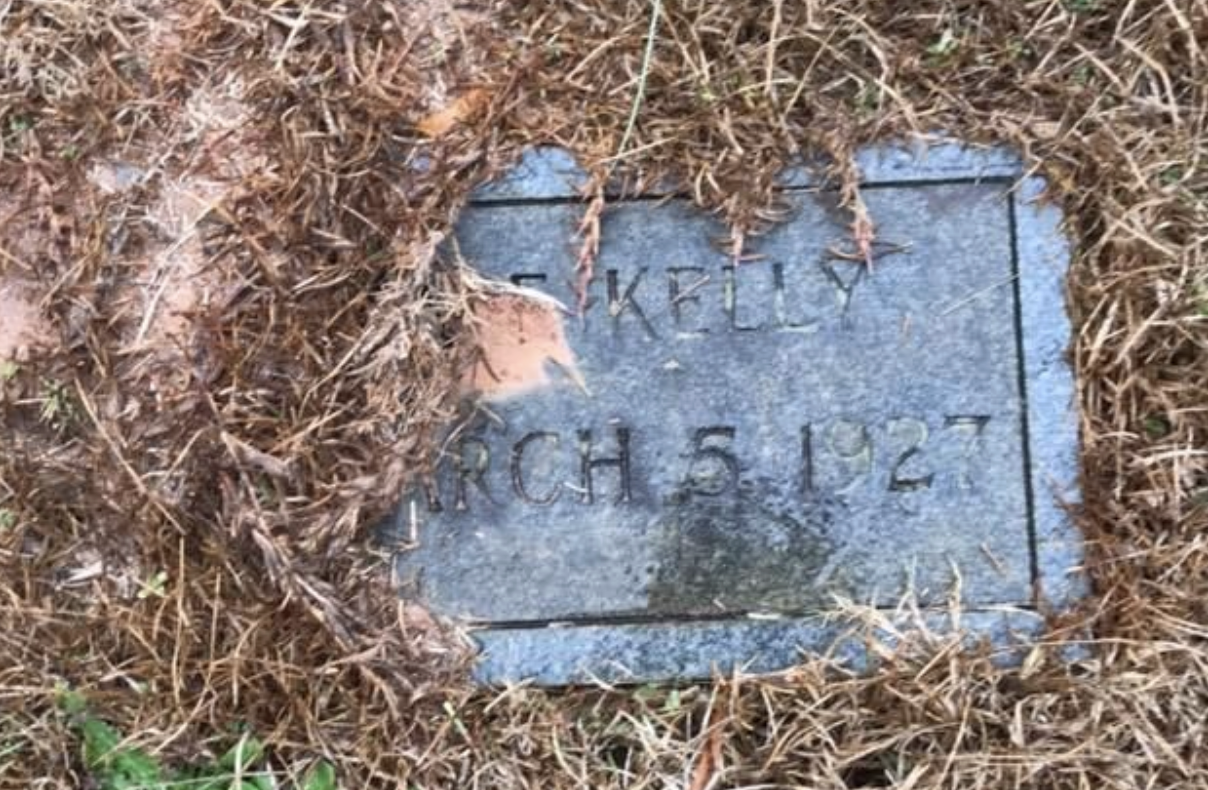
Leila Fowler Kelly died March 5, 1927 and was laid to rest beside Silas at Rosemont Cemetery in Union.
FRANCIS “FRANK” H. FOWLER (1863–1893)
Sometimes a life can leave only the faintest ripples in the record, yet still be felt if you listen closely.
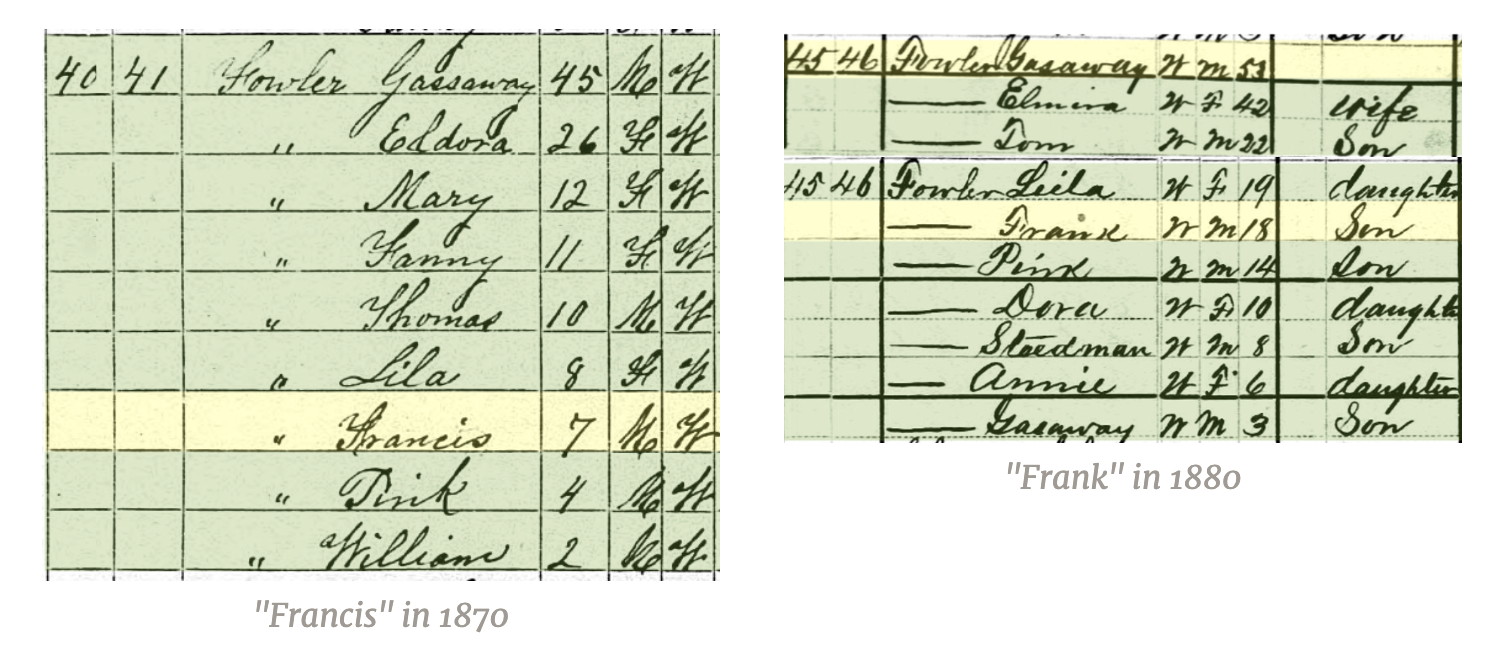
This son born to Gazaway and Elmira seems to have passed through the world with little fanfare, leaving only the softest trace in the surviving record. In the 1870 census he appears as Francis, a three‑year‑old boy in his parents’ Fairfield County household. A decade later, the enumerator recorded him simply as Frank, the familiar nickname that so often replaced the more formal Francis in rural Carolina families.
Beyond these brief notations, his life remains largely unmarked in public documents — a reminder that not every child of that generation grew into a figure who left deeds, land, or long lines of descendants behind. Some lived quietly, worked steadily, and slipped away before the century turned, remembered chiefly within the family circle that knew them.
There is one more shadowed thread in this part of the family story — the possibility that Francis was not born alone. On August 29, 1863, Cornelia Catherine Smith Henry wrote in her diary that her sister Elmira’s baby had died.
The entry is brief, almost stark, but its timing aligns with a rumor that has circulated quietly for years: that Elmira lost one of a pair of twins. No document has surfaced to confirm it, yet Cornelia’s firsthand account lends a measure of credibility to what might otherwise be dismissed as family lore.
If Francis did have a twin, the child slipped from the record before leaving even a single census trace, remembered only in the grief of a sister writing by lamplight during the war.
Francis grew into Frank in the quiet, red‑clay farmlands of Fairfield County, slipping from boyhood into manhood with little fanfare. He and his younger brother Pinckney were close in age. Their lives ran in parallel lines — the same fields, the same chores, the same long walks to neighboring farms, the same family stories passed down by lamplight.
In a rural world where brothers often became each other’s first companions and lifelong allies, Frank and Pinckney moved through their youth almost as a pair. What touched one usually touched the other.
When Frank married Frances Bagley, Pinckney soon followed with a marriage to her sister Susan Elizabeth Bagley. Two Fowler brothers, two Bagley sisters — a double joining of families that bound their futures even more tightly.
Their move down the Broad River twelve miles to the little settlement of Bookman was another shared step, a migration measured not in great distances but in intention. For a brief span, the brothers’ paths remained side by side — two new households, two young wives, children arriving, the rhythm of farm and community life unfolding as expected.
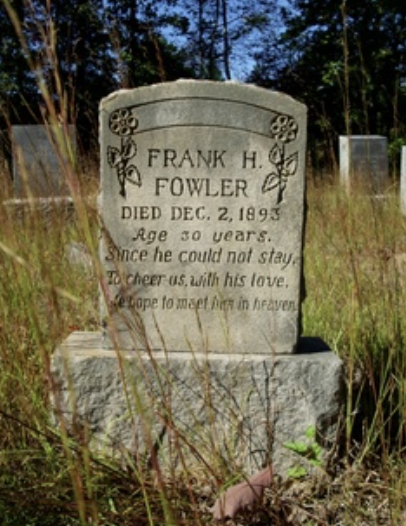
But Frank’s early death on the second day of December in 1893 broke the symmetry. At just thirty years old, he became the first of the Fowlers to be buried at Cedar Creek Methodist Church Cemetery, leaving Fannie with two small sons and leaving Pinckney without the brother whose life had always run alongside his.
After the death of Frank, his widow Frances married twice more: James Frank Meetze (b. 1848) and David Durant Stokes (1876–1932).
Frances Bagley Fowler Meetze Stokes died June 13, 1944 in Spartanburg. She was buried at Elmwood Cemetery in Columbia.
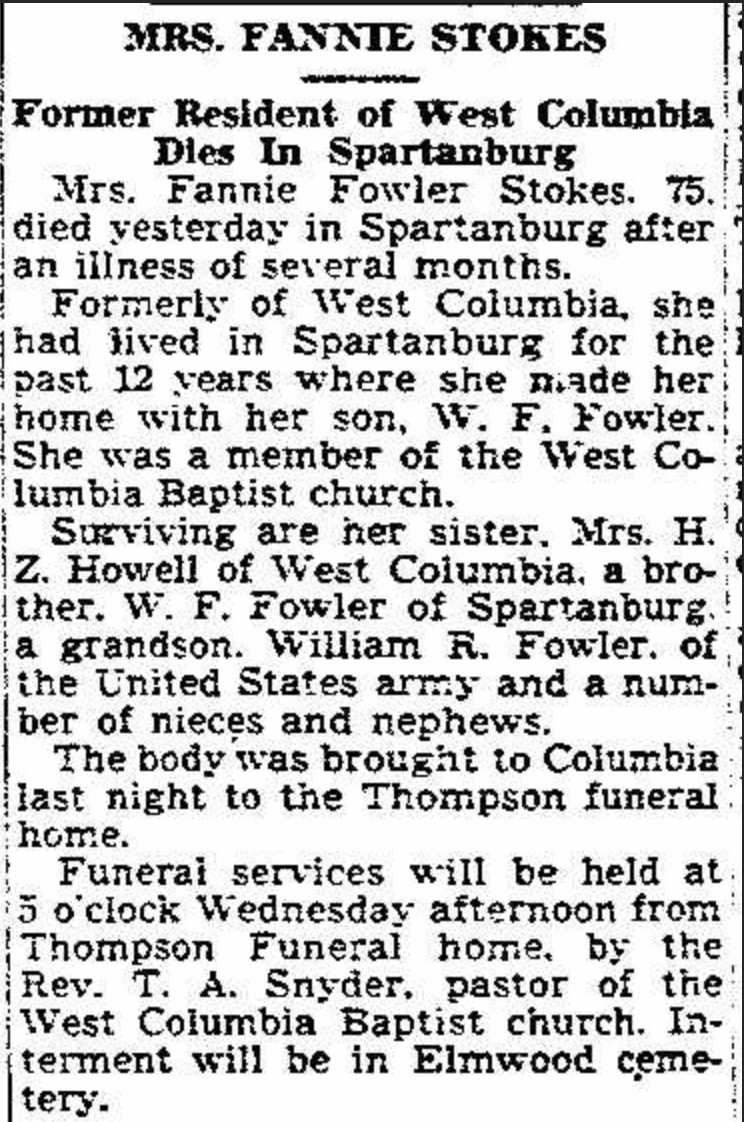
Frank Fowler’s legacy would have to be carried forward into the future by the two sons he left behind.
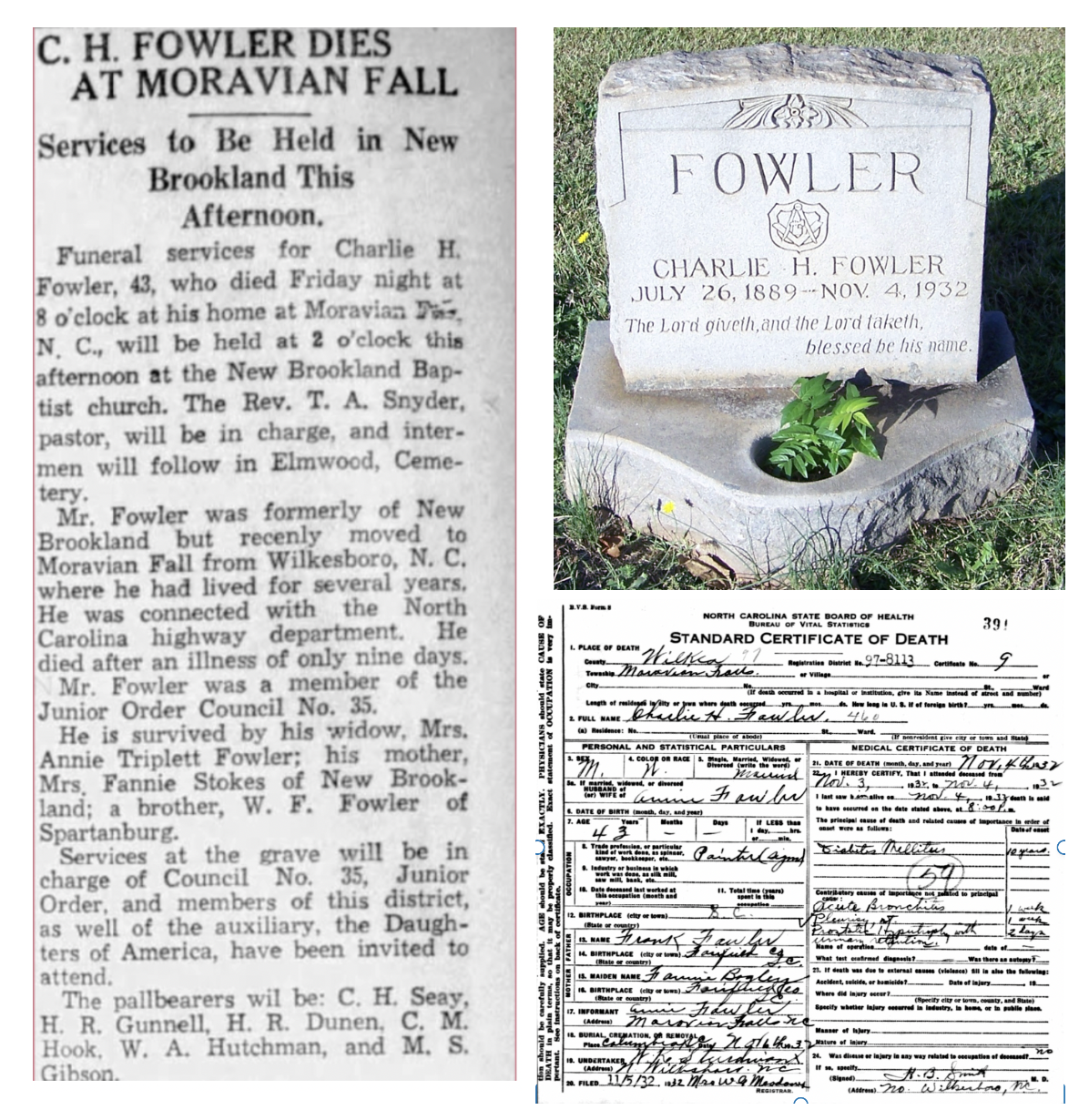
Charles Hampton Fowler was born on July 26, 1889 in the historic but now extinct town of Bookman.
He married Annie Belle Bumgarner(1889–1968). They lived in several Carolina towns over the years — Columbia, SC, Wilkesboro, NC, and finally, Moravial Fall, NC where Charles Hampton Fowler died in 1932. He was laid to rest at Elmwood Cemetery in Columbia.
They had no children.
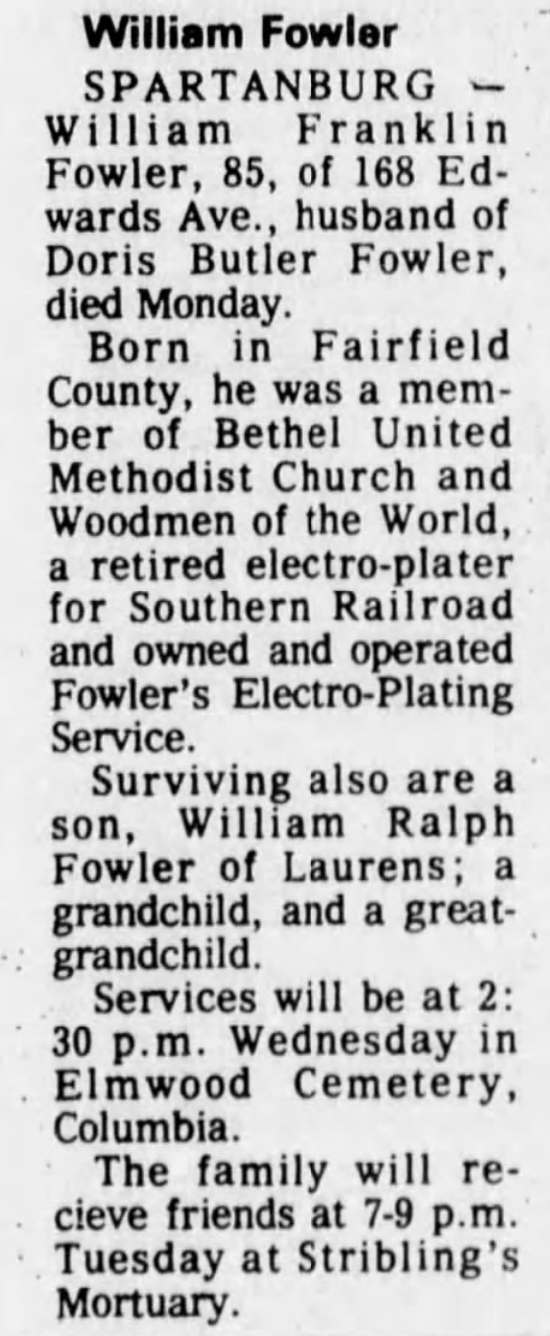
William Franklin Fowler was born in 1891 (or 1892 as per some records). He married Doris Brierly Butler (1895–1984).
They had one son, William Ralph Fowler (1918–2002).
William Franklin Fowler worked for Southern Railroad and owned his own business.
William Franklin Fowler died April 25, 1977 in Spartanburg. He was buried at Elmwood Cemetery in Columbia. Frances and her two dark-haired, brown eyed sons —Charlie and Willie — were finally together again.
PINCKNEY GADBERRY FOWLER (1866–1895)
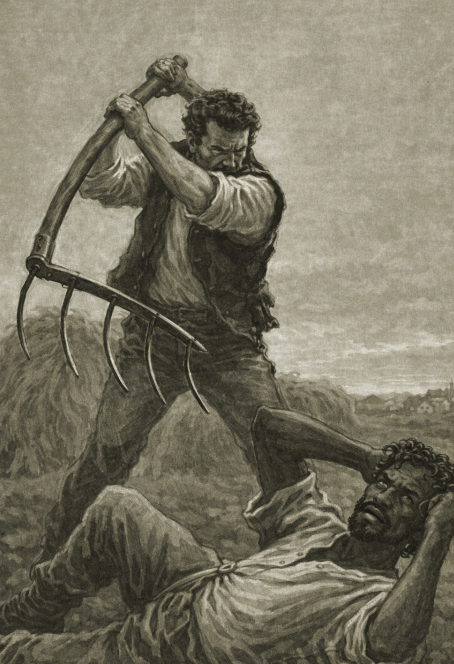
Born a year after the Civil War ended, Pinckney Gadberry Fowler was “hated by white and colored.” There may have been many reasons. The incident at Fowler’s Spring where he twice struck a young black male on the head with a cradle blade and stick gives us a glimpse into the nature of his character.
Pink Fowler married Susan Elizabeth Bagley (1871-1943).
A daughter and two sons were born to the couple in the tiny town of Bookman, located on the Broad River about 12 miles south of Jenkinsville.
- Mattie E. Fowler (1890-1896)
- John Gadberry Fowler (1892–1970)
- Benjamin Tillmore Fowler (1894–1959)
The two sons of Pinckney Gadberry Fowler lived long lives and left descendants to carry on their branch of this family.
Their little sister Mattie was only six years old when she died in 1896, a year after the death of her father. She was laid to rest in the Cedar Creek Methodist Church Cemetery.
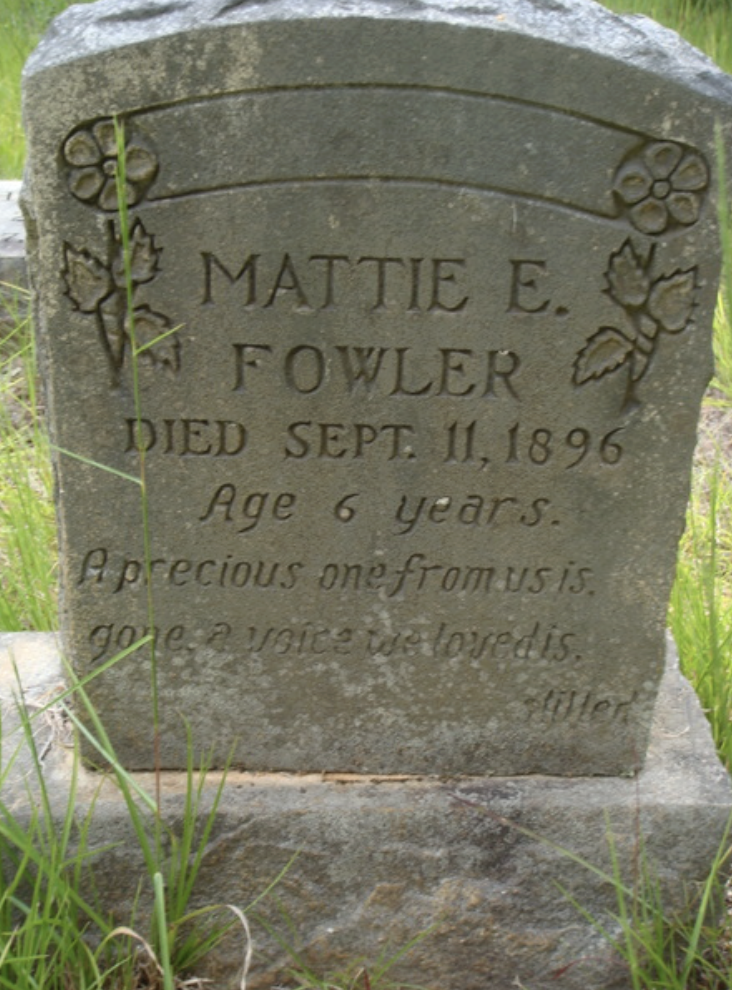
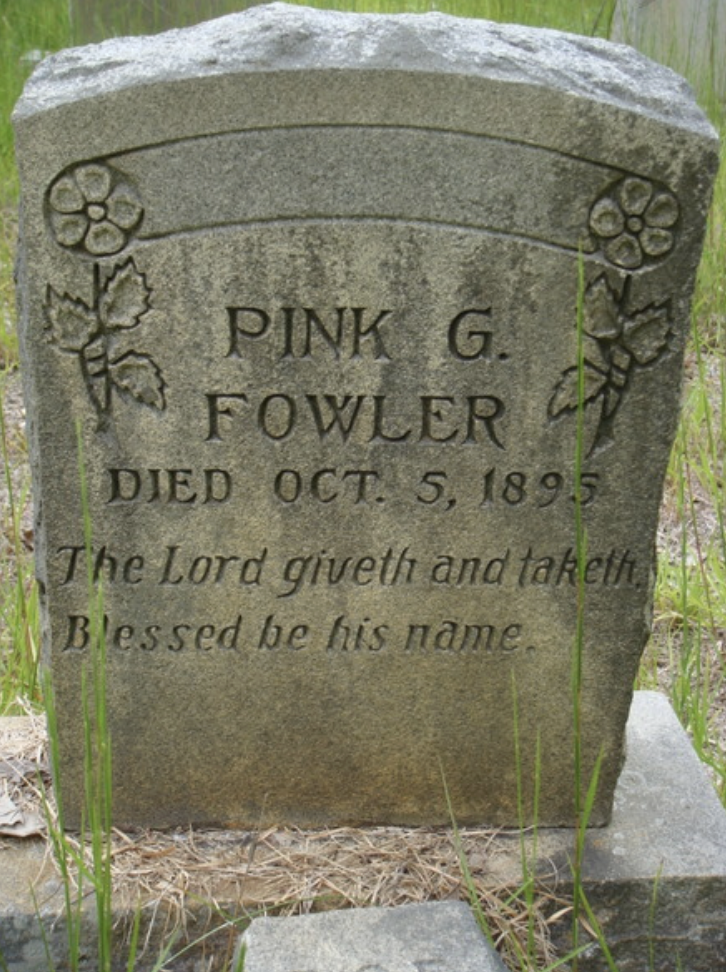
Despite careful searching, no record has yet surfaced to explain the 1895 death of Pinckney Gadberry Fowler — a man only twenty‑nine years old, still in the prime of his life.
Did illness strike suddenly, or was there an accident, a misstep in the fields or on the road? Or did the animosity that once surrounded him — the resentment of those who had been wronged or provoked — play some darker role in his end?
The silence of the surviving documents leaves only speculation. His death on the fifth of October, 1895, unrecorded in detail, stands as one of those small but piercing mysteries that linger in family history: a life cut short, a story half‑told, and a name carried forward only through memory and the two sons he left behind.
He was buried at Cedar Creek Methodist Church Cemetery, not so very far from his home on the river.
MEDORA FOWLER (1870–1900)
Medora “Dora” Fowler entered the world around 1870, named for her mother’s sister, Medora Drucilla Smith (1841–1915). She grew up in the familiar rhythms of Fairfield County and, still a young woman, married William J. Sharp about 1888.
Her married life was marked by both hope and hardship. Like so many women of the late nineteenth century, Dora faced the dangers of childbirth again and again; of the seven children she bore, only four were living by 1900.
That same year, in November, her own life came to an abrupt end. Whether she died in childbirth or from one of the many illnesses that claimed young mothers of her era is unknown, but the loss was deeply felt. Though her years were few, her legacy endured—carried forward in the lives of her surviving children and in the generations that followed them.
The Known Children of Medora Fowler and William Sharpe:
- William Thomas Sharpe (1888–1971)
- John David Sharpe (1890–1929)
- Robert G. (Gazaway or Gary) Sharpe (1893–1952)
- Corrie Belle Sharpe (1894–1896)
- Ella Lou Sharp (1897–1969)
- Preston N Sharpe (1898–1899)
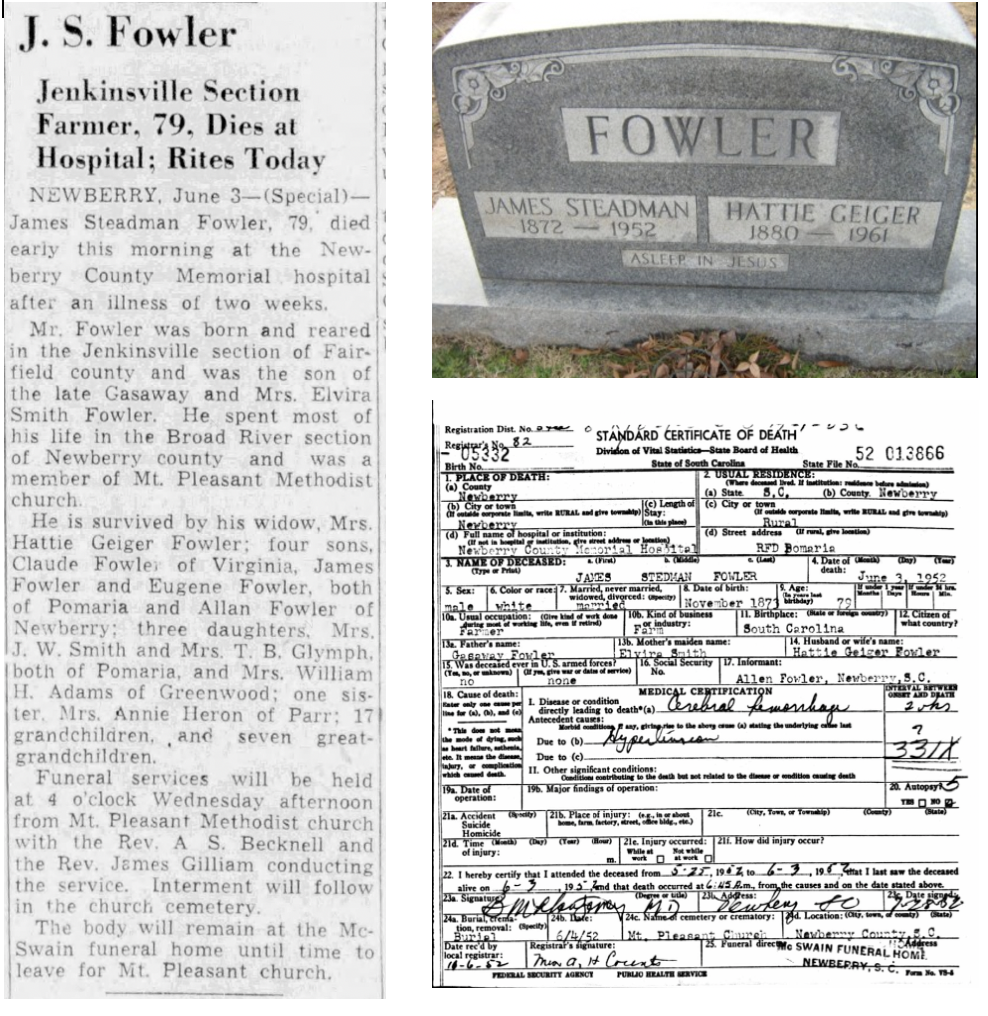
JAMES STEADMAN FOWLER (1872–1952)
James Steadman Fowler entered the world on the 8th of November, 1872, in Fairfield County, South Carolina — a name chosen with unmistakable intention. His parents honored James B. Steedman (1834–1885), the admired Union County officer who had led so many local men into the Civil War’s fiercest engagements. The name carried weight, memory, and a kind of inherited expectation.
A link:
Major JAMES BLAKE STEEDMAN (1834-1885)
In 1895, James Steadman Fowler married Hattie Elizabeth Geiger (1880–1961), beginning a partnership that would root itself not in Fairfield but in neighboring Newberry County. There, among the rolling farmland and close‑knit rural communities, they raised a large and lively family: four sons and three daughters, each carrying forward the Fowler and Geiger lines into the twentieth century.
Their children were:
- Claude Gazebury Fowler (1899–1973)
- Sadie May Fowler (1901–1974)
- James Joseph Fowler (1910–1952)
- Hattie Lee Fowler (1913–1997)
- Ruby Elizabeth Fowler (1918–2002)
- Steadman Allan Fowler (1921–1992)
- Eugene Glenn Fowler (1923–2008)
The family’s life in Newberry County appears to have been steady and rooted — farming, church life, and the rhythms of a rural community shaping the decades of their marriage.
Their children’s birth years, spread across nearly a quarter‑century, reflect a household that remained active, multigenerational, and deeply tied to place.
James Steadman Fowler died on June 3, 1952. He was laid to rest in the quiet churchyard of Mt. Pleasant Methodist Church in Pomaria, a burial ground shaded by pines and long associated with the families of the surrounding countryside.
Nine years later, in 1961, Hattie joined him there. Their graves lie side by side — a simple, enduring testament to a marriage that shaped generations of Fowlers in Fairfield, Newberry, and beyond.
ANNIE FOWLER (1875–1963)
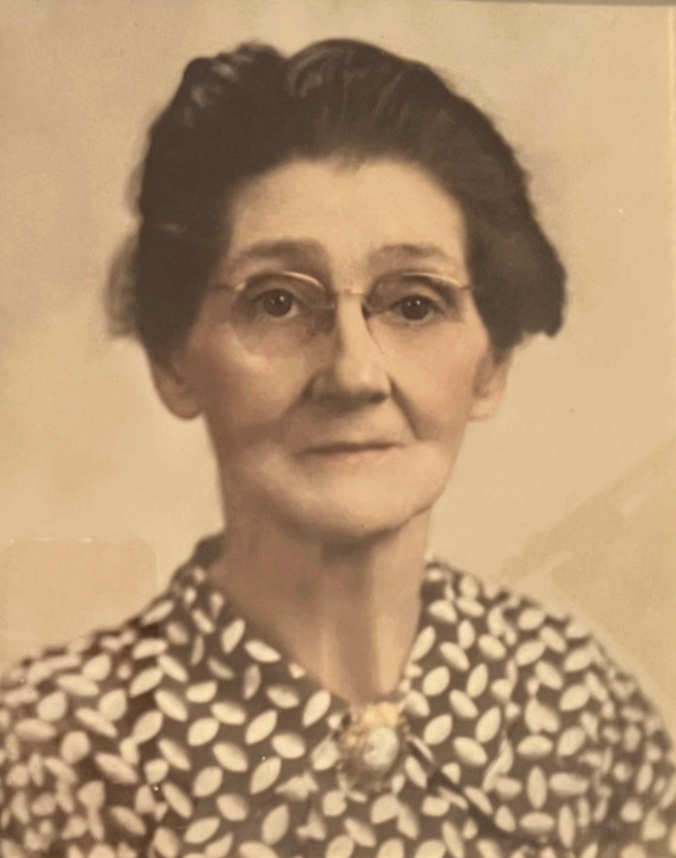
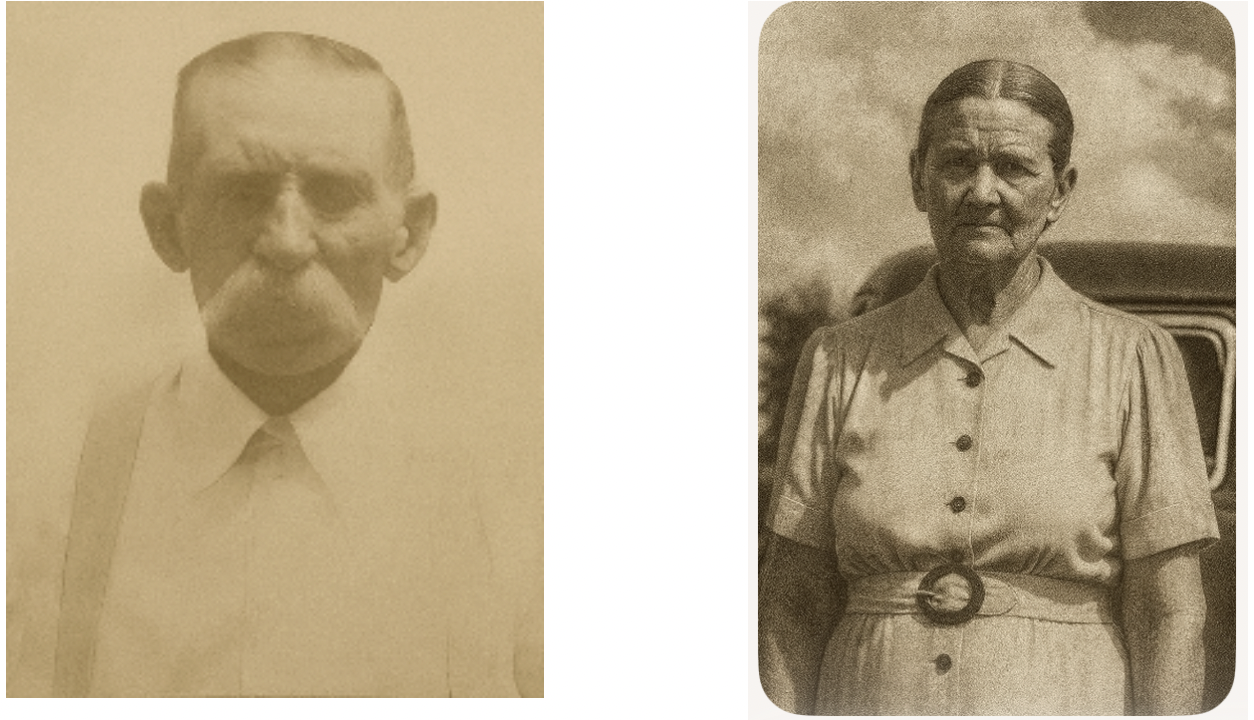
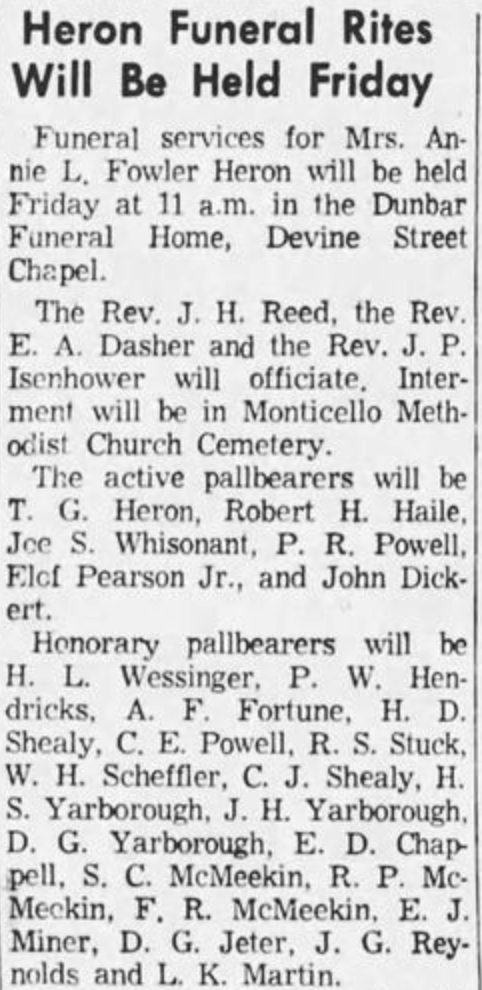
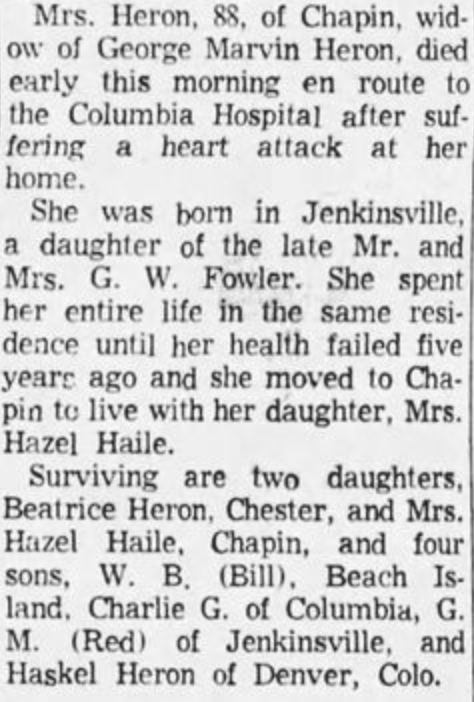
Annie Fowler carried her beauty into her later years with a kind of effortless dignity — the sort that does not fade so much as deepen. Even in the photograph taken long after her youth, the structure of her face still told the story: the high, chiseled cheekbones, the deep brown eyes that held light as though suspended in dark liquid pools, the clean, sculpted lines of her features that marked her unmistakably as Elmira’s daughter.
Handsome in her golden years, she must have been simply stunning as a young woman.
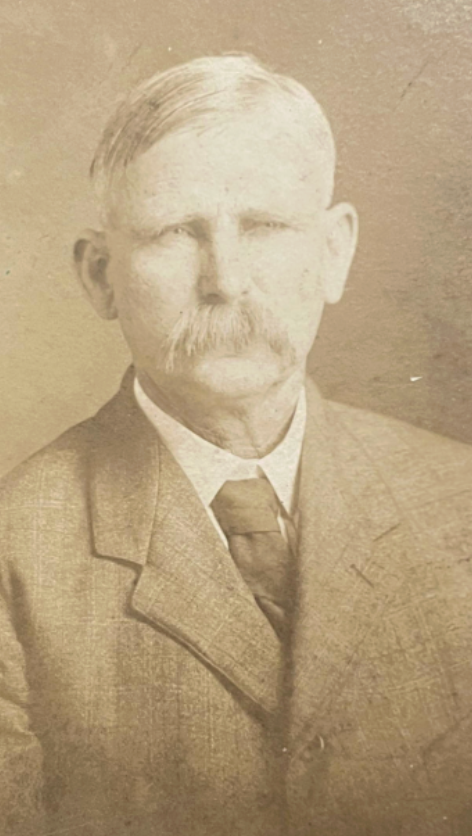
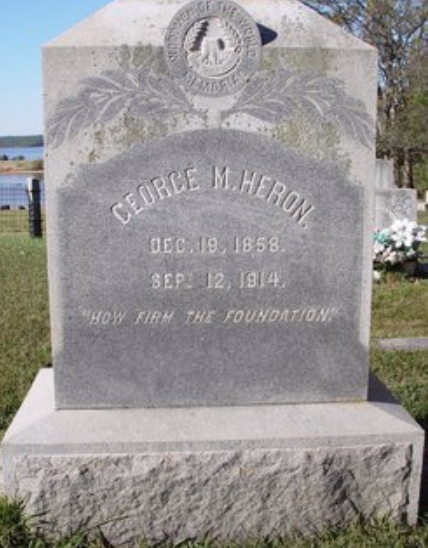
It is no surprise, then, that the man she married —George Marvin Heron — was himself a striking figure. Their pairing feels almost inevitable when you look at them — two people whose faces carried the same clarity of bone and confidence of bearing, as though each recognized something familiar and compelling in the other. Together they made a handsome couple, the kind who would have turned heads at church gatherings, family reunions, and the small social circles of Fairfield County.
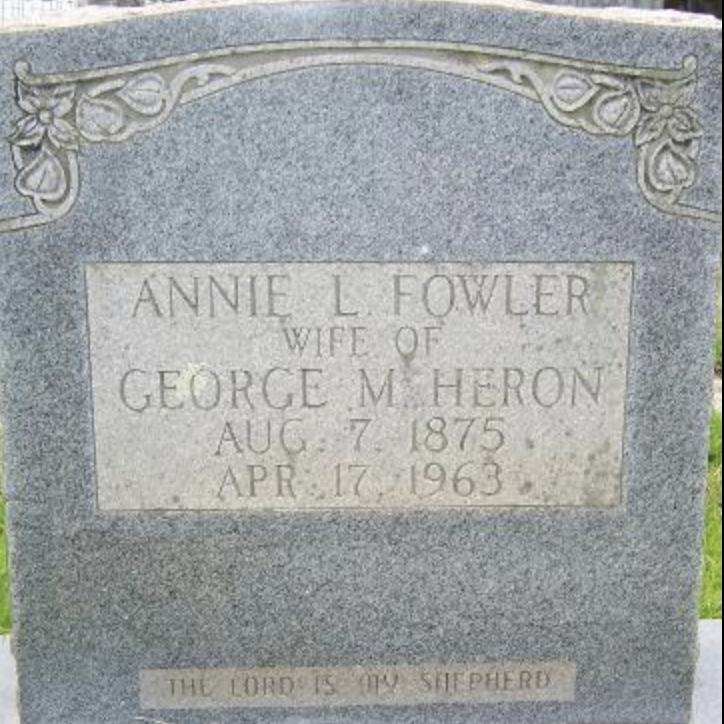
Annie and her husband married in 1891. By the turn of the century, Annie had endured the trials of early motherhood five times, yet only three of those children were living in 1900. In the years that followed, the household grew again—ten children in all were eventually born, though the names of only eight are known today:
- Edith Estelle Heron (1892–1915)
- Ella Heron (1897–)
- Willie Gifford Heron (1900–1970)
- Charlie G. Heron (1903–)
- Beatrice Heron (1906–)
- George Marvin Heron (1909–1964)
- Haskel Heron (1912–1996)
- Hazel Heron (1915–)
Even after the death of her husband, George, in 1914, Annie never strayed far from the place she had always called home—Fairfield County. The rhythms of that familiar red‑clay landscape held her fast.
Her life stretched long across the century’s great changes, and she remained anchored to the community that had shaped her from girlhood. Annie died in 1963, having witnessed more than seven decades of the county’s sorrows, recoveries, and slow transformations.
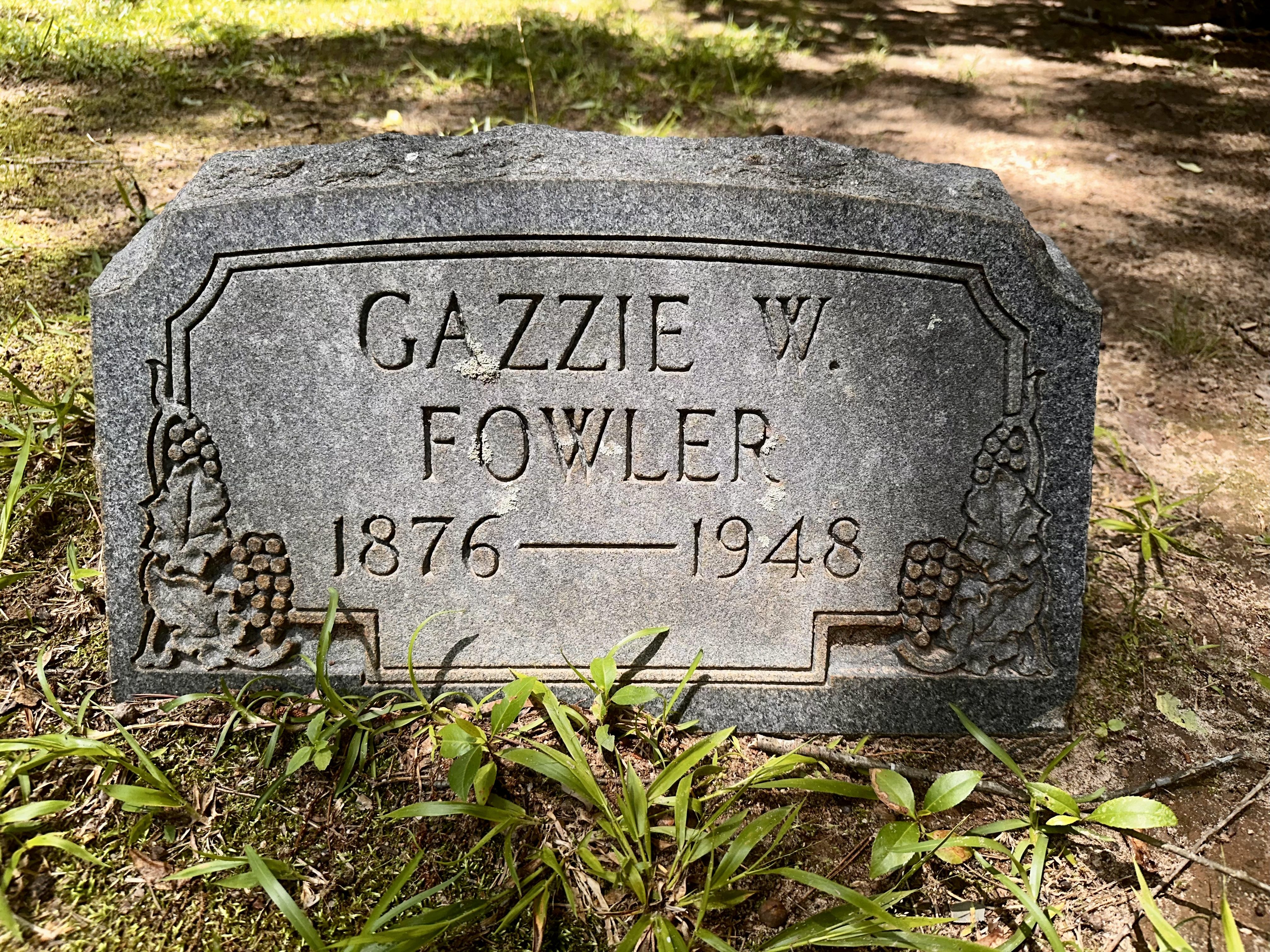
GAZZAWAY W. FOWLER (1876–1948)
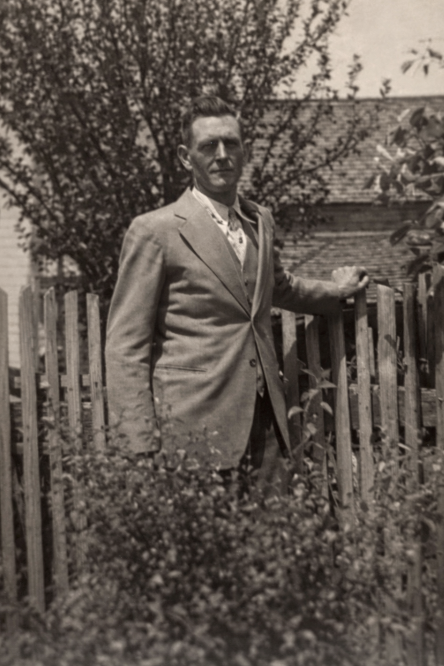
The last child born to Gassaway and Elmira was a son who carried his father’s name forward into another generation. Gazzaway Fowler, often called Gazzie, entered the world around 1876 in Fairfield County, the youngest in a long line of children whose lives were shaped by the slow unwinding of Reconstruction and the shifting fortunes of the Broad River families.
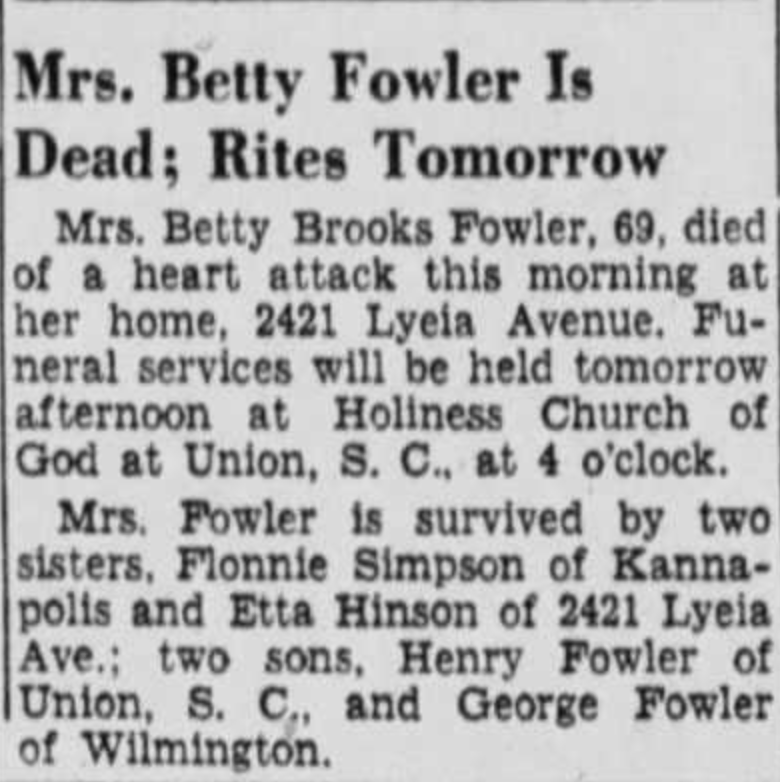
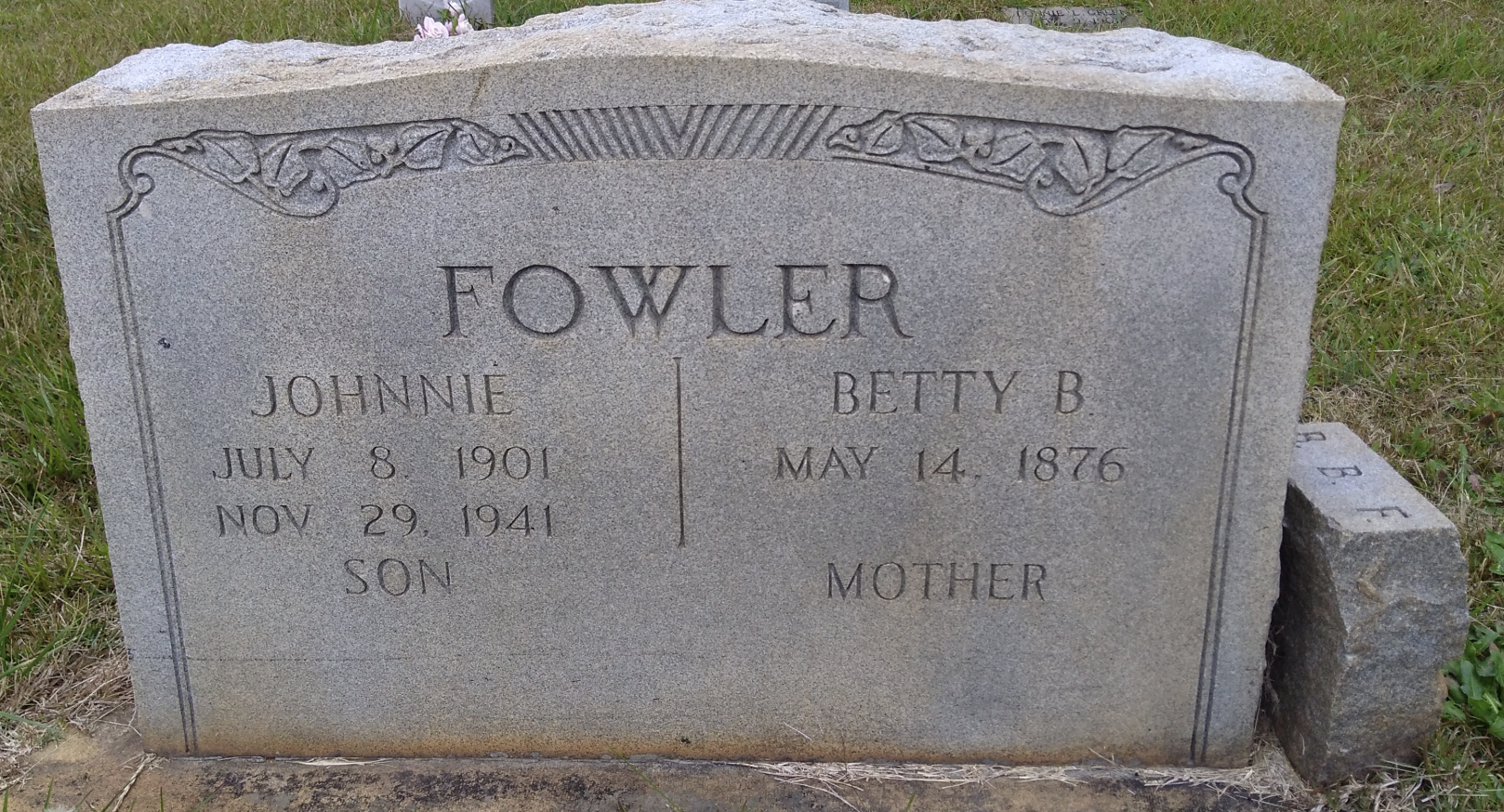
By the late 1890s, Gazzie had begun building a household of his own. Around 1897, he married Elizabeth “Betty” Brooks, a young woman born the same year as he was, but across the state line in North Carolina. Their early married life took them into Chester County, South Carolina, where they appear in the 1900 census with their infant son, Henry Clifford Fowler, born in February of 1899.
That same census carries a quieter, more somber note — the small numeral that tells us Betty had borne two children, though only one was living. The unnamed child, lost before the turn of the century, leaves no trace but that single mark on a census page. It’s a reminder of how many stories in these families flicker only briefly in the records, their names never written down, their lives carried forward only in the memory of the mother who survived them.

By 1910, the story of Gazzaway “Gazzie” Fowler and his wife Elizabeth “Betty” Brooks had taken a harder turn. The census that year tells a stark truth in the small, unforgiving boxes of its columns: Betty had given birth eight times, yet only three sons were living. Six children lost in the span of twelve years — a grief that would have shaped every corner of that household. A daughter would be born and would die in 1911.
The surviving boys were being raised not in the rural counties where both Gazzie and Betty had begun life, but in the growing industrial city of Charlotte, Mecklenburg County, North Carolina. The family lived on Louise Street, a mill village neighborhood built for the workers of the Louise Cotton Mill.
Gazzie himself was one of those workers, part of the wave of South Carolinians who left the farms and crossroads towns of Fairfield, Union, and Chester counties to seek steadier wages in the textile mills rising across the Piedmont.
Life in the mill villages was tight, noisy, and communal — rows of identical houses, the hum of machinery drifting through open windows, children playing in the red clay streets, and families bound together by shared labor and shared hardship. It was a world far removed from the Broad River farms of their parents’ generation.
And then comes the detail that ties the story back to Union County in a way no one could have predicted:
Sarah Purchase Fowler lived on that same Louise Street in the 1930s. She was a daughter of Ellis Fowler — the very Ellis who had lived beside Gassaway and Elmira Fowler in the 1870 census. Sarah had moved to Charlotte with her son Fred Mark Fowler and his family, settling into the same mill village streets where Gazzie and Betty had lived decades earlier.
By 1920, Gazzie and his family were in Union County, SC. He still toiled in the mill. Gazzie and his wife Betty remained together until 1930; their home remained in Union. But by 1935, life as they knew it had changed. Gazzie was back in Fairfield County living with his sister Annie, and Betty lived with her son Henry and his family in Union County.
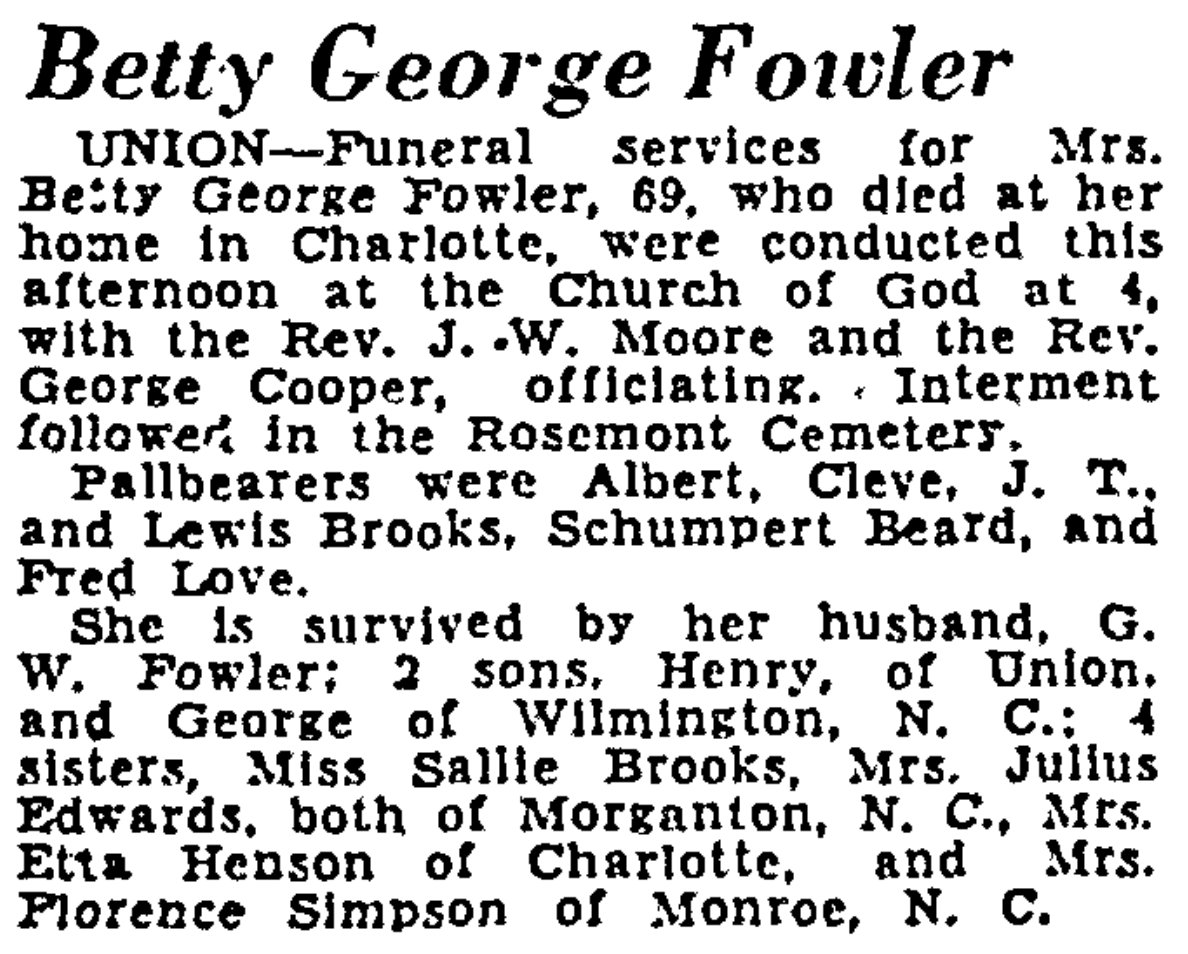
Betty died in 1945 in Charlotte, North Carolina. Her two sons were listed as survivors in the newspaper obituaries; husband Gazaway was mentioned in one, but not another.
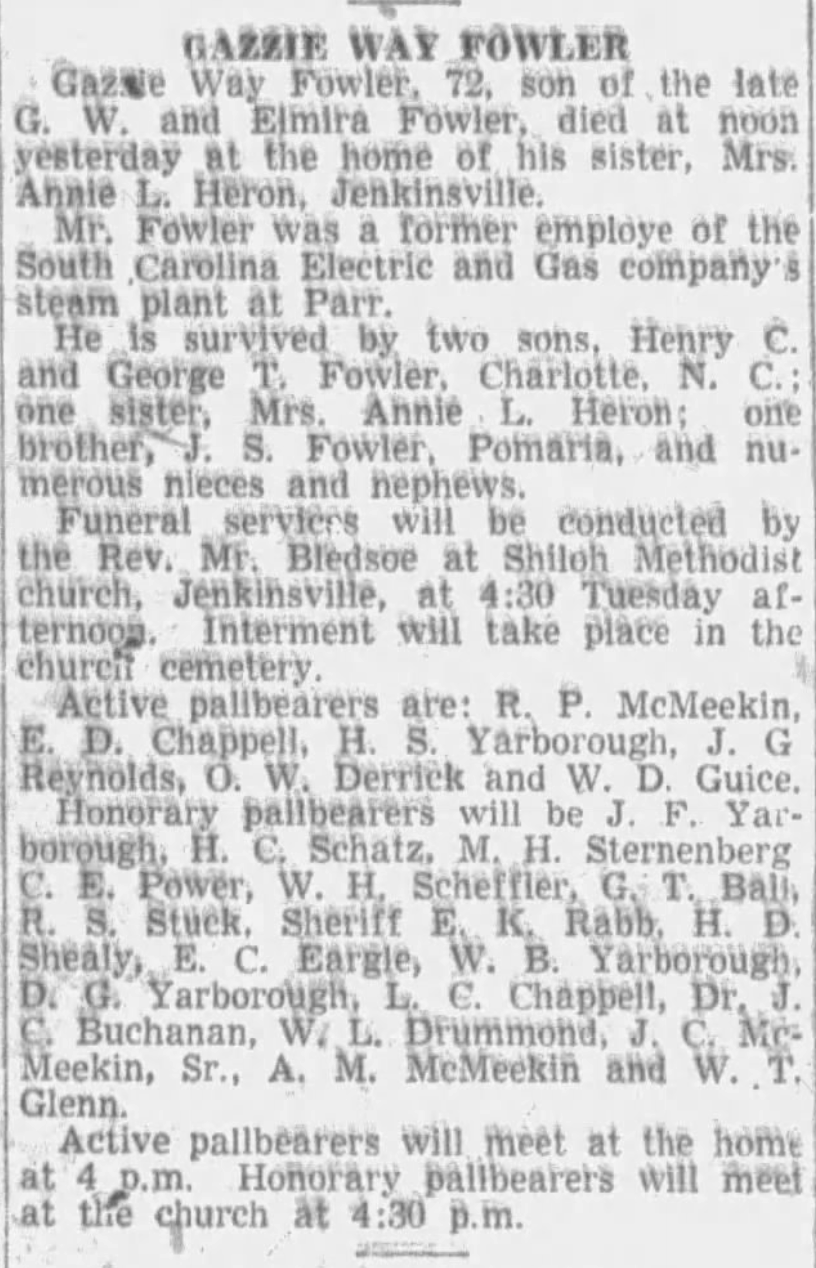
Gazaway W. Fowler died in 1948 at his sister Annie’s house in Jenkinsville, Fairfield County. He was laid to rest next to his parents in the graveyard at Shiloh Methodist Church.
IN THE END IS MY BEGINNING
In the stillness of Fairfield County, where the red clay holds the memory of generations, the story of Gazaway Fowler comes home at last. Born in the old Union District, he carried the imprint of two Carolina landscapes—one that shaped his beginnings, and one that shaped his life.
It was Fairfield that held his footsteps the longest, Fairfield that witnessed his labor, his marriage, his return from war, and the quiet years that followed. And it was Fairfield that received him in the end, laying him to rest not far from the home he shared with Elmira, beneath the same sky he had known since younger days.
For too long, his life lived only in fragments: a name in a ledger, a fading inscription, a handful of records softened by time. But he was never lost. He was simply waiting—waiting for someone to gather the truth of him with care, to lift his story from the dust, to speak his name with the dignity it deserved.
Now, through remembrance, he rises again.
Let his descendants know him as he truly was:
…a son of Union District,
…a man of Fairfield soil,
…a soldier who returned to rebuild a life,
…a husband who shared his days with Elmira,
…a presence woven quietly into the fabric of his community.
May those who carry his blood feel the steadiness of his life beneath their own.
May they know that he walked this earth with purpose, with endurance, with the quiet strength of a man who lived through hardship and kept going.
May they understand that the land he worked, the home he built, and the family he shaped are part of the inheritance they carry forward.
.
And so we leave him here, in the red earth of Fairfield County, where the wind moves softly through the pines and the past settles gently into the present. His life, once dimmed by time, now stands in the full light of truth.
His story, once quiet, now speaks again.
THE LINEAGE OF GAZAWAY FOWLER
- Henry Ellis Fowler
- Godfrey Fowler
- Thomas Gillman Fowler
- Gassaway Fowler Elmira Ann Smith 1839–1911
- Mary Evelyn Fowler 1855–1882
- Frances L. Fannie Fowler 1856–1931 m. Thomas C. Hart
- Lee Hart 1882–1938
- Thomas William Fowler 1858–1903 m. Ida Allice Hart 1863–1886; m. Carrie Louise Bagley 1873–1939
- Iola Louise Fowler 1892–1921
- Julia Blanche Fowler Jurney 1894–1974
- Thomas Fowler 1897–1938
- Maude Fowler 1900–1971 m. Vernon Clarence Elliott 1895–1973
- Vernon Carol Elliott 1920–1997Frances McCulloch Younts 1922–2011
- Eugene Wesley Elliott 1926–2025
- Boliver Norman “Bob” Fowler (1901–1953) m. Frankie F. Fowler (1904–1983)
- Lettie Fowler (1860–)
- William Franklin Fowler Sr. 1862–1892
- Leila A. Fowler (1862–1947) m. Abram Silas Kelly (1858–1911)
- William “Willie” Abram Kelly (1882–)
- Ada Kelly (1882–1897)
- Catherine Elizabeth Kelly 1884–1981
- John Belton Kelly 1886–1965
- James Joe (Jim) Kelly 1889–1961
- Ella Lane Kelly 1894–1982
- Esma Elizabeth Kelly 1895–1974
- Maybelle Kelly 1897–1986
- Ernest Everett Edward Kelly 1899–1979
- Leonard Kelly 1903–1934
- Infant Twin Fowler 1863–1863
- Pinkney Gadberry Pink Fowler (1866–1895) m. Susie Elizabeth Bagley 1870–
- John Gadberry Fowler 1892–
- Ben Tillmore Fowler 1894–
- Medora Dora Fowler 1870–1900 m. William J Sharpe 1859–1902
- William Thomas Sharpe 1888–1971
- John David Sharpe 1890–1929
- Robert Gary Sharpe 1893–1952
- Ella Lou Sharp 1897–1969
- James Steadman Fowler (1872–1952) m. Hattie Elizabeth Geiger (1880–1961)
- Claude Gasbury Fowler (1899–1973)
- Sadie May Fowler (1901–1974)
- James Joseph Fowler 1910–1952
- Hattie Lee Fowler 1913–1997
- Ruby Elizabeth Fowler 1918–2002
- Steadman Allan Fowler 1921–1992
- Eugene Glenn Fowler 1923–2008
- George Gazzaway W Fowler1875–1948 m. Elizabeth (Betty) Brooks 1876–1945
- Henry Clifford Fowler Sr 1899–1969 m. Maude Belle Barnett 1903–1961
- Rubye Elizabeth Fowler 1920–2005
- Mabel Odessa Fowler 1922–1996
- Francis Ethel Fowler 1924–1992
- Henry Clifford Fowler Jr 1927–1981 m. Nancy Coletta O’Dell 1926–2009
- Stephen Fowler 1952–1952
- David B. Fowler 1955–2024
- Doris Caville Fowler 1930–1965
- Johnnie Fowler 1901–1941
- George Thomas Fowler 1908–1974
- Henry Clifford Fowler Sr 1899–1969 m. Maude Belle Barnett 1903–1961
- Annie Fowler1875–1963 m. George Marvin Heron
- Haskel Heron 1912–1996
- G.M. “Red” Heron
- Charlie G. Heron
- W.B. “Bill” Heron
- Hazel Heron
- Beatrice Heron
- Gassaway Fowler Elmira Ann Smith 1839–1911
- Thomas Gillman Fowler
- Godfrey Fowler


Great work!!! Thank you!
LikeLike
Thank you Sharon! This one took a while to research. Sorting out the children and burial site of Thomas William Fowler was my original goal. Confirming the burial site of his brother Frank Fowler (Fairfield County and not Elmwood in Columbia) was an added bonus. I spent an entire day driving all over Fairfield County looking for the Gazaway Fowler home place, Fowler’s Spring near Alston, and the graves of Gazaway, Elmira, their sons Gazzie, Frank, and Pinckney. Found a spring between the Broad River and the home place, but it was more of a muddy hole and I am not sure if it was the spring mentioned in the newspapers. It was a lovely day! Thanks for reading and commenting! Deb
LikeLike